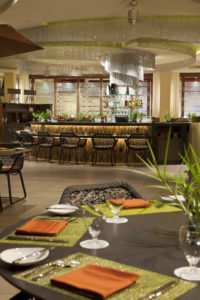
 Plantation inspired Kō is the newly opened signature restaurant on the Fairmont Kea Lani property in Maui (see my write-up on The Fairmont). Ko was recently opened after nearly nine months and an over $5.1 million rebuild budget.
Kō which translates to sugarcane in Hawaiian, showcases the diverse culinary history of the sugarcane plantation era, serving Hawaiian, Chinese, Filipino, Portuguese, Korean, and Japanese menu items. Led by Executive Chef, Tylun Pang, the menu features historical island family recipes that have been passed down for generations.
Pang is well known nationwide, yet the twist around Ko comes from a conversation the team had when they thought about what to cook in the newly designed restaurant prior to the renovation. Pang looked around his kitchen and asked his team what they wanted to cook. The previous restaurant was Italian and yet the majority of the chefs at the time and still today, are from neighboring Pacific islands and Hawaii itself.
He says of his staff, “they’re some of my best teachers; they often share recipes, techniques and cooking styles which are passed down from their families and therefore true to their own cultural roots.”
For example, the Kare-Kare, a traditional Filipino Oxtail Stew served in savory Peanut Sauce, has been in local Chef Aris Aurelio’s family for years, but now graces the menu at Kō.
Like so many places in Hawaii, they are committed to farm-to-table and organic ingredients served from the land. “A Hawai΄i kitchen represents the ethnic composition of the island,” says Chef Pang.
Local, Local, Local:
For the Ko team, Maui fishermen aren’t considered vendors, but rather as partners who share the respect for the ocean as a vital, self-sustaining resource. The 10-15 fishermen that catch for Kō support a sustainable fishery, while at the same time providing some of the most delectable fish foundanywhere in the world. The slope of Haleakalā offers the ideal climate for growing everything from sweet Maui onions to strawberries. On the east side of Maui, farmers grow fern shoots, baby heirloom tomatoes and Tahitian limes. 
And at sea level, in the dessert-like areas, mangos, papayas, bananas and avocados are in abundance. The cattle they raise upcountry is grass-fed and completely hormone, stimulant, and steroid free.
They source from over 16 island farmers for the restaurant and over 85% of all produce served every night is from Maui, Moloka΄i, Hawai’i and Oahu. Many farmers are old friends, allowing them the best access to fresh produce the islands have to offer. I had an opportunity to meet the chef during my over-the-top (it kept coming) lunch; he’s clearly passionate about his art.
Their classic bread platter is creatively displayed and comes with delicious sauces, an edamame hummus and rice crackers. It’s so beautiful, you don’t really want to dive in, right? But dive in you must and while you’re at it, order one of their cocktails. I recommend: Ko Plantation, which includes Sammy’s Beach Bar Rum, ginger, fresh pineapple, cilantro, lime and pure sugar cane. Also amazing is their Liikoi margarita, combining liikoi, lime and cointreau as well as their Pomegranate Cucumber Mojito (served with mint, Bacardi light rum, lime juice, pomegranate and club soda).

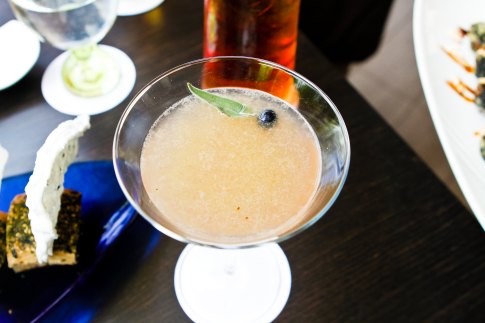
They also have sake on the menu — Ty Ku Silver, Junmai, Ty Ku Black Junmai Ginjo, Ty Ku White Junmai Daiginjo and Takuri Ty Ku Silver. A lot of their drinks are influenced by the islands and what the tropics have to offer locally, such as pineapple, Liikoi, sugar cane and rum. If you want to go for something more traditional, you can always order a beer (they even have local choices – Bikini Blonde Lager from the Maui Brewing Company), or something sweeter like a Sapphire Kawili (Bombay Sapphire, served with sage, blueberries, honey and lemon), something I could have appreciated more in my earlier twenties.
Favorites on the menu include the Lumpia Filipino spring rolls, which is a family recipe of one of the chefs and the Black and Blue Ahi. The spring rolls are served with green papaya achara and spicy dipping sauce, and you can get it with pork and shrimp or chicken and mushroom.
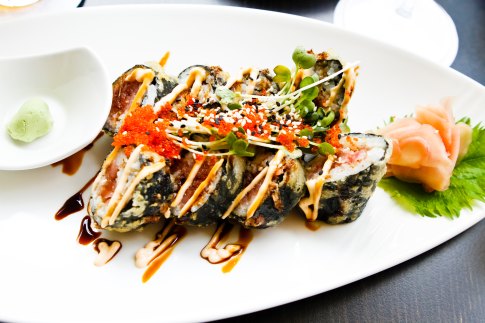
The black and blue ahi (yum) is seared with a volcano spice — cucumber, tomato and maui onion. OR, you can’t go wrong with the Oishi Sushi with spicy tuna and tempura, the Miso Glazed Tiger Prawns with saba noodles or the Mauka Harvest, which comes with (get ready for this combo) pohole fern shoots, heart of palm, kula baby lettuce, macadamia nuts and passion fruit vinaigrette.

If you’re like me, you have to order at least one salad. In addition to the exquisite Mauka Harvest, they have a chicken salad, a chilled tofu salad with sea asparagus and toasted sesame seeds or a seared ahi served with baby greens, daikon, carrots, kaiware sprouts (fresh fresh fresh), ogo and orange wasabi vinaigrette.

Don’t get me started on the desserts!!
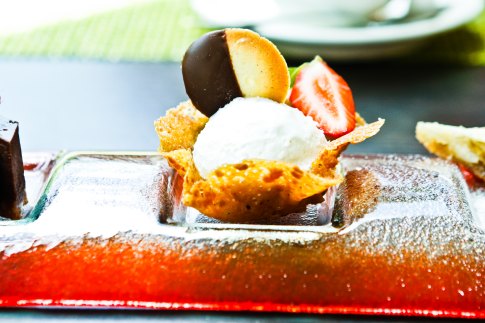
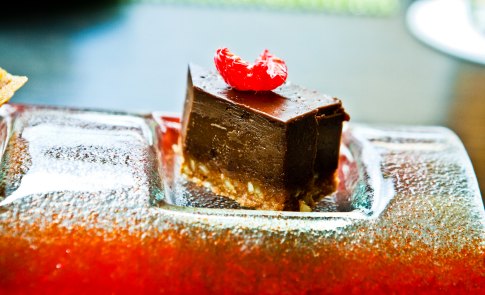
The service really deserves 5 stars. I came back on another night when I wasn’t officially ‘hosted’ and sat at the bar….ordered a Chardonnay and a salad. The service was equally amazing, so hats off to the bar and restaurant staff, the servers, the restaurant manager and marketing team for a memorable experience.
Below is a shot from the restaurant facing out towards the pool area and ocean and one viewing it with the ocean to your back.


Another great restaurant on Hawaii’s Big Island that thinks locally and organically is Manu Lani Beach Club’s Napua, which is worth a try if you plan to go to more than one island. For more posts on Hawaii, check out this section. To experience nature, botanical gardens and rainforest by segway, check out this post. For more on Hawaii and food/wine only, go here. For Hawaii and lodging, here. For more on Hawaii and arts, go here.

Renee Blodgett is the Founder and Managing Editor of We Blog the World, a global travel, culture and lifestyle publication exploring the world through the lens of meaningful experiences, human connection and cultural depth. Having lived in 10 countries and traveled to 95, Renee has spent much of her life immersed in the people, traditions, landscapes and ideas that shape how we experience the world.
Since launching We Blog the World in 2007, she has written and produced extensive editorial coverage spanning boutique and luxury travel, culinary experiences, arts and culture, wellness, adventure, technology, spiritual traditions and transformative travel. Her work is rooted in the belief that travel is about more than where we go—it is also about what a place, culture or encounter awakens within us.
Renee brings more than three decades of experience across journalism, photography, media, brand strategy, technology, wellness and global storytelling. She has worked with companies and organizations around the world on brand positioning, communications, product launches, media strategy, speaker positioning and storytelling. Through Blue Soul Media, she works with authors, entrepreneurs, thought leaders and purpose-driven brands to clarify their message and expand their impact, which includes speaker coaching/training for high-profile stages such as TED and bringing authors’ work to market while retaining authors rights.
She is also the co-founder of Blue Soul Earth, an educational platform exploring consciousness, ancient wisdom, spirituality, healing and the intersection between science and the nature of reality. Renee is the producer and host of the award-winning Blue Soul CHATS, a conversational series bringing together leading voices in science, technology, consciousness, wellness and spirituality.
Her growing body of work also includes Blue Soul Living, which extends her interest in consciousness and well-being into the spaces we inhabit, exploring how intentional design, energy and environment can support greater harmony and connection.
Renee is the award-winning co-author of the bestselling Magdalene’s Journey and founder of the Magdalene Collection, inspired by women’s voices, stories and wisdom across cultures and generations.
A longtime photographer and storyteller, Renee has documented people, places and cultures around the world and produced photographic collections focused on destinations including the Galápagos Islands, London, South Africa, Rome and Ecuador. She also co-founded Traveling Geeks, an international initiative that brought entrepreneurs, journalists, creators and technology leaders together with their counterparts in other countries to exchange ideas and explore innovation across cultures.
Renee’s work has been recognized by Forbes, the United Nations and others for her influence in media and social storytelling. Across her work in travel, media, consciousness and culture, a common thread remains: curiosity about the world, the stories that connect us and the ways meaningful experiences can change how we see ourselves and one another.