
Since we’re planning on expanding our technology coverage on the site in the upcoming months, from mobile and gear to laptops, cameras and more, I thought I’d get a sense of what’s happening on the monitor scene lately as there have been so many advancements and for the first time in years, I missed CES this past year.
I’ve never used any of Acer’s products, so thought I’d start with one of their flatscreen large external monitors to see how it performs, particularly with clarity and vivid colors in mind. After all, when I return from a trip, what’s the first thing I do? Edit photos and upload, so having my photos really pop from the screen is a top priority.
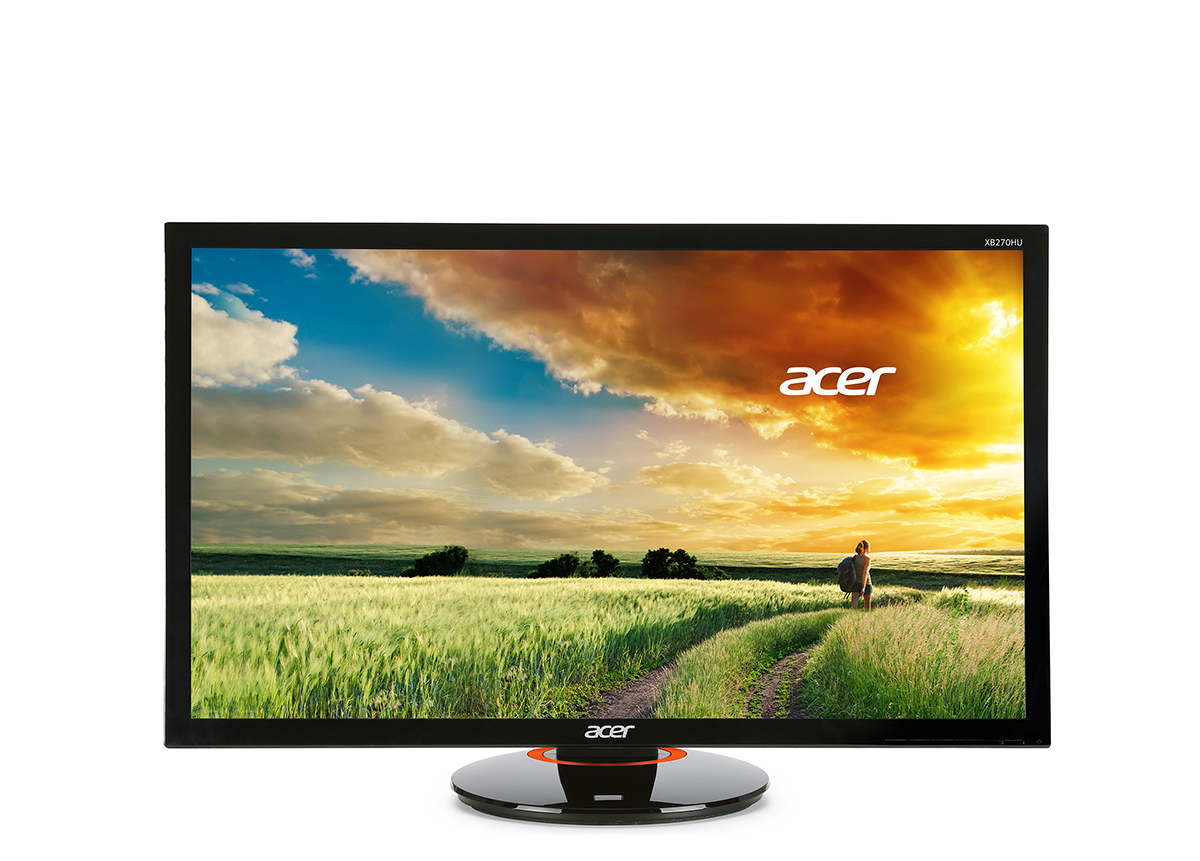
The more photography I do on the road, the more important it is to view those images on a monitor that truly makes them shine. We opted for the Acer XB270HU to start with for a myriad of reasons. First, I wanted a monitor that was at least 27 inches, preferably 32 inches, which is a great size for an external monitor, especially if you’re keen on watching movies or doing anything in the creative industry, such as editing those travel photos…OR, if you’re a gamer of course.
In addition to the monitor’s quality, we love the design. There are far too many monitors out there with ugly designs or impractical — after all, I tend to put things on the stand and am one of those workhorses who has sticky notes plastered everywhere. I’m also a huge fan of ergonomic designed products, which is essential if you plan to spend a significant amount of time at your computer.
You can adjust the height of the XB270HU, allowing you to choose the optimal height for you, ensuring a more comfortable location for where your eye meets your text or image. I can’t emphasize this consideration enough — the wrong eye distance can negatively impact the wear and tear on your arms, hands and neck.

This model met my criteria at 27 inches and while it’s not a 32 or 34 inch screen which I’d argue is even better for travel photography, the resolution goes up to 2560 x 1440, gets 350 on the brightness scale (most of them in this price range are in the 300 range), and has a very fast response time (4 ms). There are monitors that have a 1 or 2 ms responsive rating however most of the larger monitors have a lot more “bits” and color pixels to load, which can slow things down. Anywhere from 4-6 is really fine for normal use. The quality of the images are crystal clear and “bright,” a far cry from my older Samsung monitor which I ended up tossing in the bin recently.

As I mentioned above, it’s ergonomic aspect is a huge plus. Not only can you adjust its height, but you can adjust the angle of the monitor as well. Two thumbs up for adaptability. Don’t underestimate the pain you can incur if you spend a lot of time in front of a monitor, which most of us do, whether it’s for personal or professional use.
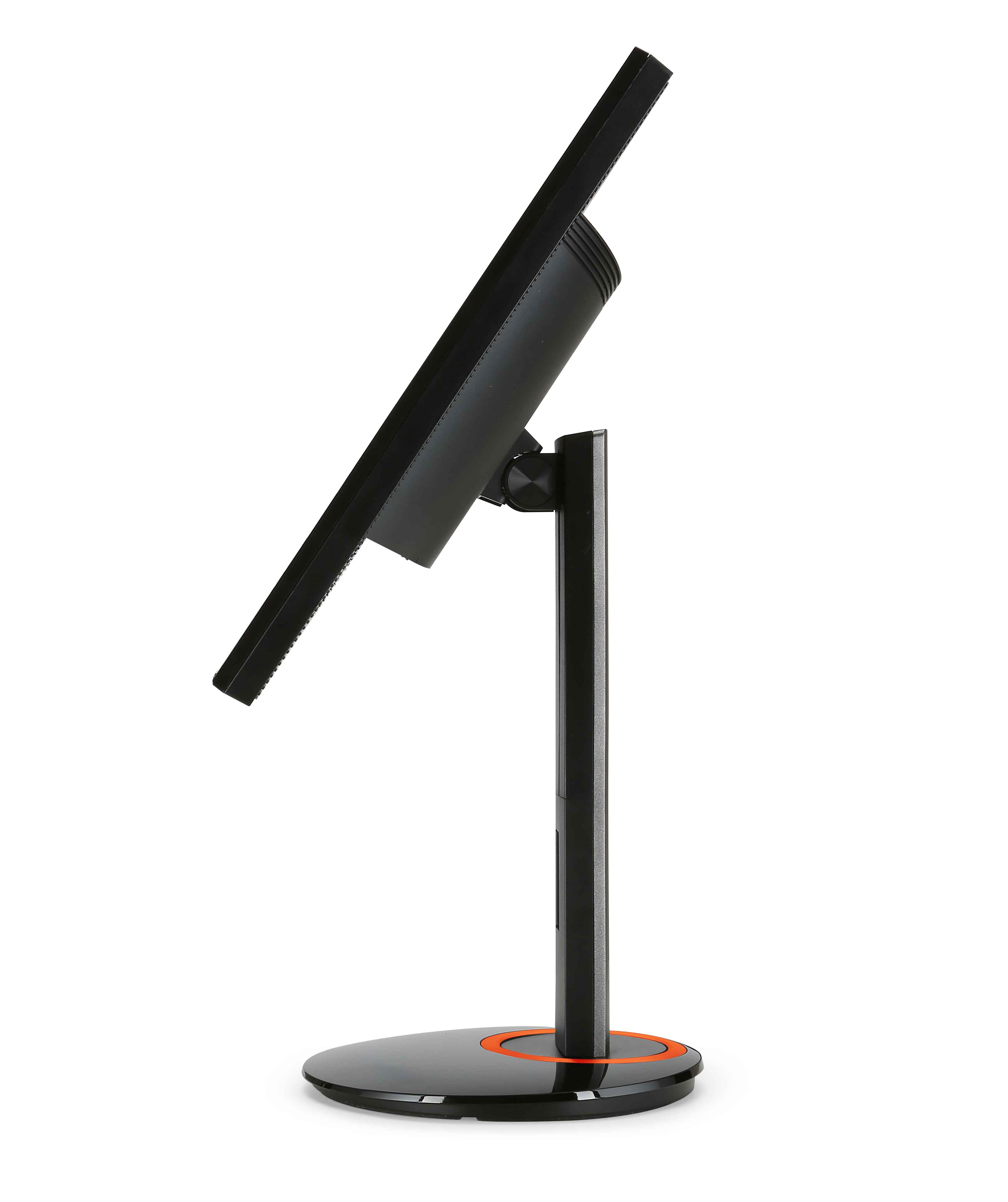
The stand itself is also particularly sturdy and while you might think this should be an automatic consideration for any external monitor design, it has not been the case in my experience. Some of them feel a little flimsy and simply don’t have a solid base like this one does — you can get a sense of the quality and stability simply by looking at the photo — compare this to a stack of other external monitors and you’ll get a sense of what I mean.

I typically use an external monitor with a laptop not a desktop system — this makes it a nice change from working on a much smaller laptop screen when I’m on the road. Does it matter? You betcha and here’s why! More real estate means you can be more productive and view more at one time.
While we didn’t test the below monitor out, take a look at Acer’s 34 inch ultra-wide QHD and FHD B326HK display. Unfortunately my existing Mac Book Pro can only accommodate up to 2560 x 1600 resolution which means that the 4K monitors were out of the question for this particular review. This monitor brings adjustability and flexiblity to a whole new level.

The B326HK is ideal for use in office environments, libraries and computer labs, and what I love most about it is its ergonomic design making it a comfortable all-day computing choice — it swivels and tilts, and has height adjustment (Bravo!!). They also use eco-friendly technologies to save power and cut energy costs which we applaud. The screen is ultra-wide and provides wide viewing angles up to 178 degrees.
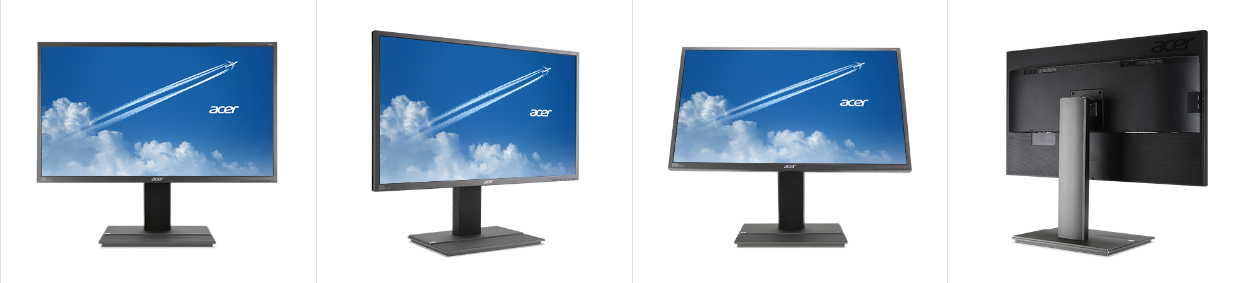
Thanks to an IPS panel, wide 178-degree viewing angles enhance visual collaboration with others on joint projects. You can choose from WQHD1 resolution all the way up to Ultra HD (4K2K)1 resolution, which delivers four times more pixels and detail than Full HD. The ultra-wide screens is great to view high resolution photography, large spreadsheets, brochures, newsletters or two documents side by side, which frankly I’d like to test out after my next laptop upgrade.
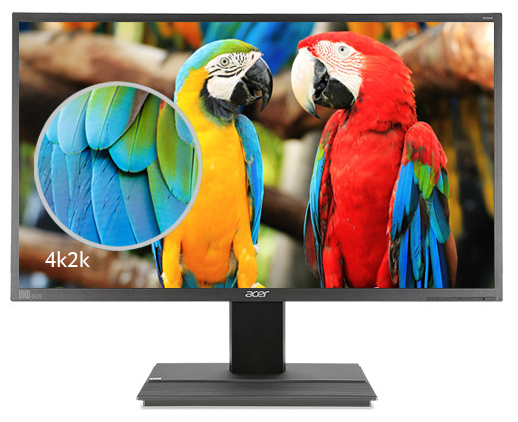
More things to love about this monitor: the combination of a 16:9 aspect ratio, 3502 cd/m brightness and 1.07 billion colors create exceptionally vivid and high-quality images. A crisp 100,000,000:1 maximum contrast ratio and a 6ms response time contribute to the stunning picture quality. Their in-Plane-Switching1 Technology lets you see perfect images from wide viewing angles, for even more clarity and comfort.
Because I was on the road so much over the summer and into September, I’ve only had a week or so with the XB270HU, but so far, we LOVE it. We tested it connected to three machines: a Mac Book Pro, a high end Lenovo laptop (two years old) and an even older Samsung, the latter machine wasn’t able to take advantage of the full color range that the XB270HU has to offer.
Acer displays are backed by professional, high-quality technical support and a three-year warranty. More info at www.acer.com for specs on all their models.

Renee Blodgett is the Founder and Managing Editor of We Blog the World, a global travel, culture and lifestyle publication exploring the world through the lens of meaningful experiences, human connection and cultural depth. Having lived in 10 countries and traveled to 95, Renee has spent much of her life immersed in the people, traditions, landscapes and ideas that shape how we experience the world.
Since launching We Blog the World in 2007, she has written and produced extensive editorial coverage spanning boutique and luxury travel, culinary experiences, arts and culture, wellness, adventure, technology, spiritual traditions and transformative travel. Her work is rooted in the belief that travel is about more than where we go—it is also about what a place, culture or encounter awakens within us.
Renee brings more than three decades of experience across journalism, photography, media, brand strategy, technology, wellness and global storytelling. She has worked with companies and organizations around the world on brand positioning, communications, product launches, media strategy, speaker positioning and storytelling. Through Blue Soul Media, she works with authors, entrepreneurs, thought leaders and purpose-driven brands to clarify their message and expand their impact, which includes speaker coaching/training for high-profile stages such as TED and bringing authors’ work to market while retaining authors rights.
She is also the co-founder of Blue Soul Earth, an educational platform exploring consciousness, ancient wisdom, spirituality, healing and the intersection between science and the nature of reality. Renee is the producer and host of the award-winning Blue Soul CHATS, a conversational series bringing together leading voices in science, technology, consciousness, wellness and spirituality.
Her growing body of work also includes Blue Soul Living, which extends her interest in consciousness and well-being into the spaces we inhabit, exploring how intentional design, energy and environment can support greater harmony and connection.
Renee is the award-winning co-author of the bestselling Magdalene’s Journey and founder of the Magdalene Collection, inspired by women’s voices, stories and wisdom across cultures and generations.
A longtime photographer and storyteller, Renee has documented people, places and cultures around the world and produced photographic collections focused on destinations including the Galápagos Islands, London, South Africa, Rome and Ecuador. She also co-founded Traveling Geeks, an international initiative that brought entrepreneurs, journalists, creators and technology leaders together with their counterparts in other countries to exchange ideas and explore innovation across cultures.
Renee’s work has been recognized by Forbes, the United Nations and others for her influence in media and social storytelling. Across her work in travel, media, consciousness and culture, a common thread remains: curiosity about the world, the stories that connect us and the ways meaningful experiences can change how we see ourselves and one another.