Some transitions arrive with a bang. Others happen so quietly that we don’t realize we’ve changed until the life we built no longer quite fits.
I’ve been thinking a lot about transitions lately because they have been washing over me like ashes kindling in a fire. It reminds me I’m feeling the shifts, and I don’t mean the obvious ones—moving to a new city, leaving a relationship, changing careers, losing someone we love, seeing your kids off to college—but the quieter shifts beneath the surface. These are the ones without announcements, celebrations, or even a clear beginning.
Sometimes you can feel something changing long before you have the language to describe it. We’ve all been there; you may be thinking of a few as you read this. Maybe there’s a little denial: “What was that? and why?” Or perhaps you have had time to reflect. Are you holding onto a tragedy, making lemonade from your story or pushing it away because it’s too painful to process?
I’ve had more than a few chapters in my life. Some were exhilarating, others exhausting, and a few I probably held onto much longer than I should have. I’ve lived in different countries, traveled extensively, built businesses, launched technology companies, products, services, entrepreneurs, communities and platforms, worked with founders and visionaries, and spent years exploring the intersection of culture, communication, human connection, spirituality and consciousness. I’ve also worked in olive and orange groves, slept in the African bush, traversed across SE Asia, swept Japan by boat, lived a stone’s throw from the Gaza Strip and in Johannesburg during Apartheid.
And yet, for all the change I’ve embraced externally, some of the most difficult transitions have had very little to do with what I was doing and everything to do with who I thought I needed to be.
That’s a very different door we enter entirely which makes for an entirely unique journey.

When the Life That Once Fit No Longer Does
For years, much of my professional world revolved around technology, media, communications, and bringing new ideas into the marketplace. I loved the energy of it—the inventiveness, the people, the possibility of helping something go from an idea to a movement. It also allowed me to attend TED every year and other events of its ilk, such as DLD, EG, PopTech, conferences such as Renaissance, Nantucket, gatherings with Ken Wilbur, Eckhardt Tolle, Bryon Katie, Tony Robbins, Wayne Dyer, Caroline Myss and countless others. There’s something very intoxicating about being surrounded by people who believe they can change the world.
And sometimes they do.
But after enough years in that world, I began asking different questions. Not just whether an idea could scale, attract attention, or become commercially successful, but whether it was making our lives richer in the ways that actually mattered. It brought me into a new chapter, one that led to teaching about spirituality, consciousness and the bridge to science and tech.
From what I saw in my days representing IoT solutions, the questions most pressing on my mind were: Are we becoming more connected? More conscious? More human?
Or are we simply getting better at building things that kept us endlessly occupied?
I still love technology. I’m fascinated by what’s possible, particularly as AI challenges so many of our assumptions about creativity, work, intelligence, and what it means to be human. Claude Code and I have become friends (most of the time) and he/it teaches me in ways I couldn’t have imagined a year or two ago.
But I’ve become increasingly interested in what technology can’t give us.
Presence. Discernment. A genuine sense of belonging. The ability to sit with uncertainty without immediately trying to solve it.
These questions began finding their way into my work long before I fully recognized the pattern.
My days at various Fortune 500 and start-up companies and as founder of Magic Sauce Media, I learned about pace, discernment, resilience, what makes a great leader and what doesn’t, and that more is not necessarily better. Through We Blog the World, travel became less about destinations and more about the people, rituals, cultures, and encounters that changed how I saw the world. And even before I launched it having spent several years roaming around the world. Through Blue Soul Earth, my exploration of consciousness, spiritual lineages, traditions, healing, and the unseen dimensions of life became a more central part of what I wanted to share. And who I wanted to be. Simply be.
That bridge between worlds led me to Blue Soul Media, where I found myself approaching storytelling, positioning, and communications differently—not abandoning strategy, but asking whether the message and the person behind it were genuinely aligned.
I don’t see these as separate professional identities anymore.
In many ways, they’ve been different expressions of the same curiosity.
What makes us who we are? What connects us? And what happens when we finally begin listening to the parts of ourselves we’ve spent years overriding?

The Art of Reinvention as a Woman
I suspect many women understand this tension intimately. We’re extraordinarily good at adapting. We learn to read rooms, anticipate needs, hold relationships together, manage expectations, and become whatever a particular chapter seems to require.
Somewhere along the way, competence can become an identity: You’re the one who can handle it. The one who figures things out. The one who keeps going. Who steps in when no one else does.
And while there’s enormous strength in that, there’s also a cost.
I know how easy it is to become so accustomed to producing, creating, helping, organizing, and carrying things forward that slowing down almost feels like a betrayal of who you’ve always been. Especially when you’ve spent much of your life being independent and entrepreneurial.
The world applauds reinvention when it produces something impressive—a new company, a book, a successful launch, a dramatic career pivot. We’re less comfortable with the kind of reinvention that involves doing less, wanting something different, or admitting that the ambitions we once held no longer nourish us.
And for women, there’s another layer.
At different stages of life, our relationship with visibility, beauty, achievement, partnership, family, and even our own bodies change. What felt essential at thirty may feel irrelevant at fifty or sixty. What once seemed like a compromise may later look like freedom.
There’s a wonderful audacity in allowing ourselves to change our minds and shifting as the wind or the tides do. Moving into sovereignty with ease and grace, no permission needed. Yet, we don’t always allow that permission. We may continue playing a role because we’ve become very good at it. Because others depend on us. Because we’ve invested years in building it. Or simply because we don’t know who we’ll be without it.
I’ve certainly wrestled with that. Identity is a main theme early on in wisdom school transitions for a reason. We’ve been focused on it for six pillars and although the teachings add different nuances and go deeper as the months roll by, loosening our grip on identity is a core layer that enters each time.
One of the more surprising realizations for me has been that letting go of an identity can be harder than letting go of a job, a place, or even an opportunity. A role can disappear overnight. Our attachment to it sometimes takes years to unravel. I see this with myself, people in our community and even other leaders I admire. They too, have an attachment to what and who they represent. It’s part of being human.
What Autumn Understands That We Often Resist
Maybe that’s one reason I find myself drawn to the symbolism of Autumn. To embrace your inner Sophia, Shekinah, Goddess within, there’s so much magic in tapping into the seasons and the rituals that go along with it. Autumn is a favorite because it’s still carries some of the warmth of summer, but sheds in powerfully vivid colors: leaves changing, cooler peach hues to the sunsets.
I’ve experienced fall in very different parts of the world, and I love how a season can carry such distinct memories depending on where we are. The crispness of the air, the smell of damp earth, the shifting light, the deepening of color.
But I’ve also spent enough time traveling to recognize that the seasons we experience internally don’t always correspond to the calendar. We can be in the middle of a glorious summer externally while going through a deep winter inside. And sometimes, just when the rest of the world expects us to be blossoming, we find ourselves needing to retreat.
Nature doesn’t seem particularly troubled by these transitions. Trees don’t negotiate with autumn. They don’t cling to every leaf because they’ve worked so hard to grow it. We, on the other hand, can spend years trying to keep alive something that has already completed its purpose: A friendship. A professional identity. A belief about success. A version of ourselves that made perfect sense in an earlier chapter and no longer does. Perhaps there are people and places that deplete our energy yet we continue.

I’m not suggesting that we abandon commitments whenever things become difficult. Some of the most meaningful parts of life require patience, resilience, and the willingness to stay when staying is uncomfortable. But there is a difference between something that is challenging us to grow and something that is asking us to remain small. Learning to recognize that difference may be one of the most important forms of discernment we develop. And it rarely happens through logic alone.
The Space Between What Was and What’s Next
In the consciousness work Anthony and I share through Blue Soul Earth, we explore the importance of presence, stillness, and the space that exists before creation. It’s something I’ve come to appreciate more deeply in my own life. For much of my career, an ending was followed almost immediately by a beginning. One launch led to another. One opportunity opened the door to the next. There was always a new idea, a conversation, a project, or somewhere else to go.
Movement felt natural to me.
It still does.
But I’ve begun to see how quickly we can fill an empty space simply because we don’t know what to do with it. For example, we leave one chapter and immediately begin constructing another, often without understanding what the previous one was trying to teach us.
What if we didn’t?
What if, instead of asking, “What’s next?” the moment something ends, we allowed ourselves to ask, “What just happened to me? What did this chapter reveal? What am I still carrying that I no longer need?” There is a kind of emptiness that can feel deeply unsettling, especially for people accustomed to making things happen.
We interpret it as stagnation, uncertainty, or a lack of direction. But perhaps some empty spaces aren’t problems to be solved. Perhaps they are necessary. Truly necessary. I
Rest assured, I don’t pretend to have mastered this. My instinct is still often to create, connect, initiate, and move forward. I can recognize the value of stillness intellectually and still find myself resisting it in practice. That’s part of the work, too. And the beautiful thing is that we’re in this together, if we allow ourselves to. In other words, if we allow ourselves to be vulnerable in community, to join one, to let out and let in.
When Success Starts to Mean Something Different
One of the gifts of getting older, at least in my experience, is that certain things begin to lose their grip. Finally. I breathe out a sigh of relief as I write this. Not because we stop caring, but because we’ve lived enough to question the things we once accepted without much thought.
I spent years in industries where visibility, influence, growth, and momentum were treated as measures of success. And there’s nothing inherently wrong with any of them. I’ve enjoyed many of those achievements and remain proud of the work behind them, yet more importantly, I’ve met extraordinary people in remote villages, spiritual communities, and places far removed from the familiar markers of Western success who seemed to possess a richness of spirit that no professional accolade could touch.
Travel has been one of my greatest teachers in this regard. When you spend time with people whose priorities, traditions, and relationships to the world are radically different from your own, it becomes harder to believe there’s only one way to live a meaningful life.
It also becomes harder to ignore the questions that follow you home.
- What am I giving my energy to?
- Who am I becoming through the choices I make every day?
- And does the life I’ve built still reflect what I believe?
Those aren’t always comfortable questions.
Sometimes the answers require us to disappoint people. Sometimes they ask us to redefine success in ways that others won’t understand. And sometimes they reveal that the person we’ve spent years becoming is ready for an entirely different expression. But guess what? Not every transformation needs an audience.
We live in an age where almost everything seems to require a narrative. We announce our pivots, document our healing, share our breakthroughs, and package our personal growth into something others can consume. Having spent so many years in media and communications, I understand that impulse better than most. I also understand the power of a well-told story. But I’m increasingly protective of the experiences that haven’t yet become stories.
Some things need time to take shape away from public view. Some realizations are still too tender to explain. Some changes are so subtle that giving them a name too early can diminish them. And some of the most profound shifts may never produce anything that looks particularly impressive from the outside. For example, a conversation we finally have — allow ourselves to have. A boundary we quietly establish. An old resentment we release. A decision to stop proving ourselves to someone who will never see us clearly or understand us fully.
These are transformations, too. Big ones. And for women who have spent decades making themselves available to everyone and everything, choosing where our energy goes can be a radical act.
Not selfish. Not unkind. Simply conscious. And it leads to self-care, self-love and embodiment.

A Different Kind of Harvest
Autumn is often associated with harvest, with gathering the fruits of what we’ve planted. As a gardener, I mourn the loss of daily basil grabs from the pots outside my door, but rosemary graces me throughout the winter. I reflect on this and am reminded of gratitude: embracing what does come our way through the transitions, not solely on what we’ve lost.
It also makes me wonder whether the harvest of a life is always what we imagine it will be. Perhaps it’s not the company we built, the places we’ve visited, the recognition we received, or even the goals we’ve accomplished. Maybe, just maybe, it’s the wisdom that remains after some of those things have fallen away. You know the kind I’m talking about: the ability to distinguish between excitement and alignment. Between being needed and being loved. Between recognition and fulfillment. Between a life that looks successful and one that actually feels like ours.
I haven’t arrived at some final destination where everything suddenly makes sense. And frankly, I hope I never become so certain of who I am that I lose the curiosity to discover something new. I’m still interested in launching ideas, creating meaningful work, exploring new places, meeting fascinating people, and participating in conversations that challenge how we understand ourselves and the world.
But I want to do those things with greater intention. Purpose. Inner joy. Sovereignty. Less from the need to prove something, and more from a genuine desire to contribute, connect, and create. As the light changes and the days begin to shorten, I’m finding myself less interested in making dramatic declarations about what I’m leaving behind. Discernment is part of this journey btw, and those of you who have journeyed long and hard know what I mean. It also means setting boundaries and not letting people take advantage of your good graces, your commitment, your heart and your time.
Now, I’m paying more attention to what still feels alive. Which conversations leave me energized? Which places bring me back to myself? Which relationships invite honesty rather than performance? Which ideas keep returning, even when I try to set them aside? What people nourish me and which ones take advantage of me? Do what they hold match what I want to hold dear? Are they in the same vibrational resonance or one that constantly takes rather than gives? And perhaps most importantly, what am I holding onto simply because it once belonged to me?
I don’t have answers to all of those questions. Maybe that’s the point of this season. Not to emerge with an entirely new identity or a perfectly mapped-out future, but to become a little more comfortable with the person who exists when the old labels fall away.
There are chapters of my life I’ll always treasure, even though I wouldn’t want to live them again. And there are parts of myself I’m only now beginning to understand. For me, that’s what this season is really about.
Not starting over.
Not becoming someone new for the sake of it.
But making enough room to discover what has been quietly waiting beneath everything I’ve learned to be.
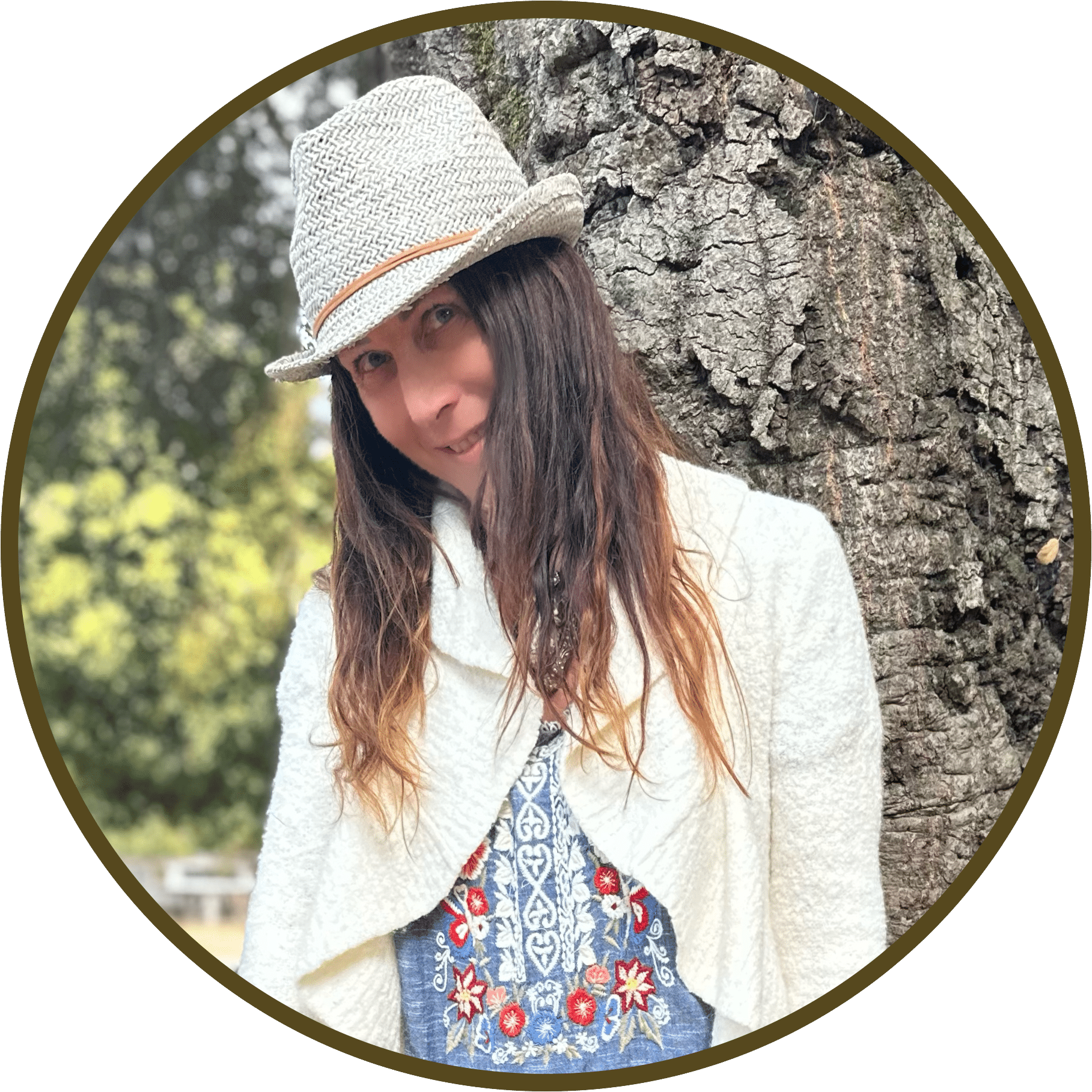
Renee Blodgett is the Founder and Managing Editor of We Blog the World, a global travel, culture and lifestyle publication exploring the world through the lens of meaningful experiences, human connection and cultural depth. Having lived in 10 countries and traveled to 95, Renee has spent much of her life immersed in the people, traditions, landscapes and ideas that shape how we experience the world.
Since launching We Blog the World in 2007, she has written and produced extensive editorial coverage spanning boutique and luxury travel, culinary experiences, arts and culture, wellness, adventure, technology, spiritual traditions and transformative travel. Her work is rooted in the belief that travel is about more than where we go—it is also about what a place, culture or encounter awakens within us.
Renee brings more than three decades of experience across journalism, photography, media, brand strategy, technology, wellness and global storytelling. She has worked with companies and organizations around the world on brand positioning, communications, product launches, media strategy, speaker positioning and storytelling. Through Blue Soul Media, she works with authors, entrepreneurs, thought leaders and purpose-driven brands to clarify their message and expand their impact, which includes speaker coaching/training for high-profile stages such as TED and bringing authors’ work to market while retaining authors rights.
She is also the co-founder of Blue Soul Earth, an educational platform exploring consciousness, ancient wisdom, spirituality, healing and the intersection between science and the nature of reality. Renee is the producer and host of the award-winning Blue Soul CHATS, a conversational series bringing together leading voices in science, technology, consciousness, wellness and spirituality.
Her growing body of work also includes Blue Soul Living, which extends her interest in consciousness and well-being into the spaces we inhabit, exploring how intentional design, energy and environment can support greater harmony and connection.
Renee is the award-winning co-author of the bestselling Magdalene’s Journey and founder of the Magdalene Collection, inspired by women’s voices, stories and wisdom across cultures and generations.
A longtime photographer and storyteller, Renee has documented people, places and cultures around the world and produced photographic collections focused on destinations including the Galápagos Islands, London, South Africa, Rome and Ecuador. She also co-founded Traveling Geeks, an international initiative that brought entrepreneurs, journalists, creators and technology leaders together with their counterparts in other countries to exchange ideas and explore innovation across cultures.
Renee’s work has been recognized by Forbes, the United Nations and others for her influence in media and social storytelling. Across her work in travel, media, consciousness and culture, a common thread remains: curiosity about the world, the stories that connect us and the ways meaningful experiences can change how we see ourselves and one another.