For the first time in history, science, spirituality, consciousness, technology, and culture are colliding in ways that are reshaping our inner and outer worlds. Sure, Plato and Aristotle talked about the soul thousands of years ago, and many renowned philosophers taught their own versions of it. We’ve come a long way since Einstein, Schrödinger, Planck, Pauli, Heisenberg, Bohr or even the more recent examples of Roger Penrose, who is a more recent version of brilliance that stemmed from the mathematical physics of general relativity and cosmology and naturally English theoretical physicist, cosmologist, and author Stephen Hawking who I once had an opportunity to meet.
Back then, we didn’t have access to the knowledge we have today—the mind-bending advancements in medicine (think epigenetics, stem cell research and applications, big data to help people with collective trauma or diseases) and the latest leaps in physics and biology (think Edward Witten, known for his groundbreaking work in string theory and quantum gravity and Lisa Randall who has made progress in particle physics and cosmology, including assessing the nature of dark matter and cosmological inflation).
Today, we are living in an age of rapid acceleration—not just in physics, science and technology, but in our understanding of what it means to be conscious, human, and interconnected with the onslaught of Artificial Intelligence (AI) everywhere we turn.

Consciousness: The Internal Frontier
It’s not just neuroscientists and physicists who are joining the conversation, but doctors, psychologists, biologists, musicians, producers and more. From quantum theories suggesting that consciousness might be a fundamental property of the universe, to brain–computer interface experiments allowing thought to control machines, we are finally bridging this ancient inner knowing (call it your Higher Self, innate wisdom or your noetic compass) with modern science through direct experience and empirical investigation.
We are moving beyond academic curiosity here. As we map the neural signatures of meditation, lucid dreaming, and altered states through MDMA, Ayahuasca, Frog Medicine or Mushroom Journeys, we are starting to gain deeper insight into our human potential. It raises the age-old question: What does it mean to truly be human today?
The old idea that consciousness is merely a byproduct of the brain is being challenged, and with it, the way we view our place in the cosmos. Visionaries like Dr. Eben Alexander, who, after a near-death experience (NDE), asserts that consciousness is not solely produced by the brain but is a fundamental aspect of reality that exists independently. Alexander suggests that the brain acts as a filter or reducing valve for consciousness, allowing access to it, rather than being its source. He’s not alone. The University of Arizona’s Dr. Gary E. Schwartz is renowned for his research on consciousness and related phenomena, and groups like IONS (Institute of Noetic Sciences) and CHI (Consciousness Healing Initiative) have peer-reviewed data that likely make materialists’ skin crawl.
Extending Mind and Body Through AI
When I started in the world of technology, I was working on client/server systems, word processing applications and productivity tools to make our lives more efficient, mostly in the office. Technology wasn’t yet integrated into personal lives, and we didn’t have cell phones. Today, technology has moved far beyond a set of tools. Some suggest that it is becoming an extension of our nervous system.
Say what?
Think about it. AI, in its early days, was mostly used to help people with disabilities. Think robots and speech recognition systems that could write what you said in real-time. I launched that one. (Dragon’s first large vocabulary speech recognition dictation software). Fast forward the clock and now we’re seeing AI process language, images, and even emotions at scales and speeds beyond our human capacity. Augmented and virtual realities create shared dreamscapes. Biotech innovations can edit DNA or restore lost senses. And it’s all happening at what feels like the speed of light.

The question must move beyond the most riveting one: “What should we build?” It’s not about quantity or super intelligence or productivity on steroids. In the age where we are still predominantly human, we need to ask: “What does it mean to be human? What do we want to become? And how do we build something that fully embraces these values?”
Remember that every technological advance reshapes culture and rewrites the boundaries of identity to some degree. AI has just made it more rapid and has blurred the lines between ethics and morality in some sectors.
We must be mindful as we create new solutions for future generations, infused with AI or not. We now stand at a threshold where the line between human and machine, natural and artificial, is becoming increasingly porous. And guess what? It’s up to us to define it, build it, shape it and create a bridge to what I call heart-centered living. Feminine values must be central and core to the world we are now trying to re-imagine: one not dictated by fear and divisiveness, but collaboration and connection.
Science as a Bridge Between Method & Mystery

New advancements in science are moving away from dissecting the world into separate parts, and recognizing the interconnectedness. They are also looking for ways to deepen the connection with our world, including each other. For example, ecological systems, planetary climate, the human microbiome, and even social networks all reveal patterns of interdependence. This beautifully mirrors ancient spiritual wisdom from masters across borders, that everything is connected. This wisdom, which even our indigenous elders of today still embrace, strongly suggests that humanity’s survival depends on living in alignment with that truth.
The Stories That Have Shaped Our Beliefs
Culture doesn’t live in a vacuum, of course. The stories, rituals and values bring us our beliefs. Our parents, teachers and politicians tend to shape how we think, the decisions we make, and the level of confidence we have to lead (or watch on the sidelines). For example, countries like the United States, pushed people beyond their limits, suggesting that “anyone can make it as an immigrant, including those who have been shunned or violated elsewhere.” This used to be the storyline, but in recent times, it is no longer a widely held view. Other cultures focus on collaboration and sharing or put the family first and center.
We all have a story.
What’s yours? Does it define you? Does it lead to a series of beliefs that no longer serve or support you?

Our story can sink us and keep us in trauma or it can serve as a reminder that we are so much more than our beliefs, which ultimately are the stories we tell ourselves over and over and over again. Neither define us. When we have a deeper and broader understanding of what it means to be human, we begin to look at these stories and beliefs differently. If we recognize our potential as Spirit or as consciousness that lives on, our understanding of the role we play on the planet shifts with it.
Sure, technology and science influence culture, but it is consciousness that gives this complex but fascinating combo meaning. In a hyper-connected world, cultural boundaries are both dissolving and being reasserted, largely because the collective consciousness is demanding it. You might say that we are simultaneously becoming a global village and a patchwork of fiercely defended identities all at the same time.
When I was at the height of my career in the technology industry, social media became a thing, an early thing. I’m talking about the original launches of My Space, Twitter, and Facebook. We often joked about it in casual conversations, but also on panels. The leading line might be something along the lines of: The World has a Megaphone—what will you say on yours?
Suddenly, the world had access to online platforms without a personal website. It wasn’t just artists, musicians, and storytellers who could reach millions instantly with their message, but every Tom, Dick and Jane, at least in the Western world. Years marched on, and that extension started moving East and then South. Given the proliferation of cell phones in Africa, teenagers in villages now have access to data from other teenagers on the other side of the world, whether it’s a blog post, poem, song, dance or plea for help. Anyone can spread ideas that can inspire unity or widen division. Ask a millennial or a Gen Z’er: Memes can now travel faster than movements. When a culture aligns with conscious intention, it becomes a powerful force for evolution, as it raises the collective consciousness to something more meaningful.
The Call for a New Renaissance
Might we call this a New Renaissance? We’ve had others, but unlike the past, we are being called to step up. It’s not just about novel and brilliant ideas that bring science, technology and consciousness forward, but it requires deep wisdom from a part of ourselves we may not yet fully understand.

How can we use these powers to deepen compassion, expand awareness, and create cultures and ways of living that honor both diversity and unity? Embrace a heart-centered life?
Our tools are becoming more powerful as AI rapidly and profoundly transforms the way things are done and understood. It’s only been 2.5 years since we’ve lived with Chat GBT and we’re already asking it and other tools of its ilk, everything. Literally.
College kids are turning to it for mental health advice and kids are using it to finish their homework faster. Large organizations are using it to handle support. Politicians are using it to influence populations. It begs the question: What will happen to our critical thinking? But that’s a topic for another article.
In this wild New Renaissance period, our science is revealing even more mysteries, and spiritual thinkers are thrilled it’s finally catching up to the innate wisdom we’ve always known, until that is, we forgot. And until we began to live so fast, that we no longer plugged into silence, the quiet of the void and our soul’s needs.
We are remembering again what we always knew, and science is drawing parallels to help us navigate this exciting new terrain. We’ve begun to see how our culture is more interconnected than ever before.
If we marry the precision of science (and even some of its inprecision) with the depth of consciousness, and the advancements in technology with the creativity of our cultures and customs, we may just create a future that is not only more progressive than we’ve ever thought possible, but more awake.
As the world wakes up one soul at a time, we face choices: Fear to face the unknown or perhaps even the known that is trying to stifle our independent voices, or we can choose empowerment to embrace the power we have as human beings, both individually and collectively. Lest not forget, we are stronger together and united than siloed and alone. Remember our mutual interests, passions and desires. Once we focus on this unity, we will get more of the same.
Where would you prefer to live?
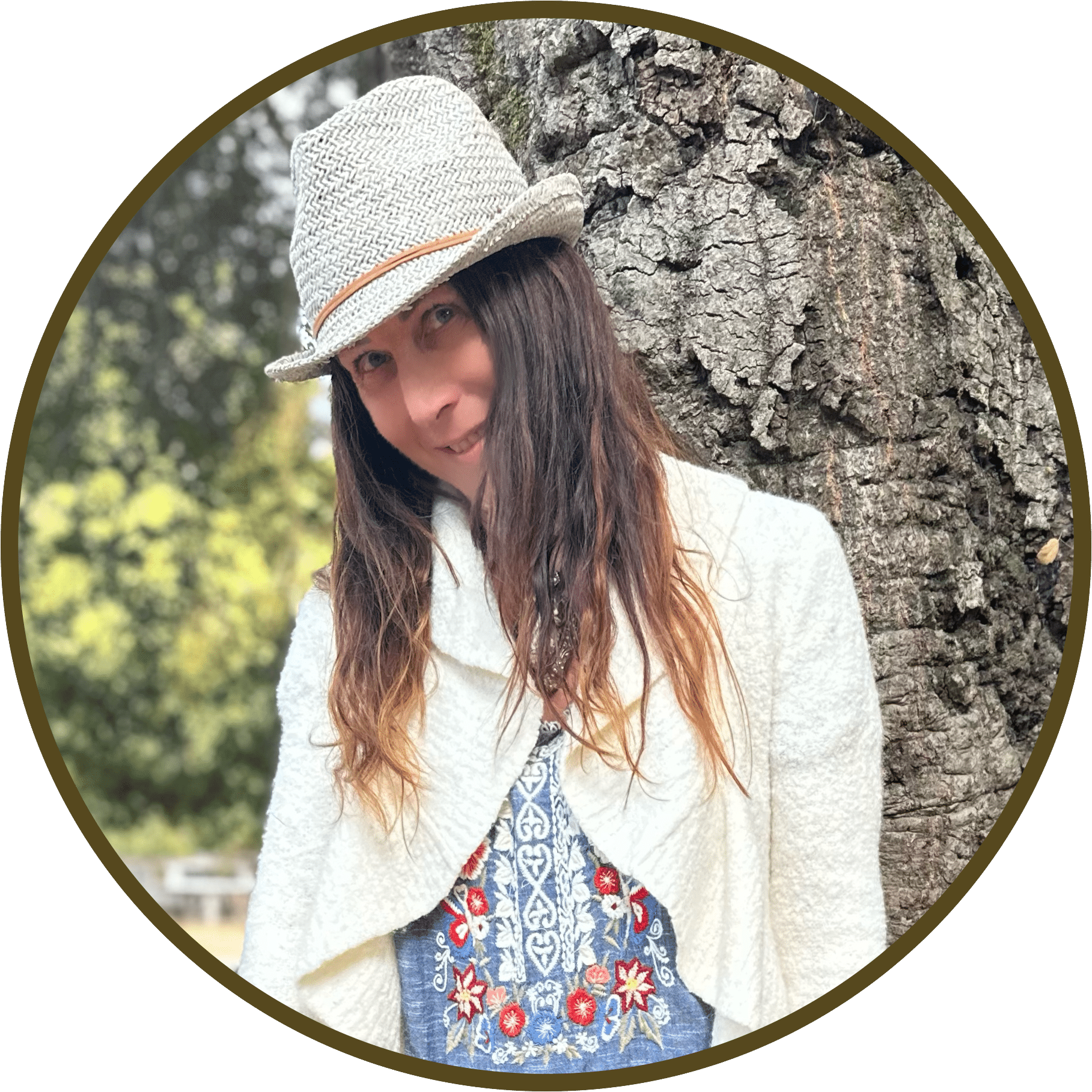
Renee Blodgett is the Founder and Managing Editor of We Blog the World, a global travel, culture and lifestyle publication exploring the world through the lens of meaningful experiences, human connection and cultural depth. Having lived in 10 countries and traveled to 95, Renee has spent much of her life immersed in the people, traditions, landscapes and ideas that shape how we experience the world.
Since launching We Blog the World in 2007, she has written and produced extensive editorial coverage spanning boutique and luxury travel, culinary experiences, arts and culture, wellness, adventure, technology, spiritual traditions and transformative travel. Her work is rooted in the belief that travel is about more than where we go—it is also about what a place, culture or encounter awakens within us.
Renee brings more than three decades of experience across journalism, photography, media, brand strategy, technology, wellness and global storytelling. She has worked with companies and organizations around the world on brand positioning, communications, product launches, media strategy, speaker positioning and storytelling. Through Blue Soul Media, she works with authors, entrepreneurs, thought leaders and purpose-driven brands to clarify their message and expand their impact, which includes speaker coaching/training for high-profile stages such as TED and bringing authors’ work to market while retaining authors rights.
She is also the co-founder of Blue Soul Earth, an educational platform exploring consciousness, ancient wisdom, spirituality, healing and the intersection between science and the nature of reality. Renee is the producer and host of the award-winning Blue Soul CHATS, a conversational series bringing together leading voices in science, technology, consciousness, wellness and spirituality.
Her growing body of work also includes Blue Soul Living, which extends her interest in consciousness and well-being into the spaces we inhabit, exploring how intentional design, energy and environment can support greater harmony and connection.
Renee is the award-winning co-author of the bestselling Magdalene’s Journey and founder of the Magdalene Collection, inspired by women’s voices, stories and wisdom across cultures and generations.
A longtime photographer and storyteller, Renee has documented people, places and cultures around the world and produced photographic collections focused on destinations including the Galápagos Islands, London, South Africa, Rome and Ecuador. She also co-founded Traveling Geeks, an international initiative that brought entrepreneurs, journalists, creators and technology leaders together with their counterparts in other countries to exchange ideas and explore innovation across cultures.
Renee’s work has been recognized by Forbes, the United Nations and others for her influence in media and social storytelling. Across her work in travel, media, consciousness and culture, a common thread remains: curiosity about the world, the stories that connect us and the ways meaningful experiences can change how we see ourselves and one another.