Is anyone else feeling beaten up by the relentless volume of social media posts begging us to pay attention to more and more destructive behavior? What was once somewhat isolated to our own backyard is increasingly on the world stage.

Having lived in eleven countries and traveled to more than ninety-five, I’ve seen a lot in my life. I traveled to the Eastern Bloc when it was still known as the Iron Curtain and lived in places where war was waging. Friends had gas masks, people hid, women had no voice, and in some places, the freedom to roam and say what you wanted wasn’t a given. My journey is a far cry from those who survived the Holocaust or as an Afghan woman under the Taliban, but I’ve witnessed more atrocities than many. I merely mention this to provide a foundation for how I see the world.
Having a lived understanding of what democracy is—by having seen, studied, and experienced what it is not—fundamentally changes how its erosion is perceived. When you know the feel of censorship, the quiet normalization of fear, the narrowing of acceptable thought, the replacement of consent with compliance, you don’t mistake these shifts for temporary disorder or political theater. You recognize them as patterns. From that vantage point, the dismantling of democratic norms is not abstract or distant; it is visceral and immediate. What others may dismiss as dysfunction or polarization registers instead as something far more serious: the early stages of a system forgetting its own foundations . . .
- Forgetting its values
- Forgetting what it means to be human.
- Forgetting that we are all immigrants in one way or another.
- Forgetting basic dignity.
- Forgetting period.
Forward wind the clock.
After many years on the road, I returned to the States and dove into healthcare and tech with vengeance. Truth be told, I’ve always been pretty good at unplugging from the digital grid, even when I was engulfed by it as a branding consultant to start-ups and entrepreneurs. As astonishing as this may sound, when I led broadcast media training groups at one of the top tech PR firms in the country, I didn’t even own a television. It was all noise in the field for me, yet I seemed to have a natural grasp of a good storyline and how to pitch it with ease. I could plug in and out without feeling the effects of negative news . . . even treacherous news. It’s as if I built up an immunity to it so I could navigate the media landscape with ease and grace. I also knew many of the journalists personally and respected their views and ethics—you know who you are. It was easy to work with people you knew were conscious. It came from years of building trust. Your word meant something. Dignity and ethics meant something.

What didn’t serve a conscious end, I saw as theatre and was able to move about my life knowing it was just theatre.
These days, I am mostly interested in the bridge between spirituality, science and technology. My partner and I are launching a wisdom school for modern times called Blue Soul Alchemy in the Spring. We teach that everything is divine. That the answers lie within. That searching out there diminishes your own source of inner wisdom. And deep down, I believe that everything has a higher purpose and is ultimately playing a role in elevating collective consciousness.
And yet, I’m also human, and my heart naturally aches when I see people being dragged from their homes, babies separated from their mothers and violence toward non-violent protestors in American streets. The latter is protected under a democracy, or is it?
I recently received texts from a couple of old friends from Munich who were there for the annual DLD Conference. My heart stopped when they came in, for I had attended this thought-provoking event year after year until I could no longer afford the thousands to enter. I went to TED for years, too, and both events draw multi-millionaires and billionaires.
I realize this chapter of my life was spent in a Silicon Valley Bubble, yet I loved attending those gatherings and others of their ilk. You see, I met many genuinely conscious people who wanted to make the world better—among them billionaires, including some who no longer appear to act from that place, if they ever truly did. Perhaps the dissonance was always there, simply obscured by proximity and polish. Corruption, after all, rarely arrives alone; it multiplies quietly.
And corruption begets corruption.
After seeing the posts from Davos, something in me finally snapped. I’m usually able to hold troubling news within a larger sense of purpose, but watching public laughter over Canada distancing itself from the United States was beyond unsettling.
Having traveled the world for decades, this wasn’t the first time I felt a quiet shame about openly carrying the stars and stripes. Most people understand that a nation’s leadership doesn’t always reflect the conscience of its people—but that grace is harder to extend when the country in question is a democracy, where responsibility is assumed to be shared.
It made me want to hide in a corner and wrap myself up in a blanket, but without a cozy cup of tea or a fire. I just wanted to disappear. Yet, I have faith in something larger than myself, even when the news invites us to be part of its insanity and divisiveness, focused on clickbait rather than on uniting us as a species. Clickbait rather than offering us a path back to our shared essence.
The Mirror of Our Times

Social media echo chambers amplify our differences, political discourse has devolved into tribal warfare, and the very concept of shared truth seems to have fractured. Yet within this chaos lies a deep invitation—a call to remember something our ancestors understood deeply: the fundamental interconnectedness of all existence.
Ancient sages, mystics, and philosophers didn’t have Twitter (X) or network news, but they grappled with the same human tendencies toward division, fear, and the illusion of separation that plague us today. Their insights, refined over millennia, offer not escape from our current reality, but a transformation of our relationship to it.
Returning to Oneness Across Lineages
Buddhism reveals how our individual well-being is inseparable from the well-being of the whole. When we truly grasp this, political opponents transform from enemies to fellow travelers caught in their own suffering and conditioning.

The Sufi poet Rumi captured this beautifully: “You are not just the drop in the ocean, but the entire ocean in each drop.” We use similar references in our own teachings: “You are a grain of sand, but you’re also the entire desert itself,” and as Ram Dass, Deepak and many others have taught, the universe is in us as much as we are in it.
Indigenous wisdom traditions worldwide speak of the web of life, where harming one part inevitably harms the whole. Don’t see it as a metaphor, but more of a recognition of how consciousness itself works at the deepest level.
The Ego’s Political Theatre

It feels as if this innate understanding is currently unraveling. A doctor friend of mine who travels in high-profile circles recently shared a Facebook post showing a graph from Nature.com of scientific research and support within our borders being eroded over the past year.
It was deeply saddening to witness; however, beneath the emotional response, a more pressing question emerged: What is the spiritual meaning of this moment? What does it reveal when something of genuine consequence is so casually dismissed as pseudoscience or “fake news,” despite decades of global evidence and the testimony of respected experts?
At a deeper level, this dismissal signals a rupture between knowledge and wisdom. Spiritually speaking, it reflects a collective retreat from humility, the willingness to admit uncertainty, to listen across disciplines, and to remain open to truths that challenge convenience or power. When evidence is ignored not because it is weak, but because it is inconvenient, consciousness contracts. It is a forgetting of our responsibility to truth, to stewardship, and to one another.
Much of the political divisiveness we are now seeing stems from what the Hindus call maya—the veil of illusion that makes us believe we are separate, isolated beings whose survival depends on defeating “the other.” The ego-mind, evolved for physical survival, creates stories of us-versus-them that feel absolutely real and urgent. But what is ultimately true?

Buddhist psychology identifies this as the Three Poisons:Greed (attachment to our way being right), Hatred (aversion to opposing viewpoints), and Delusion (the belief that our perspective is the only valid one). These mental formations cloud our ability to see clearly and, more importantly, to feel into what truly matters.
Consciousness as the Bridge to Healing
When we recognize that the same awareness looking out through our eyes is looking out through every other person’s eyes—regardless of their political or religious beliefs—compassion becomes a higher calling. The Sufi mystic Ibn Arabi called this wahdat al-wujud—the unity of being, which I love.
This doesn’t mean all political positions are equally valid or that we shouldn’t stand up for our values. Rather, it means we can engage from a place of wholeness rather than fragmentation, seeking to understand rather than merely to defeat. This is why non-violent acts of unity and strength are so vital right now. And might I add, deep listening.
The Jewish tradition of shema means “to hear” or “to listen deeply which is a spiritual practice across all lineages. I referenced Thomas Hubl’s language for it in a previous post, largely because I just finished one of his books – he calls it attunement, which is a great word for it. In other words, I am attuned to you when I listen from a place of presence.
When we listen to someone with whom we disagree—not to change their mind or to prove them wrong, but to genuinely understand their perspective—we create space for healing. This doesn’t mean abandoning our convictions but rather approaching dialogue as an opportunity for mutual discovery rather than conquest, where the ego thrives. Even if we don’t see it in the White House or from other political leaders and corporate CEOs, it doesn’t mean we can’t be the example for others to follow, starting in our own backyards. Thank you, Gandhi, for wearing that advice on your sleeve every day.
The Hindu practice of namaste—recognizing the divine light in another—offers a powerful antidote to dehumanizing political rhetoric. When we encounter someone wearing a red hat or a blue button, can we first see the consciousness behind the symbol? Can we have an awakened heart that can hold both truth and compassion simultaneously? Challenging to be sure, but it’s practice. Spirituality is a way of life, not something that comes from an Ayahuasca journey or attending Burning Man on shrooms. It takes daily practice to cultivate compassion and inner stillness.
Many years ago, I was at a Tony Robbins conference, and the words flashed on the screen, “The World Surrenders to a Quiet Mind.” Certainly, spiritual greats can do this through their inner stillness and presence. My response, however, was something I didn’t expect. I began weeping. Deep down, I knew this universal truth, and it washed over me.

A quiet mind comes from stillness and flowing with the natural laws. Taoists call it wu wei—acting from a place of naturalness rather than forced effort.
The last week has been particularly challenging for me. At a time when we are launching a new program, the little (and noisy) voice inside my head didn’t stop: What if people don’t see the value in ancient wisdom and want a more sensational approach that better aligns with modernity? What if the message of love, connection, unity, and the kingdom lies within each and every one of us, isn’t enough?
Part of it is the mirror reflection of the outside world, feeling as if it is falling apart, when deep down, I know that it’s all an illusion. It’s simply theatre, and we are co-creators of the play.

I love what Thich Nhat Hanh calls “deep democracy”—political engagement rooted in love rather than fear. I think about how I dreamed of meeting him one day because his teachings resonated so deeply with me, yet his Spirit lives on, and his wisdom still teaches me in both surprising and unsurprising ways.
A Spiritual Crisis?
As we heal the illusion of separation within ourselves, we become agents of healing for the collective. That awareness is what we need to cultivate in each other to heal what is broken. We are the ones we are searching for, and as the profound ascended master Yeshua (Jesus) once taught, the kingdom lies within.
How to Calm the Noise
I looked out at the lagoon, with the winter birds and ducks sitting in their silence, immune to the news from Davos, Israel, Minneapolis, China, Russia, and the Ukraine. They were frolicking in the water, aware of the beauty of the present moment. And what a sight it was—all around me was beauty.

While the East Coast was getting hammered with sub-zero temperatures, I could walk out my door and bask in the sunshine. Gratitude returned. It wasn’t immediate, but it made me think of so many who were struggling with issues far greater than mine. Five friends facing stage four cancer, another friend who just lost a family member, and those who were separated from their loved ones in an ICE raid. The list goes on.
Ironically, when I was feeling the dullest, the loneliest and the weakest, one of my early spiritual mentors from the East Coast called out of the blue. Shortly thereafter, there was a text from a client I hadn’t heard from in years, asking if I was okay during this challenging time.
When gratitude returns, and you can truly feel it, it becomes a spiritual moment. It served as a reminder of what I already knew to be true, yet it also shows that, in our humanity, we will have these defeatist moments. When they surface, turn inward and then out to your community; it’s not an either-or, it’s a both. If you don’t have a community that supports and nourishes you, find one.

The Importance of Community

The core foundation of our award-winning book, Magdalene’s Journey, is that love is the glue that binds communities together. Love isn’t just a feeling but an organizing principle of reality itself. Love can provide the foundation from which we can engage even in the most challenging political realities with both courage and compassion.
I love this quote by Kabir: “The truth is, we are all walking each other home.” In our politically fractured time, perhaps our highest calling is to remember this truth and to live it, one conversation, one relationship, one moment of conscious choice at a time. I am proud of how Minnesota citizens are standing up for peace and unity at a time when their beautiful city feels like it’s under attack. Whether this is a “truth” for you or not, it’s a feeling that many people feel, and shouldn’t be dismissed. In our humanity, we need to see with the eyes of love and compassion, not through political lenses.
Ancient wisdom lives not in the past but in the eternal present moment, where all transformation occurs. The question is not whether we can heal our divisions, but whether we’re willing to remember who we truly are beneath all the noise. In that remembering lies our hope—not just for political healing, but for the birth of a truly conscious civilization.
SO, what does it mean to be conscious for you? Can you feel it when it erupts inside you? How does it send you signals? Please share your thoughts and insights.
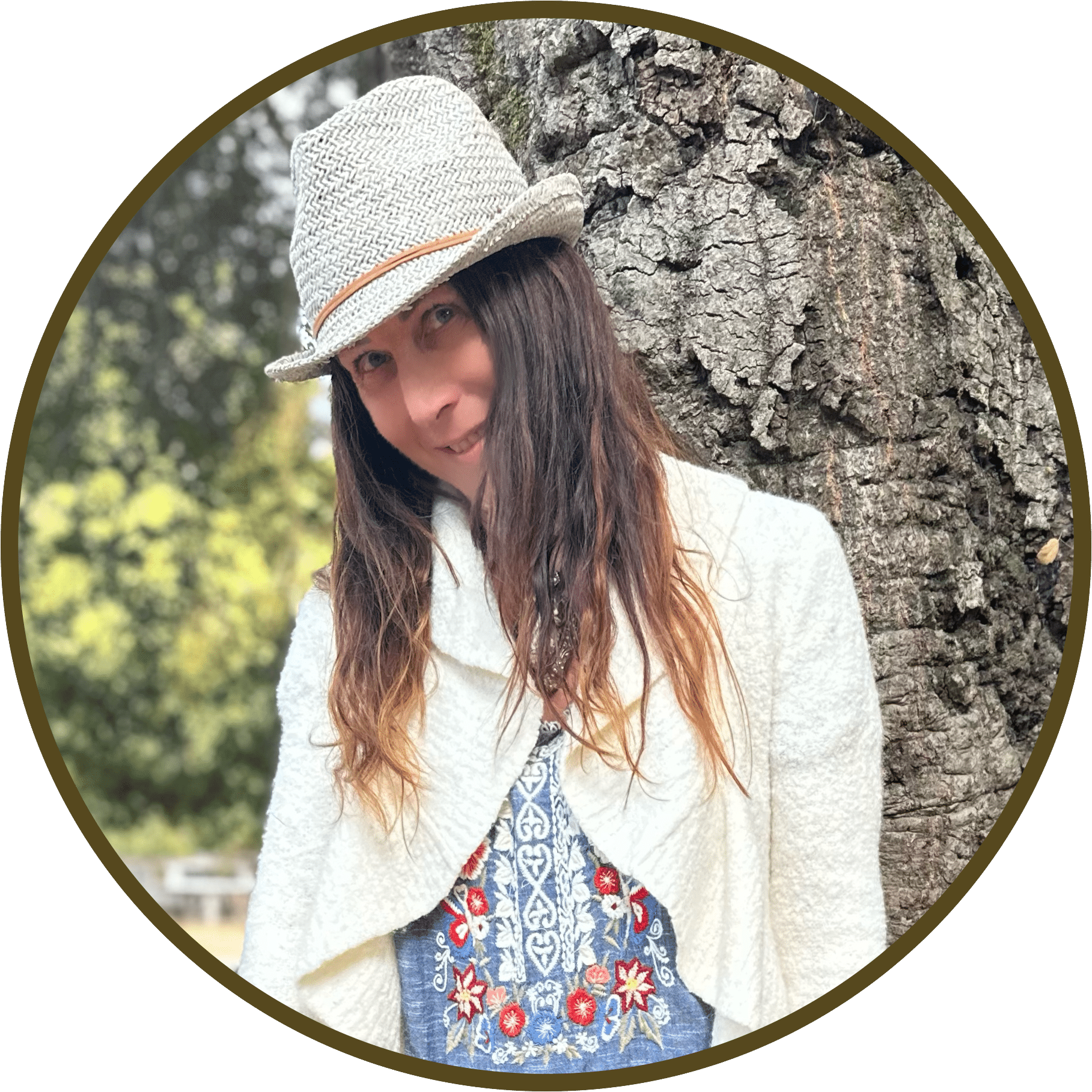
Renee Blodgett is the Founder and Managing Editor of We Blog the World, a global travel, culture and lifestyle publication exploring the world through the lens of meaningful experiences, human connection and cultural depth. Having lived in 10 countries and traveled to 95, Renee has spent much of her life immersed in the people, traditions, landscapes and ideas that shape how we experience the world.
Since launching We Blog the World in 2007, she has written and produced extensive editorial coverage spanning boutique and luxury travel, culinary experiences, arts and culture, wellness, adventure, technology, spiritual traditions and transformative travel. Her work is rooted in the belief that travel is about more than where we go—it is also about what a place, culture or encounter awakens within us.
Renee brings more than three decades of experience across journalism, photography, media, brand strategy, technology, wellness and global storytelling. She has worked with companies and organizations around the world on brand positioning, communications, product launches, media strategy, speaker positioning and storytelling. Through Blue Soul Media, she works with authors, entrepreneurs, thought leaders and purpose-driven brands to clarify their message and expand their impact, which includes speaker coaching/training for high-profile stages such as TED and bringing authors’ work to market while retaining authors rights.
She is also the co-founder of Blue Soul Earth, an educational platform exploring consciousness, ancient wisdom, spirituality, healing and the intersection between science and the nature of reality. Renee is the producer and host of the award-winning Blue Soul CHATS, a conversational series bringing together leading voices in science, technology, consciousness, wellness and spirituality.
Her growing body of work also includes Blue Soul Living, which extends her interest in consciousness and well-being into the spaces we inhabit, exploring how intentional design, energy and environment can support greater harmony and connection.
Renee is the award-winning co-author of the bestselling Magdalene’s Journey and founder of the Magdalene Collection, inspired by women’s voices, stories and wisdom across cultures and generations.
A longtime photographer and storyteller, Renee has documented people, places and cultures around the world and produced photographic collections focused on destinations including the Galápagos Islands, London, South Africa, Rome and Ecuador. She also co-founded Traveling Geeks, an international initiative that brought entrepreneurs, journalists, creators and technology leaders together with their counterparts in other countries to exchange ideas and explore innovation across cultures.
Renee’s work has been recognized by Forbes, the United Nations and others for her influence in media and social storytelling. Across her work in travel, media, consciousness and culture, a common thread remains: curiosity about the world, the stories that connect us and the ways meaningful experiences can change how we see ourselves and one another.