How many of you are feeling a growing disconnect from an inner truth that doesn’t seem to find its way into our media, governments, healthcare system, schools and universities or even the exchanges in our communities? We experience snippets of it here and there, but we typically find it in small gatherings or over lunch with a close friend. Many feel as if ethics, human kindness and dignity are being zapped from this universal thread we call life.
Beneath the surface of modern life, often drowned out by notifications, deadlines, social media AI posts and the constant pull of urgency, many ache for deeper connections with people, but also with our environment. Even for those who grew up in cities, it’s undeniable that we become more present when we spend time in nature without distractions.

You see, Gaia or Mother Earth IS us. In other words, we’re not separate from nature, but rather expressions of the same living system we so often treat as external. It’s an illusory view that we are separate from that which we are made up of and that which has formed us.
In celebrating Earth Day, which arrives each year as a gentle interruption, we are reminded not just to consume less or recycle more, but to reconnect with something deeper. It was born during a time when environmental damage was becoming impossible to ignore: oil spills, polluted rivers catching fire, smog-choked cities, and widespread pesticide use. Over 20 million Americans, thousands of schools and universities, and communities came together, making it one of the largest civic demonstrations in U.S. history. Thankfully, these protests led to major policy shifts, including the creation of the Environmental Protection Agency, the Clean Air Act and the Clean Water Act.
How quickly we forget. It becomes a marked day on the calendar that even bypassed me this year because I was so busy with my countless to-do lists.
Still, more than 190 countries observe it, making it one of the largest civic events on the planet, and its message combines environmental activism, education, spiritual reflection and community engagement. It’s a great time to reflect upon and honor the way showers who were driving forces, such as Rachel Carson and her book Silent Spring, John Muir, who saw wilderness as something truly sacred, Green Belt Movement founder and Nobel Peace Price winner Wangari Maathai, who mobilized rural women to plant millions of trees, climate change advocate Greta Thunberg, and one of my all time heroines Jane Goodall who stood up for global conservation, emphasizing the interconnectedness of all living beings.

I also recently reread Braiding Sweetgrass by Robin Wall Kimmerer for our book group, where the author’s incredible Indigenous storytelling beautifully showed an ecological consciousness grounded in reciprocity, gratitude, and an interconnectedness with the natural world.
But the challenges have become more complex and, in many ways, have been reversed by the decisions of powerful people and corporations, where accountability has largely been ignored. Think: climate change, loss of biodiversity, deforestation (I witnessed this firsthand in South America and Africa), and the degradation of our oceans, which I also experienced when snorkeling in places that used to be full of life and are now dead. Underwater, with my mask fogging up, I felt my heart ache.
Ancient traditions have always intuitively understood our connection to nature, and modern science now confirms it through ecology, systems theory, and even astrophysics.
Seasonal Cycles & Rituals, and Living in Rhythm

How often do you walk barefoot on the earth, or were you told it was dangerous or primitive to do so as a child, so you no longer do? How often do you sit in stillness without distraction—specifically in nature? Meditation apps are on the rise, but when I ask around about how people use them, it’s usually at the office, before they head off to work, or even in their cars. This obviously helps; if your life is so busy that you commit to making time wherever you are, it’s better than no stillness at all. That said, when you move that stillness time to nature, something primal shifts in you, and there’s a deep remembering. The symbolism of each season comes alive because you see it all around you. And more importantly, feel it.
- Spring → renewal, fertility, awakening
- Summer → vitality, growth, abundance
- Autumn → harvest, gratitude, release
- Winter → stillness, reflection, restoration
Enter the Sun
Small acts restore rhythm. It’s no wonder that ancient traditions paid homage to the sun, since many saw it as the source of our life force. I find it astonishing that so many years ago, they inherently understood the sun’s value when starting your day, and now we have grounded research in biology, circadian rhythms, and nervous system regulation to confirm it. The ancients understood that how you begin your morning shapes how your body and mind function for the rest of the day—and the rising sun became a natural anchor.

Early sunlight exposure sets your circadian rhythm (your internal clock), triggers cortisol awakening response (balance), signals your brain to start producing melatonin later at night (better sleep) and regulates mood-related neurotransmitters like serotonin. So while ancient traditions described this as absorbing “life force” or “vital energy,” today we might explain it as light-driven biological regulation.
In ancient Indian practice, especially within early Vedic culture, the sun (Surya) was seen as a source of both physical and spiritual vitality. For example, they performed morning rituals they called Surya Namaskar (Sun Salutations) to help align the body with natural rhythms. Many Indigenous and Pagan traditions also honored these transitions through rituals and ceremonies.
A Biological Reset
Our bodies are intelligent and naturally tap into ancient regulatory pathways. Nature activates them.
Research shows that:
- Spending 20–30 minutes in nature daily significantly lowers cortisol (a stress hormone)
- Time in forests improves immune function and increases natural killer cell activity
- Exposure to natural light helps regulate circadian rhythms and sleep cycles, as I mentioned earlier
- Nature immersion reduces anxiety, rumination, and mental fatigue
This is one of the reasons why practices like forest bathing have become so popular and powerful.
People often say that somewhere along the way we forgot, but I’d argue that it was driven out of us through conditioning, as a way to remove our agency and our intuitive connection to ourselves.
Reconnecting to Silence
Silence is far from emptiness, it’s presence. Years ago, at a Tony Robbins conference, I heard something that stopped me in my tracks: The World Surrenders to a Silent Mind. I was so moved by it that it became a core saying on my blog, and I even put it on the back of my business cards. Yep, it resonated that deeply.
Sitting outside in nature requires less effort. Awareness expands without any force. Our thoughts begin to untangle, our breath naturally deepens, and somewhere in that process, clarity comes through. Think of it as biological and spiritual alignment happening simultaneously.

Renee in the glaciers of southern Chile

Renee in Iceland
I remember many of those aha moments I had in the middle of nowhere — it was just Gaia and me, and I felt so alive. I felt connected. And as odd as this sounds, I felt love. The unconditional interconnected kind, the kind that some people find in God or a God. Gaia is my God. Gaia is my Goddess. And Gaia is my source of inner knowing. I’d add, it’s never a one-way street — we’re participants in the process, always, whether we realize it or not. It’s how our internal compass remembers itself . . . our Higher Self and all the ancient wisdom that is truly connected to everything.

Landmannalaugar Canyon
Let’s now move from our landmass and the Earth to the cosmos.
The Stars: The Science of Interconnection

Astrophysics tells us that the carbon in our cells, the calcium in our bones, and the iron in our blood were all formed in ancient stellar explosions. That cosmic material has become what we call life. We depend on oxygen from trees, soil ecosystems sustain plant and microbial life, and forests communicate through underground networks. Peter Wohlleben’s book The Secret Wisdom of Nature offers some mind-bending research about plant and tree communication.
Nature is not separate from us—it is a continuum within us.
We are not in nature.
We are nature.
The Bridge Between Humanity, Gaia & the Cosmos
Ever since I was a child, I have felt an inherent interconnectedness with Gaia, but I didn’t realize it extended beyond Earth, despite my mesmerizing experiences with telescopes and the stars at a young age. It was only much later in life that I began to learn about this deeper (and wider) connection.
The same forces that shape galaxies shape ecosystems. The same elements in distant stars exist within us. People describe this during medicine journeys—their oneness with the galaxy and beyond.
I’ve stayed clear of Ayahuasca, not so much out of fear, but because it intuitively feels too harsh for me. That doesn’t mean I haven’t seen benefits from others’ experiences, when guided by a well-trained, legitimate and ethical facilitator. I did fear ecstasy, largely because I’ve known people who overdosed or had bad experiences when not facilitated. Today, we refer to it mostly as MDMA or “Molly,” which seems to break down the walls between Self and the Other in profound ways.

Medicine journeys, including entheogenic plants or non-pharmacological methods like drumming, can serve as a bridge to cosmic understanding by temporarily dismantling the ego’s rigid boundaries. I am starting to see that people who fight or resist this process are afraid of that dismantling, which is understandable. I don’t say this to suggest that everyone should go on a medicine journey, but to point out the merits of it in helping people feel a direct, felt perception of being part of a larger, unified system rather than separate from the All That Is. There are other ways that open the door as well, such as sound frequencies.
For those who have grown up in a world that dictates God is separate from and far beyond any of us (the three Abrahamic religions, for example), it can be terrifying to have an experience of that oneness and realize that you, too, are Source, not separate from it. Belief systems will be immediately challenged, and when we’ve grown up praying to God (or a God), asking for help or inner peace, then where would we go if that perception faded away? This is why I used the word “terrifying” rather than “challenging”. It will literally feel as if your entire foundation for how you view the world (and your spirituality) will shatter in a million pieces.
Many of these plant medicines deactivate the Default Mode Network (DMN) in the brain, which gives us our sense of separateness and identity. This is one of the reasons why, btw, that most traditional mystery schools start with the dissolution of Self, not because identity is a bad thing, but because it claims jurisdiction and our beliefs over our infinite self (or the soul or spirit self), the one that dissolves into the oneness of our existence. It melds (and melts) into unity consciousness. It’s a merging of sorts.
Most people aren’t willing to go there. Or if they do, they stop at the intellectual curiosity and understanding of it, but fear putting it into practice and by practice, I mean embodiment, which is where the real magic happens: when we embody a wisdom so deeply that it simply becomes us.
From this place, there’s no longer a need for spiritual experts, gurus, rabbis, priests, ministers, imams, or monks. You begin to look to (and toward) inner guidance, as the prophet, shaman and spiritual master Yeshua (Jesus) taught so controversially over two thousand years ago: the kingdom lies within. There are no laws beyond what he called the natural laws. It was radical for the time, and it still is in many circles where the conditioning is so deeply rooted. There’s no longer a need for costumes, symbols and gear that shout to the world: “I am THIS, but not THAT.” Certain language and wearing things that give us labels keep that separateness alive, but most people don’t see it that way. They might say, “It’s who I am,” or “It’s tradition,” without realizing these symbols keep old ideas of religion and cultural separation alive in us. Think epigenetics, which we still haven’t fully comprehended, but the evidence is there.
This is precisely why identity is a fundamental starting point for mystery and wisdom schools that focus on universal truths rather than subscribing to any one ideology or system.
To embody that oneness, it needs to show up in all areas of our lives, and identity gets in the way. We need not look far in our modern world to see example after example of this at play. Those who hang on will fight tooth and nail that this isn’t true, for letting go feels like a death.
This is why medicine journeys are shifting consciousness so profoundly right now.
Kanna is often referred to as a natural heart opener, and for some, that oneness feeling and connection also occur, as they do with San Pedro (Huachuma). In Transpersonal Psychology, some see these experiences as ways for the individual to feel that interconnection to both the known and the unknown. As a result, it sometimes gets dismissed as mere imagination, but what if imagination is simply a pathway to more expanded dimensional realities?
You can also see it as a non-dual reality, which, ironically, is also what Yeshua and other lesser-known spiritual masters taught in ancient times. When this distinction or barrier between the Self and the cosmos vanishes, we can experience transformative insights into our purpose and the sacredness of life.
Perhaps, just perhaps, we are having one experience in a multidimensional layer of an interwoven, infinite cosmic fabric we’ve yet to fully understand.
The boundary between Self, nature and all living things is thinner than we think. We are an expression of the cosmos, perhaps a localized form of something vast and intelligent, whether we call it God, the Goddess, Great Creator or Great Spirit, the Cosmic Soup, Allah, Elohim or Universal Consciousness. Note that only the Goddess and possibly the Great Creator in this limited but most well-known list humanity uses take on a feminine form.
So, my title of this piece is more than just our place in nature; it’s our oneness with it. We are both participants and observers. What we do to the planet, we do to ourselves. But when we reconnect to that innate wisdom within, something significantly shifts, and the results are huge:
- Our presence becomes deeper with loved ones, but also strangers.
- We realize that learning and becoming something or someone with a title, ideology, religious belief, or label is meaningless.
- Life isn’t a race.
- We act more consciously and make decisions that serve and unite, rather than disconnect us or destroy.
- We begin to live with reverence.
- We not only understand what the word grace is at the core of our being, but we become it.
Remember, dear friends, we are the trees, in another form. We are the rivers, the soil, the air. We are stardust—awake and breathing. In a world that feels divided with far too many fragmented ideologies, practice becomes our transformation.
In the process, we become whole and realize that nature and treating Her as You and vice versa is perhaps the best medicine for our bodies, minds and souls.
Thanks for listening.
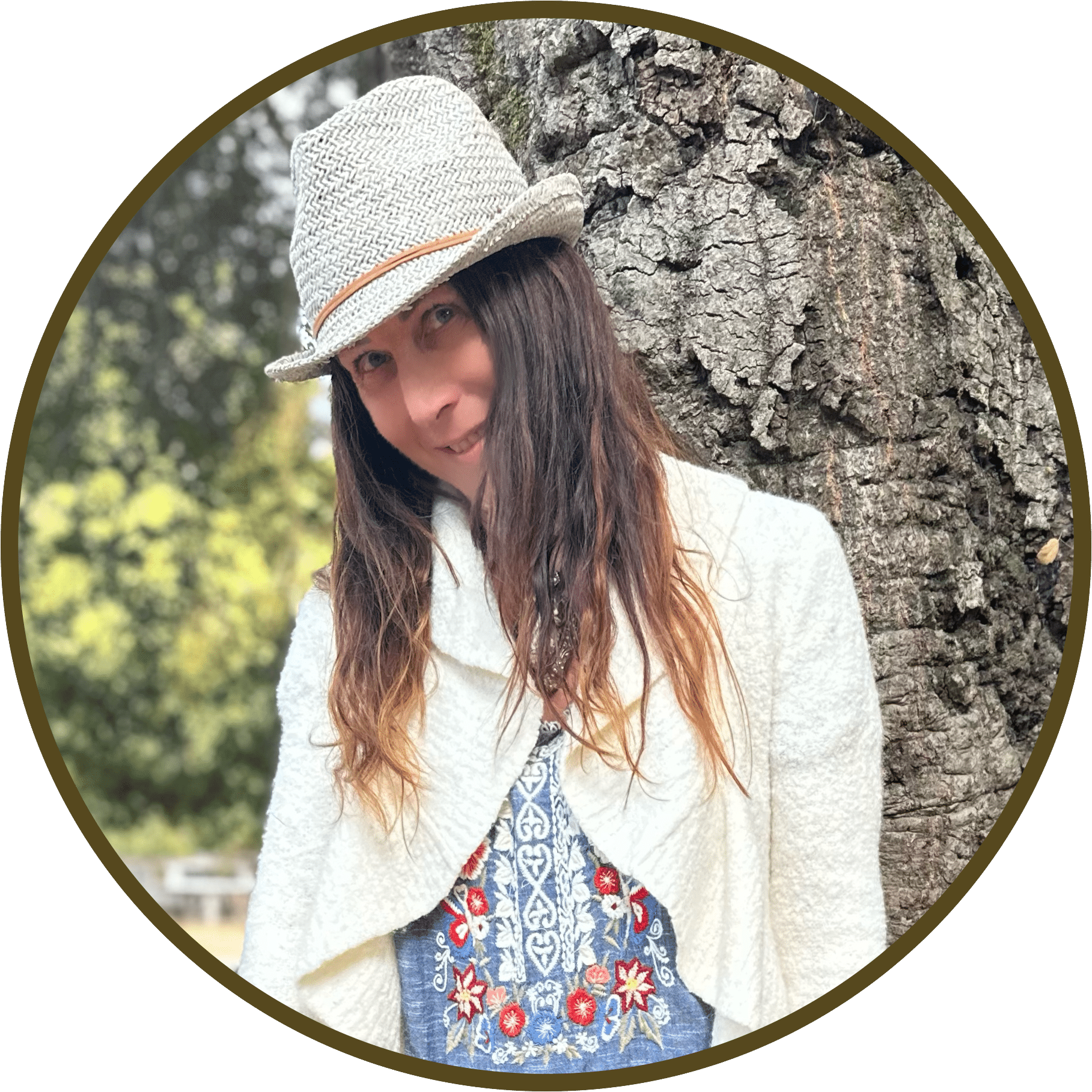
Renee Blodgett is the Founder and Managing Editor of We Blog the World, a global travel, culture and lifestyle publication exploring the world through the lens of meaningful experiences, human connection and cultural depth. Having lived in 10 countries and traveled to 95, Renee has spent much of her life immersed in the people, traditions, landscapes and ideas that shape how we experience the world.
Since launching We Blog the World in 2007, she has written and produced extensive editorial coverage spanning boutique and luxury travel, culinary experiences, arts and culture, wellness, adventure, technology, spiritual traditions and transformative travel. Her work is rooted in the belief that travel is about more than where we go—it is also about what a place, culture or encounter awakens within us.
Renee brings more than three decades of experience across journalism, photography, media, brand strategy, technology, wellness and global storytelling. She has worked with companies and organizations around the world on brand positioning, communications, product launches, media strategy, speaker positioning and storytelling. Through Blue Soul Media, she works with authors, entrepreneurs, thought leaders and purpose-driven brands to clarify their message and expand their impact, which includes speaker coaching/training for high-profile stages such as TED and bringing authors’ work to market while retaining authors rights.
She is also the co-founder of Blue Soul Earth, an educational platform exploring consciousness, ancient wisdom, spirituality, healing and the intersection between science and the nature of reality. Renee is the producer and host of the award-winning Blue Soul CHATS, a conversational series bringing together leading voices in science, technology, consciousness, wellness and spirituality.
Her growing body of work also includes Blue Soul Living, which extends her interest in consciousness and well-being into the spaces we inhabit, exploring how intentional design, energy and environment can support greater harmony and connection.
Renee is the award-winning co-author of the bestselling Magdalene’s Journey and founder of the Magdalene Collection, inspired by women’s voices, stories and wisdom across cultures and generations.
A longtime photographer and storyteller, Renee has documented people, places and cultures around the world and produced photographic collections focused on destinations including the Galápagos Islands, London, South Africa, Rome and Ecuador. She also co-founded Traveling Geeks, an international initiative that brought entrepreneurs, journalists, creators and technology leaders together with their counterparts in other countries to exchange ideas and explore innovation across cultures.
Renee’s work has been recognized by Forbes, the United Nations and others for her influence in media and social storytelling. Across her work in travel, media, consciousness and culture, a common thread remains: curiosity about the world, the stories that connect us and the ways meaningful experiences can change how we see ourselves and one another.