For most of my career, at least during my technology one, you’d find me at nearly every SF Bay Area event and at all the substantial ones. In the States, the rhythm stretched from Austin, Denver, Seattle, Boston, and Boston to New York, Boulder, Chicago, Monterey, Las Vegas, Los Angeles, Atlanta, San Diego, Palm Springs, and countless cities in between. Europe became a recurring backdrop: Dublin, Hanover, Paris, Geneva, London. Although the route and routine changed with each client, travel was always part of my life.
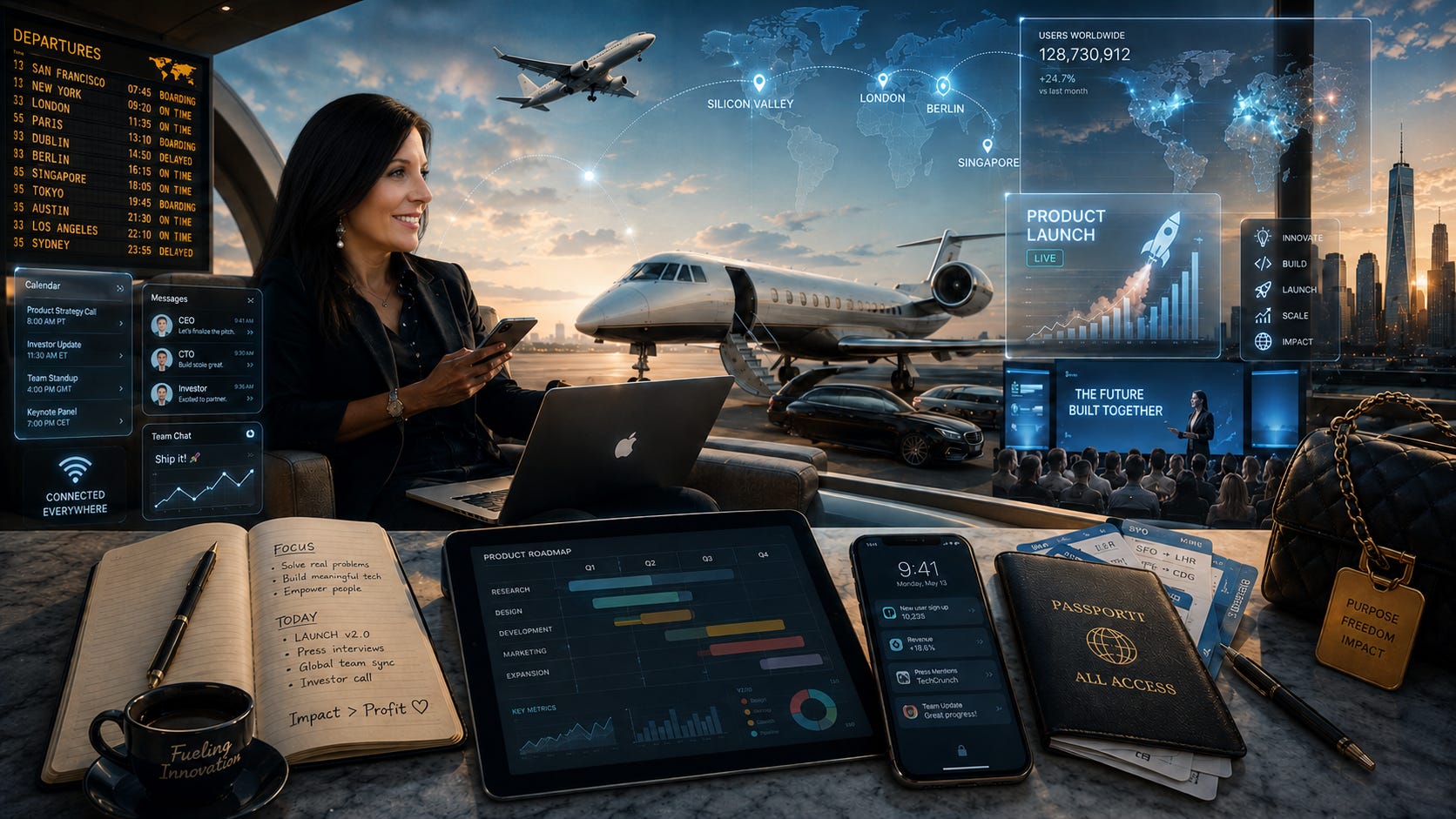
For the most part, I loved the schedule. Why wouldn’t I? I was young, had tons of energy, client’s paid for the expenses and I was able to meet interesting entrepreneurs from around the world and experience new restaurants in every location. In some places, I even requested the same waiter upon returning, as though ritual itself could create a sense of home inside perpetual motion. It was a fun and might I add, riveting ride.
Yet beneath that fun and fascination was a relentless undercurrent. Sleep became optional. Availability became currency. I believed that over-performing was one of the reasons clients hired me. If you responded to emails at midnight or answered texts before dawn, surely that signaled commitment. Surely it proved you were indispensable.
In many ways, it did.
My testimonials even reaffirmed it. The kudos were sincere and generous, but it also strengthened an increasingly unsustainable belief: that constant accessibility equaled value, and exhaustion was simply the cost of excellence. I was living by the masculine principles and survived within that infrastructure.
For over twenty-five years, I sustained that rhythm. I worked hard and played hard, convinced sleep was overrated because my body seemed to cooperate with the demands. And to be fair, there were extraordinary rewards: intellectual stimulation, meaningful professional growth, adventure, influence, and the thrill of being embedded inside the evolution of an industry reshaping modern life. I poured enormous energy into ensuring clients succeeded—ethically, as this was a must for me—and I balanced that pace by staying a little longer in various cities to explore with my Canon 7D in tow. I devoured the culture and diverse food from around the world. Travel, photography and getting out in nature fed my soul.
Looking back, a pivotal lesson came not from a tech titan, but from one of the few female CEOs I worked with during those years. We were attending Digital Hollywood, and after I mapped out every elite networking party and late-night industry gathering I managed to get us access to, she interrupted my carefully engineered agenda: “We’re not spending the evening in bars with a bunch of men,” she told me matter-of-factly. “We’re going for sushi.” What? I countered. Isn’t that what she paid me for? I thought. Didn’t we need to make deals? After all, that’s why we were there. In other words, wasn’t maximizing deal flow the entire point and wasn’t relentless networking the job?
But over a very long and fulfilling dinner, something shifted. She taught me that meaningful connection could exist alongside ambition. That success didn’t always require intensity. That balance was not weakness, but wisdom.
Balance = Wisdom & Liberation
After stepping away from the frenetic pace of the technology world for nearly a decade, I began to understand how deeply that lifestyle had shaped me. At that time, the Internet of Things (IoT) industry was exploding, and I was an integral part of it. Yet, I found myself increasingly disillusioned by the idea that every aspect of human life required technological mediation. Did I really need applications to track my sleep, monitor food expiration dates, regulate my thermostat, count my steps, and optimize every waking hour? Many of these innovations were (and are) undeniably useful, but the sheer proliferation of them left little room for inner guidance untouched by algorithmic oversight.
Pulling back felt liberating.
There was spaciousness again. Silence. A return to intuition—that quiet internal knowing many spiritual traditions reference and institutions like the Institute of Noetic Sciences (IONS) describe as a “noetic compass.” Around the same time, organizations such as HeartMath Institute were gaining mainstream attention for exploring the relationship between emotional coherence, intuition, and physiological well-being. Although I distanced myself professionally from the tech industry, I continued to watch its evolution.
Did I miss it? What I missed were the relationships, not the bells and whistles. Conferences like CES, COMDEX, LeWeb, Demo, D, and the Dublin Summit had become annual reunion points with people I genuinely cared about. Yet one afternoon, reflecting on those relationships, I realized that nearly all of my closest professional connections—perhaps 95 percent—were men . . . amazing men, but men nevertheless.
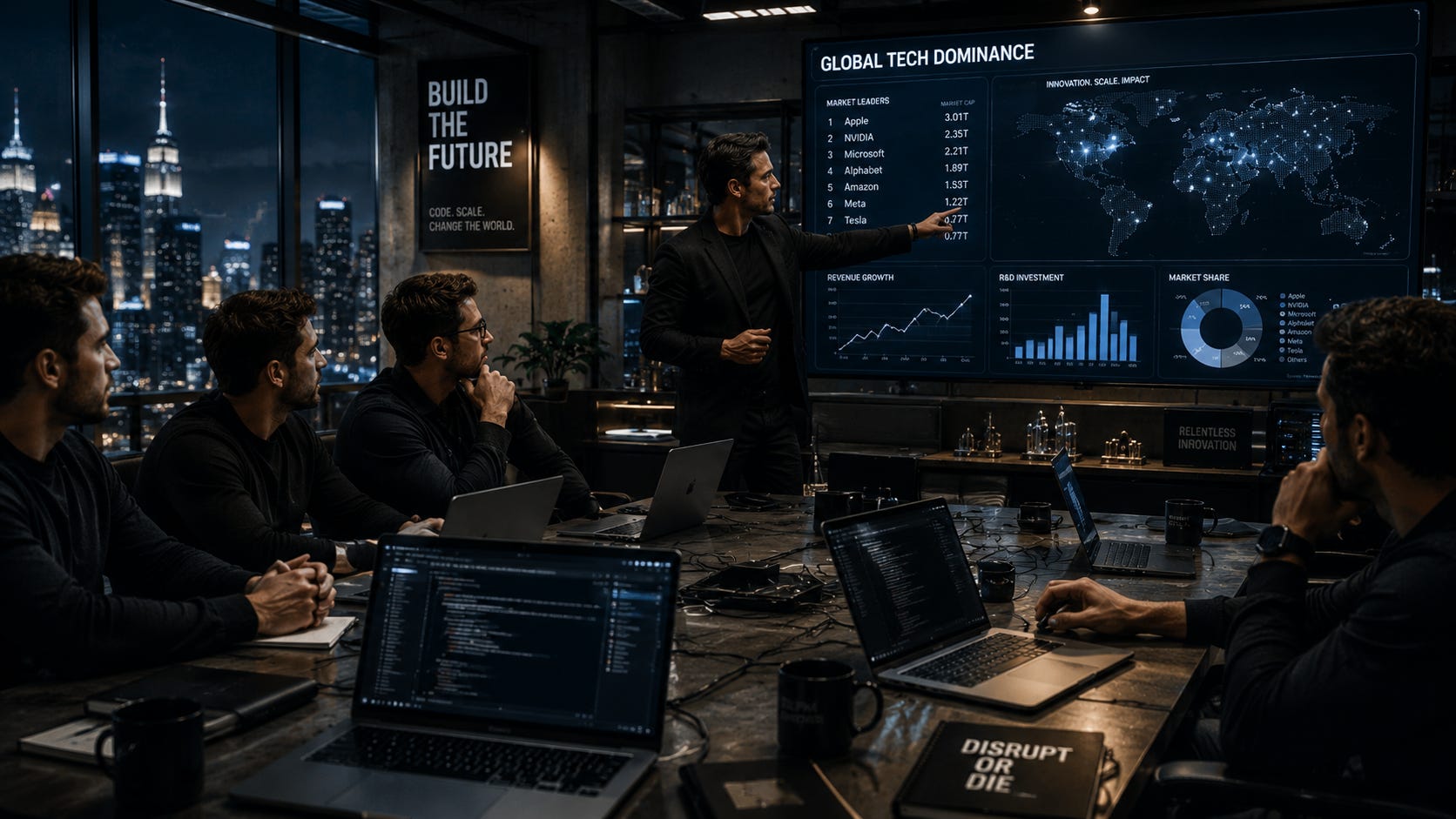
It was because men overwhelmingly dominated the technology landscape. As a connector, my role was to broker introductions between founders, investors, media, and strategic allies. In an ecosystem driven by proximity and influence, I followed the currents clients deemed most valuable.
When you live inside perpetual deal flow, however, you rarely stop long enough to examine what may be missing from your life. The momentum itself becomes a kind of anesthesia. As Tony Robbins and others of his ilk have said in so many words, “Proximity is power,” and they’re right. It is. It was. And I was primed for it.
But we don’t always know what we don’t know or haven’t experienced fully, right?

Enter Human + Tech
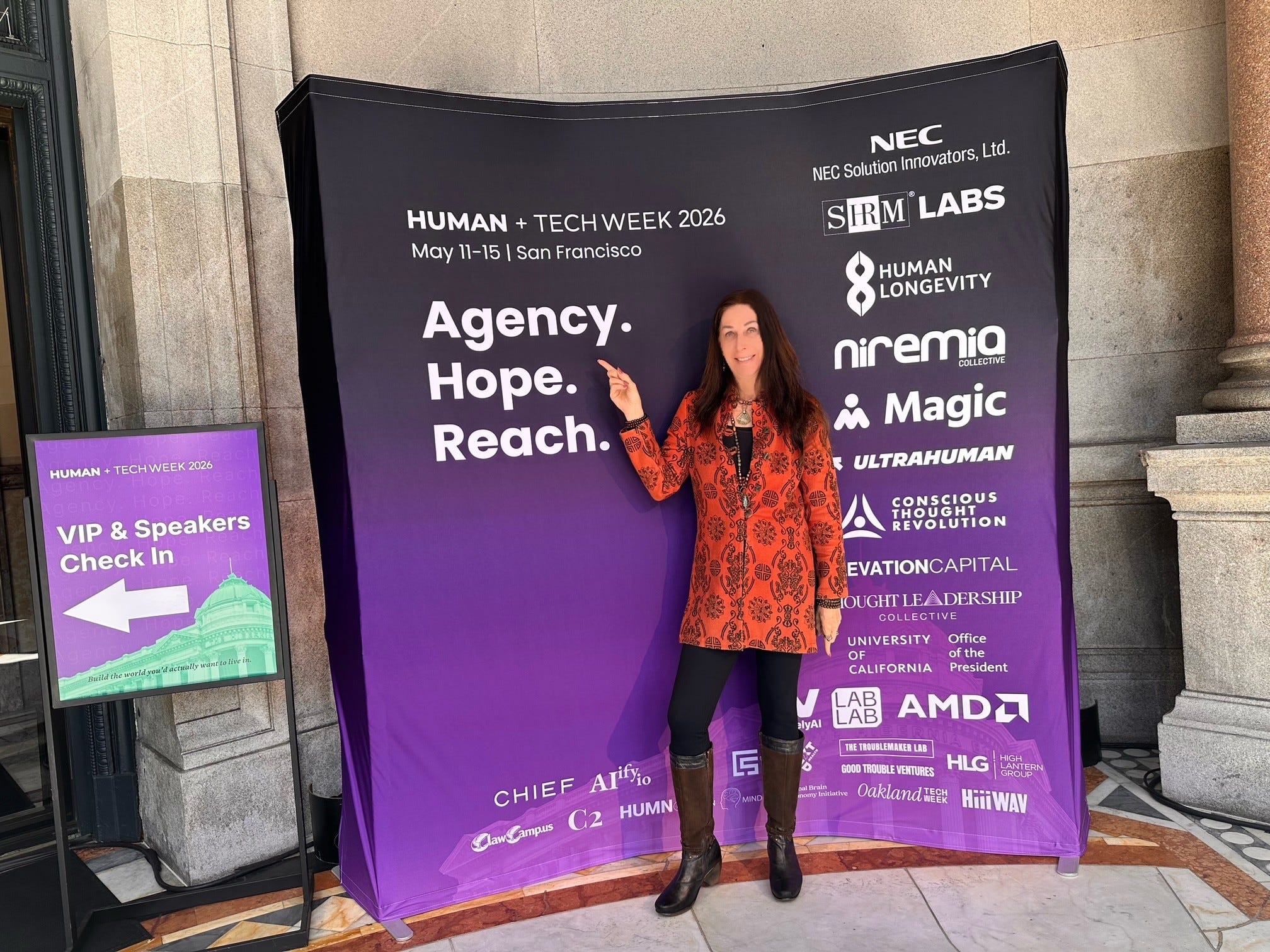
On day 1, I found myself watching the main-stage talks, curious to discover something new and meaningful. Naturally, AI was at the forefront of the conversation and there were discussions about how it was impacting nearly every industry. Each day was divided into core themes:
- Day 1: AGENCY—The future of work and human performance focused on building systems that expand human agency, dynamic capability intelligence, AI-native work platforms, and labor markets as adaptive infrastructure. Speakers included entrepreneurs such as David Co of Calm, Michele Jawando of Omidyar Network, futurist Ramez Naam, and Stanford neuroscientist David Eagleman.

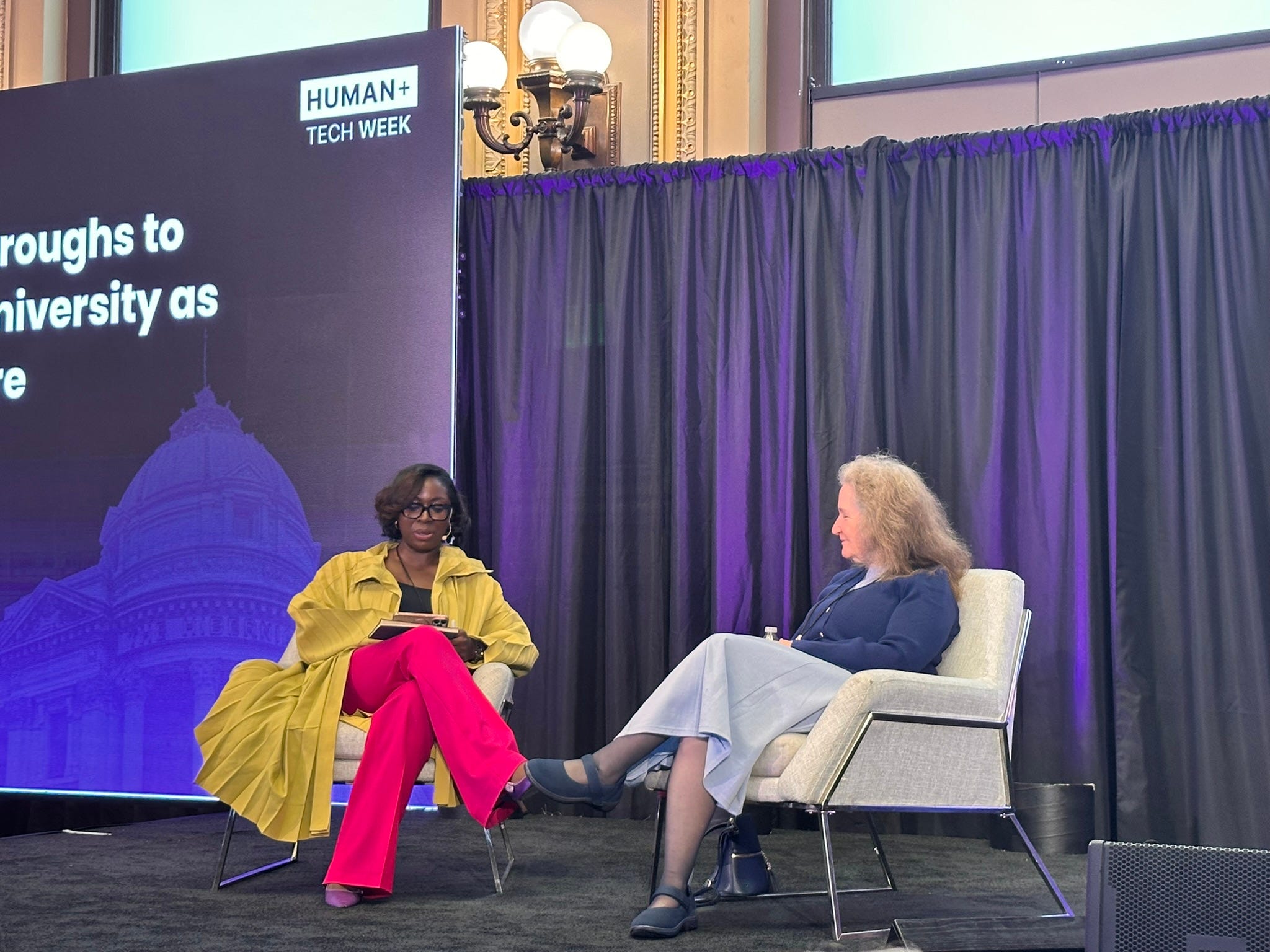
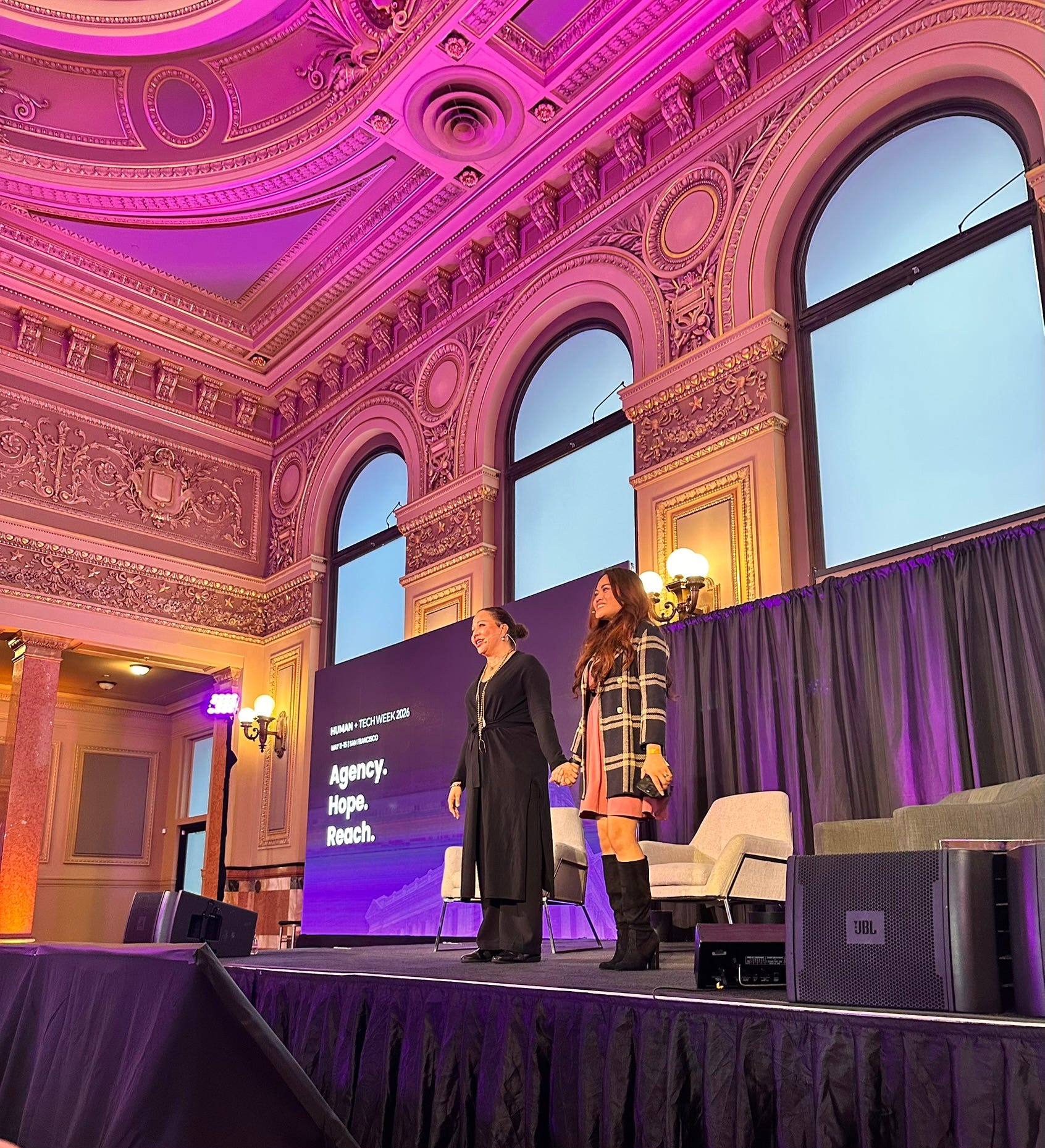
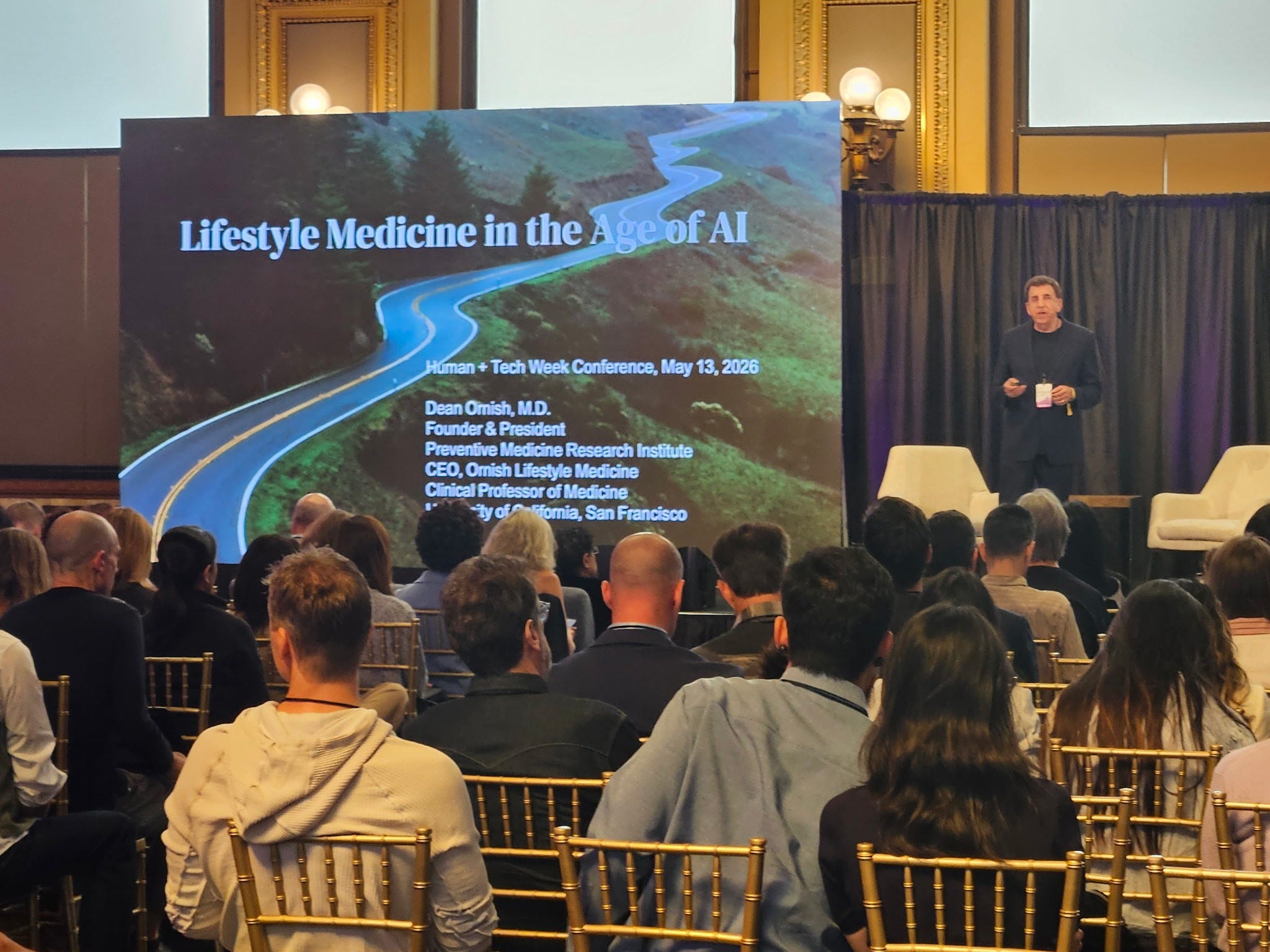
Day 2: HOPE—The future of health focused on shifting systems toward prevention-first population health, extended capability, cognitive and physical optimization, and AI-enabled early detection. Driving the conversation was Dr. Daniel Draft, Dr. Dean Ornish, Dr. Larry Brilliant, John Hagel, Thrive AI Health’s founder DeCarlos Love, and professor De Kai.
Day 3: REACH—The future of flourishing cities focused on intelligent civic service orchestration, prevention-first infrastructure, regional intelligence, and AI-enabled climate preparedness. Speakers included Peter Hirshberg, Senator Scott Wiener, Waymo CTO Dmitri Dolgov and Bobby Fijan from the American Housing Corporation.
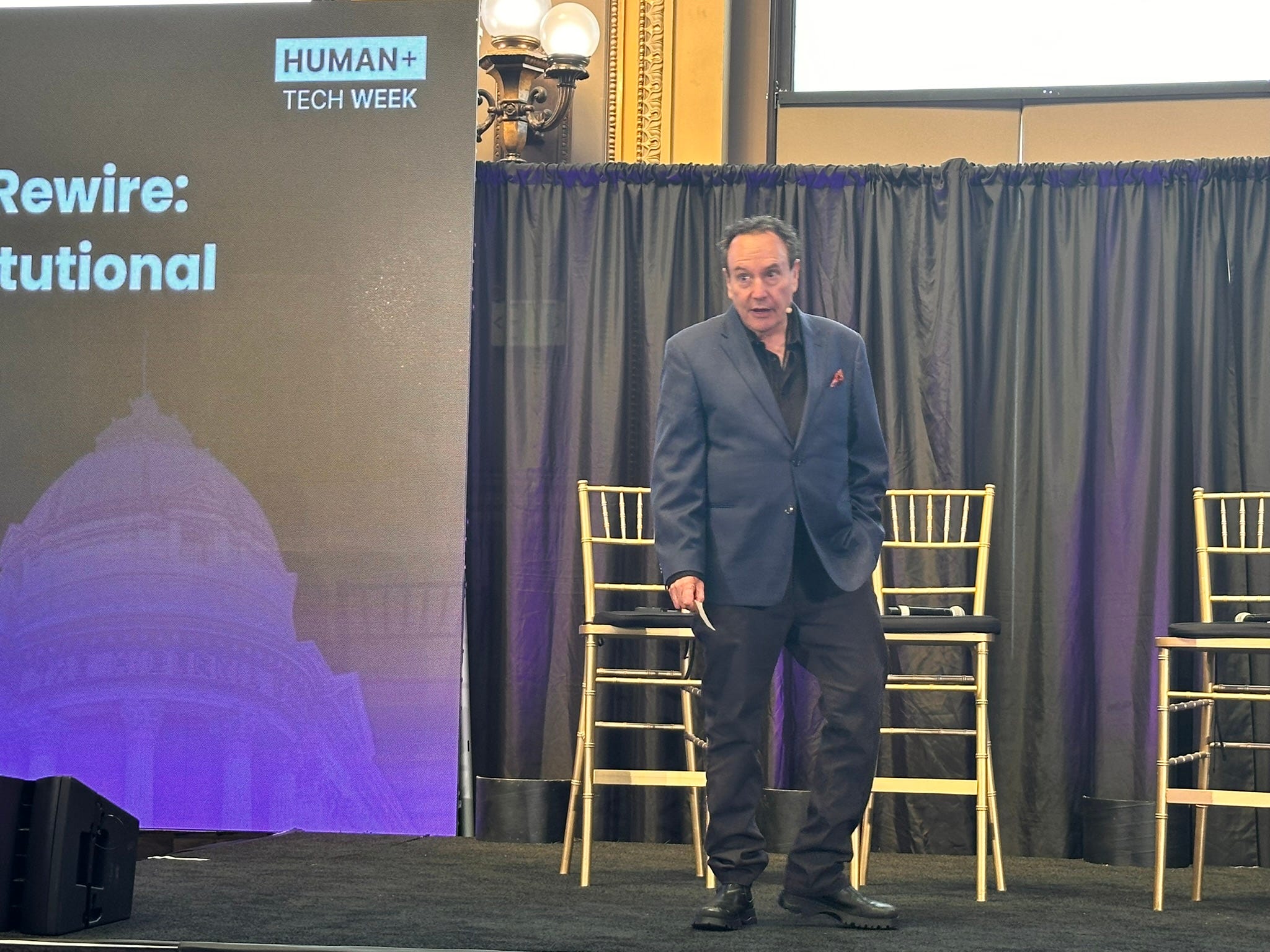
It took me nearly a full day before I discovered the smaller break-out discussions where there was an opportunity to really connect. Think salon-like gatherings and un-conference style tables. It was the unscripted exchanges where people spoke not only about technology, but about loneliness, meaning, values, exhaustion, healing, and belonging.
By the second day, I realized that the majority of the people I was having substantive conversations with were women—not only founders and executives, but psychologists, engineers, professors, venture capitalists, facilitators, authors, healers, artists, and researchers. What struck me most was not simply their presence, but the quality of attention they brought into conversation. And their willingness to dive below the surface.
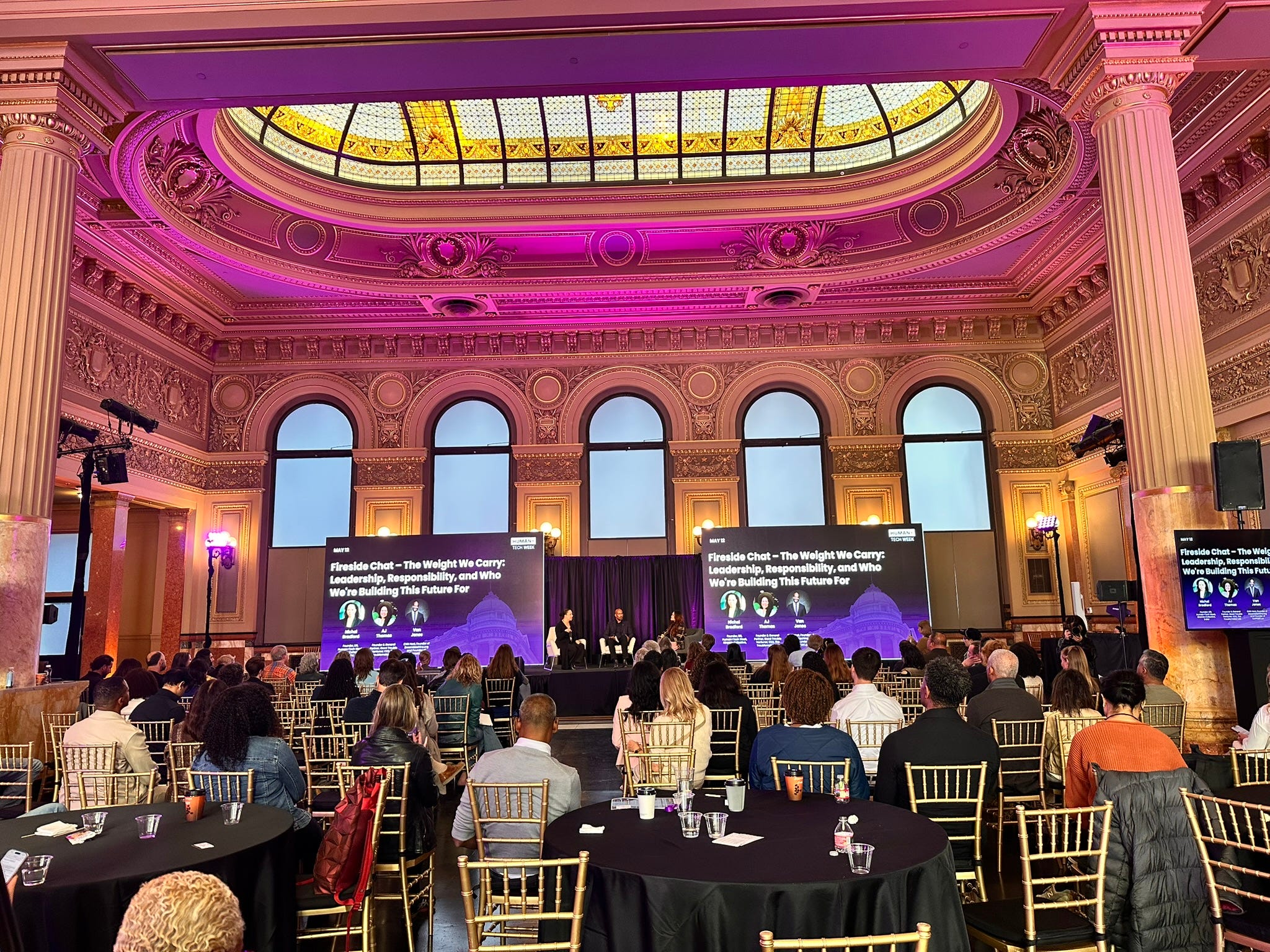
We talked about our lives—challenges, values, what fills us up and what doesn’t and more importantly, why. The women I connected with were not scanning the room for someone more powerful. Presence itself felt radical. And might I add, foreign.
The atmosphere carried an entirely different energetic architecture from the hyper-performative environments where I spent most of my working life. Discussions extended beyond innovation and efficiency into subjects rarely centered at technology conferences: consciousness, emotional intelligence, community, stewardship, human flourishing, and the psychological implications of AI.
The conversations reminded me how profoundly modern culture has normalized patriarchal models built on linear achievement: faster, bigger, higher, more. By contrast, matriarchal frameworks tend to emphasize cyclical thinking, collective well-being, relational intelligence, sustainability, and care. The patriarchal model was the world I grew up in, professionally and socially.
But today, we are living in radically different times. People are interested in deepening our consciousness and connections more than ever.
Truth be told, Human + Tech tends to draw people who are interested in consciousness; however, let’s remember it’s still a predominantly business-focused event with innovating technologies and AI being the driving force for speakers, discussions and break-outs. Despite the setting, women were vocal; they weren’t quiet about things that didn’t align for them.
What a breath of fresh air.
By the end of day 2, I left feeling fulfilled. Day 3 rolled around and I couldn’t wait to go back, despite the hour drive each way and the overpriced parking two blocks from the venue. Rather than tune in to the mainstage discussions, I spent the next two days proactively searching for women whose energy I seemed to resonate with. It’s something I can sense and feel before someone even utters a word. And I also dove into experiences, starting with Good Company.
Embodied Future in Practice
Good Company had an on-site demo. Their goal? To build technology that brings people together, co-creating transformative experiences that nourish body, mind, soul, and the future we want to live in. As you walk up to the screen, you simply speak what you want the moving image to become, using adjectives and descriptive words to guide it. The images move with you and respond in real-time.
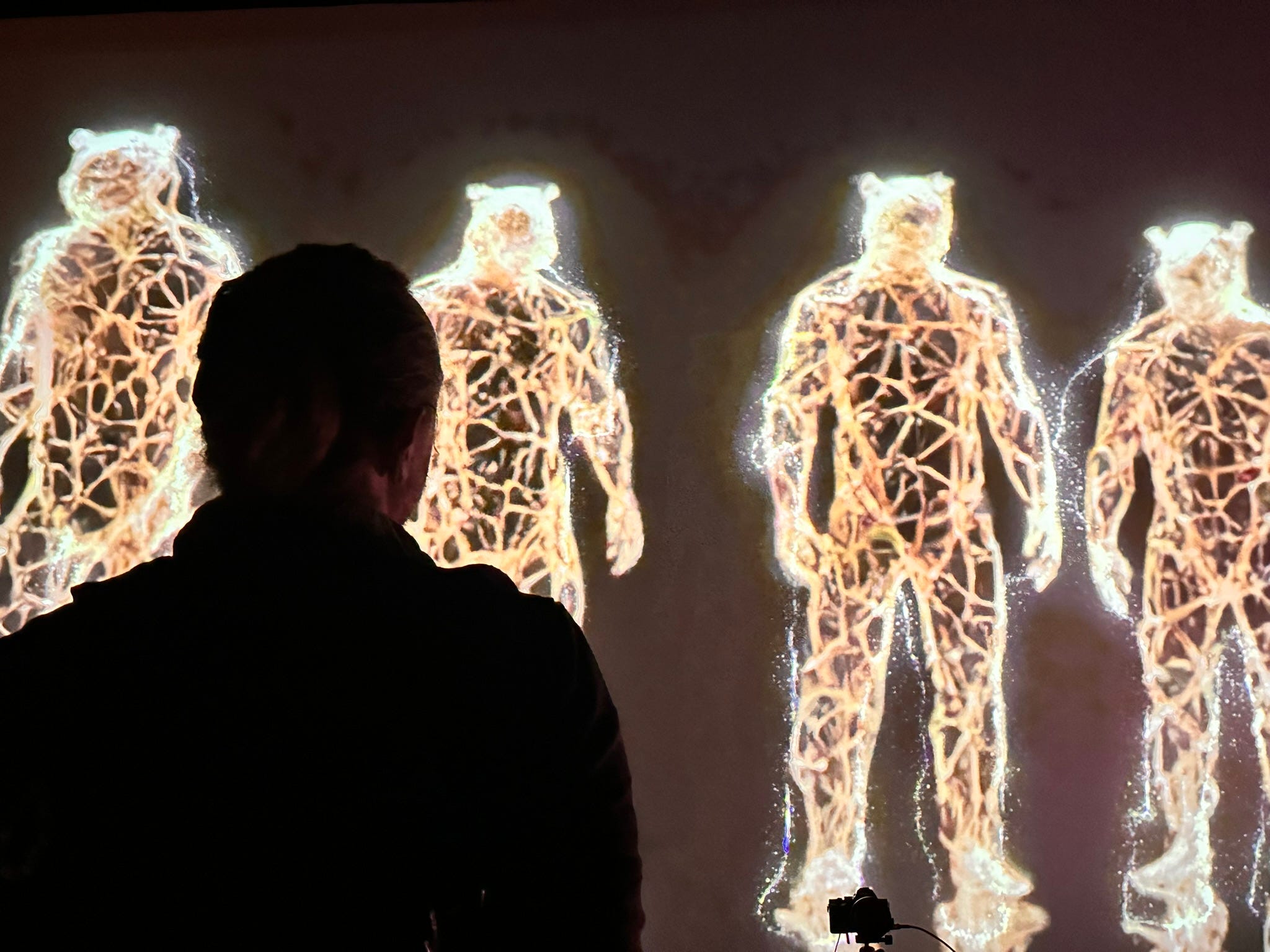
I decided to play with it, using vernacular that might be deemed “woo” for some, such as Goddesses, rise of the feminine and so on. When you tune in, remember, I’ve co-authored a book about Mary Magdalene and her journey, so I was curious to see what would show up.
Movements Led with Matriarchal Values
I also joined a break-out table to talk about movements, and how we can use AI to launch them, but more importantly how to sustain and grow them. Some of the themes that came up included using a matriarchal values to build new movements. Traits that support this model include decentralized power, allowing your passion to speak through you so your ego isn’t driving the agenda, and how to create transcendent experiences. Yup, you read that correctly: transcendence experiences.
How do we create these experiences for people and for ourselves?
The matriarchal model will help us design platforms for belonging. AI can help to decentralize power since people are not longer just an audience—they are also collaborators in the process of building a movement. Then, the journey becomes one of ancestral healing. But before we launch a movement, product, service or company, it’s important to ask: What’s the state of our inner architecture?
We need to be aligned or the movement won’t be aligned.
From a matriarchal framework, the discussion centered on decentralization, humility, deep listening, collaboration, and creating transcendent experiences rather than purely transactional engagements. There was a repeated emphasis on designing systems that support belonging rather than hierarchy.


Community & Collaboration
Do you know that the biggest common denominator for people who live over 100 is community? If it weren’t for the community we’ve created at Blue Soul Earth, I wouldn’t still be doing the work we do. They’ve become like family, and their well-being, happiness and emotional success matters to me. When we walk this path together, side-by-side and listen during the up’s and down’s, we become part of the whole. We make sense of the changing times together.
Community, collaboration, being in flow, speaking from your heart, allowing your higher self to speak through you and community are common threads here. It makes me think of something someone said at one of the sessions: “I am not against or for the wind. I am the wind.”

I deeply resonated with this and it feels like something an indigenous ancestor might have said or at least lived their life that way. Later, Van Jones echoed many of these themes from the main stage. He spoke about ancient circles, shared humanity, and the erosion of communal care in modern society.

His words felt especially resonant in a world increasingly polarized by ideology, identity, politics, and fear.
- What happens when no one feels held? Or heard? Or understood?
- When every disagreement becomes warfare rather than dialogue?
- When algorithms reward outrage over understanding?
Psychology, Human Agency & AI
Again and again throughout the conference, participants returned to the same underlying truth: Humanity is suffering from profound loneliness and disconnection. People are desperate to belong, and increasingly turning toward technology to fill emotional and psychological voids once held by community.
This raises urgent questions as AI systems become more embedded in daily life:
- How do we ensure these technologies strengthen human agency rather than diminish it?
- How do we design AI that supports psychological well-being instead of dependency?
- How do we create systems rooted not merely in efficiency, but in care?
In a day-long AI-focused session led by Barney Bell, one particularly compelling conversation explored the possibility that future AI agents should ask more thoughtful questions rather than simply provide immediate answers. Instead of bypassing introspection, perhaps technology could encourage it.

Several participants emphasized the importance of designing AI systems capable of recognizing emotional nuance and adapting responses based on the psychological needs of the individual.
We need to design protocols with conscious human input. Our relationship between humans and AI agents needs to support human agency. Safety is a critical need as these agents become more capable, and rest assured, they will.
Fear is currently crippling societies, neighborhoods and families. People want to belong so they’ll plug into something—anything—where it feels that they might, even if it’s not necessarily healthy for them long-term. That said, when we’re part of an engaged community with care and collaboration at the helm, that loneliness can turn into healing when we allow people to co-create with us.
One idea in the psychology discussion included the need to look at the ways AI agents are guiding us. For example, if an overlay anxious person asks the same question as a more independent type who avoids asking for help, AI should be able to calibrate the algorithm and deliver an answer and tone that differs depending on who they are. In other words, when AI acts as a mirror, people can get a better understanding of their current state, rather than simply dishing up a one-size-for-all answer.
Underlying all of it was a deeper recognition: Technology alone cannot heal a fractured society. Inner Architecture matters and is where it all needs to begin, as I mentioned under the Designing Movements section.
If we attempt to build movements, businesses, platforms, or communities without first examining our own wounds, triggers, and unconscious conditioning, those distortions inevitably replicate themselves within the systems we create.
Consider this. When we’re at odds with another (Pro or Anti-Vaccine, Palestine vs Israel, Ukraine vs Russia, Pro-Trump or Against . . . the list is long), we’re constantly at war with our beliefs. We won’t deviate from our views and beliefs because we’re so wedded to the notion that our way is right and the other isn’t. When we’re constantly pushing our agenda on another—whether quietly or loudly—the fear and division only rises, not diffuses. No one is thinking about oneness or our shared humanity when we’re trying to convince someone (or a group) that we’re right. There’s no room to move towards togetherness and unity, nor is there room to allow yourself or the other to be heard, held and understood.
I loved Van’s reference to this care, since it seems as if its a quality humanity has diminished. We’re not meant to be on a siloed journey; as human beings we’re wired for connection as Dr. Shamini Jain often shares in her work.
If we only connect with and gather with others who support and praise our world views and beliefs, then how will we ever grow, expand and move towards harmony and connection?
We won’t. It needs to be a choice every day. This is the real work. We need balanced views between the feminine and masculine forces of society, so we can live in harmony.
We need to not become so glued to our ideologies and beliefs that we don’t have space for another’s views and insights.
We will never open our hearts from this isolated place. This applies to building a framework and underlying platforms for AI just as much as it does in our own neighborhoods and with our families.
Thanks Van for your wisdom, words that some might feel don’t belong at a business and technology conference. I’d argue that your words and reminders belong everywhere.
If we’re not wired for humble stewardship (which btw, is the last pillar in our Blue Soul Alchemy Wisdom School program for a reason), then our ego is sure to get in the way. We must go inward first. As the ancients say, As Within, So Without.
When we choose to step up as leaders, our energetic states will affect the outcome. It always does. This applies to relationships too; if we don’t work on our internal architecture and clear the triggers from unspoken traumas, the same toxic patterns keep repeating themselves again and again.
Awareness is key here. You can’t be a willing participant in changing your internal architecture if you refuse to take a look at your patterns or insist there’s nothing to shift or worse, you realize it, but choose not to step up and do anything about it. Understanding where it shows up is critical to living your best life, whether you’re building a new AI agent for others to use or how you connect with your loved ones on a daily basis.
AI and Building Trust
As AI becomes more conscious, consider how humans think of trust versus machines. For a machine, it equates to delivering better accuracy or an efficient answer, but for us, it happens over time and is based on our experience with someone, i.e., whether they support us in a healthy and ethical way. We can feel someone’s authenticity and their care. We wonder: Can we let ourselves go and be vulnerable? Can we trust that our private share will be safe and held in a sacred container?
We must also remember that the definition of values is very subjective.
Several people noted: AI is amplifying distrust in society, not just through fake news or elevating “bad actors”, but also in filtering out what you shouldn’t see. It’s called algorithmic censorship, which is the most insidious manipulation that is currently spreading. There’s a rise of omissions and half-truths which begs the question: How is the algorithm deciding what information gets left out of results? Right now, there isn’t a great way to identify mass manipulation, especially when large language models (LLMs) are working off the same data. A few suggested that we need to look at other architectures outside LLMs.
We Model What Gets Awarded in Society
We’re now coming full circle. When we make a decision to “work on” our internal architecture (the shadows, the triggers, the traumas) within a patriarchal-dominated architecture, we’re not rewarded for vulnerability, our wounds and inner truth, but for accolades, deals, burying emotions, intellectual intelligence, and speed. For those of us who were conditioned by this worldview (most of us), it makes it even harder to embark on such a path. Some are dipping their toes into this sizzling and largely unknown landscape through plant medicine journeys, but without the proper support and integration, it can lead to more confusion, trauma and even mental instability.
That said, humanity can no longer afford to side-step or bypass personal and spiritual growth. The ramifications of not doing so is now in our face louder and uglier than ever before. We’re seeing it in Washington, and the Middle East, as well as in the drastic cutting of programs that support women’s rights to bodily autonomy and to people’s overall mental and physical well-being. And we will see it in AI agents when ego leads the way. After all, AI is simply an extension of humanity’s consciousness.
Matriarchal Model as our Future
Now is the time. The matriarchal model is collaborative, healing, supportive, and inclusive. It includes values that allow people to hold another and to be held themselves, without criticism or judgment.
Bypassing our personal and spiritual growth by refusing to see our blind spots or insisting we do it on our “terms,” is a far cry to the path of humble stewardship, where all lives matter: all colors, all religions, all beliefs, all sexual identities, all economic status, and all cultures.

If we choose to walk this path, we need to do so with care. In other words, part it includes being kind to ourselves. It’s not easy to show up for US, largely because we’ve been conditioned not to. It’s not easy to embrace a matriarchal model because what has been elevated and rewarded for hundreds of years are values that counter it.
My friend Natalie’s book Empathy in Action demonstrates how empathy can be measured in business. In other words, the ROI is there. Key ingredients and traits discussed in the book include: deep listening, understanding a customer’s pain points, needs and problems to solve, acting on what you predict and prescribe by personalizing the experience and then improving on what you have learned from your actions, interactions and outcomes.
Substitute the word customer for community member, business partner, husband, wife, sibling, child, consumer of AI tools, or friend, and you’ll see some great matriarchal traits and values in action. Some of the core characteristics include:
- Empathy over Ego
- Collaboration over Control
- Active Listening
- Attuning in (not to be confused with tuning in)
- Mentorship & Connection
- Emotional Intelligence (EI) or as I like to say, our internal compass
- Focus on Longer Term Benefits and the all (not just a select few or the people at the top)
- Building Trust
- Becoming an Emotional Anchor for the Group or Individual
- Nurturing Through Growth & Development
- Flexibility & Being Open to Pivot
- Inclusivity: All Lives Matter
- Generosity & Humility
- A Commitment to Stewardship
Perhaps this is the deeper lesson emerging at the intersection of humanity and technology: the future will not be shaped solely by intelligence, speed, or innovation. It will be shaped by our capacity for presence, humility, emotional maturity, and collective care layered on top of the innovations that are being created.
In a world increasingly mediated by algorithms, these may become the most essential technologies of all.
Thanks for listening.

Renee Blodgett is the Founder and Managing Editor of We Blog the World, a global travel, culture and lifestyle publication exploring the world through the lens of meaningful experiences, human connection and cultural depth. Having lived in 10 countries and traveled to 95, Renee has spent much of her life immersed in the people, traditions, landscapes and ideas that shape how we experience the world.
Since launching We Blog the World in 2007, she has written and produced extensive editorial coverage spanning boutique and luxury travel, culinary experiences, arts and culture, wellness, adventure, technology, spiritual traditions and transformative travel. Her work is rooted in the belief that travel is about more than where we go—it is also about what a place, culture or encounter awakens within us.
Renee brings more than three decades of experience across journalism, photography, media, brand strategy, technology, wellness and global storytelling. She has worked with companies and organizations around the world on brand positioning, communications, product launches, media strategy, speaker positioning and storytelling. Through Blue Soul Media, she works with authors, entrepreneurs, thought leaders and purpose-driven brands to clarify their message and expand their impact, which includes speaker coaching/training for high-profile stages such as TED and bringing authors’ work to market while retaining authors rights.
She is also the co-founder of Blue Soul Earth, an educational platform exploring consciousness, ancient wisdom, spirituality, healing and the intersection between science and the nature of reality. Renee is the producer and host of the award-winning Blue Soul CHATS, a conversational series bringing together leading voices in science, technology, consciousness, wellness and spirituality.
Her growing body of work also includes Blue Soul Living, which extends her interest in consciousness and well-being into the spaces we inhabit, exploring how intentional design, energy and environment can support greater harmony and connection.
Renee is the award-winning co-author of the bestselling Magdalene’s Journey and founder of the Magdalene Collection, inspired by women’s voices, stories and wisdom across cultures and generations.
A longtime photographer and storyteller, Renee has documented people, places and cultures around the world and produced photographic collections focused on destinations including the Galápagos Islands, London, South Africa, Rome and Ecuador. She also co-founded Traveling Geeks, an international initiative that brought entrepreneurs, journalists, creators and technology leaders together with their counterparts in other countries to exchange ideas and explore innovation across cultures.
Renee’s work has been recognized by Forbes, the United Nations and others for her influence in media and social storytelling. Across her work in travel, media, consciousness and culture, a common thread remains: curiosity about the world, the stories that connect us and the ways meaningful experiences can change how we see ourselves and one another.