I had the opportunity to attend the annual Bioneers Conference this year, held in the heart of downtown Berkeley. I was first introduced to the event over a decade ago through a friend who served as an advisor and attended some of its early fundraisers in the San Francisco Bay Area. Since then, I have followed its work with admiration and continue to value its mission.
Let’s start with their values.
As a nonprofit organization, Bioneers is dedicated to serving communities—particularly underserved ones—while striving to “honor the web of life, each other, and future generations.”
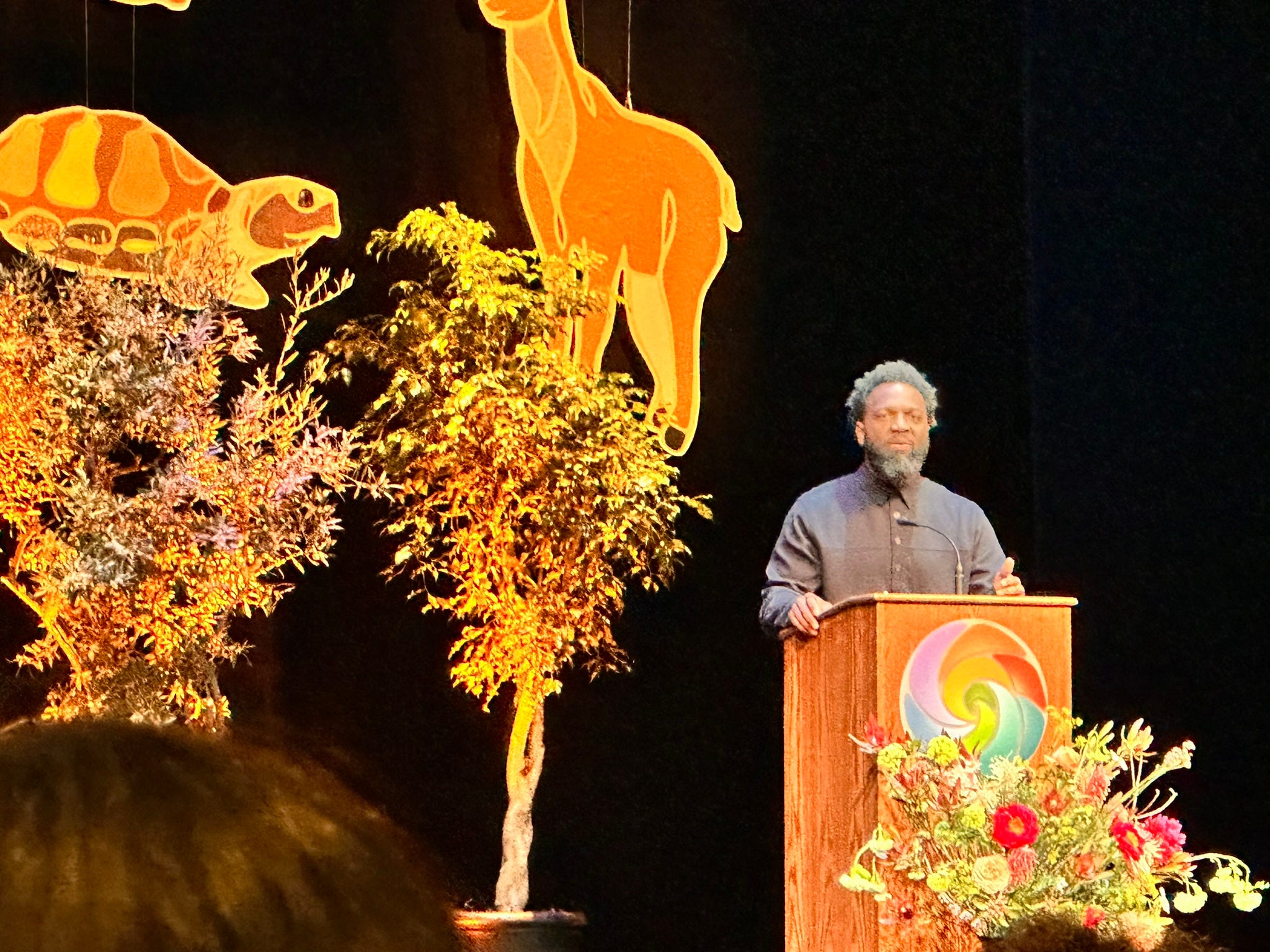
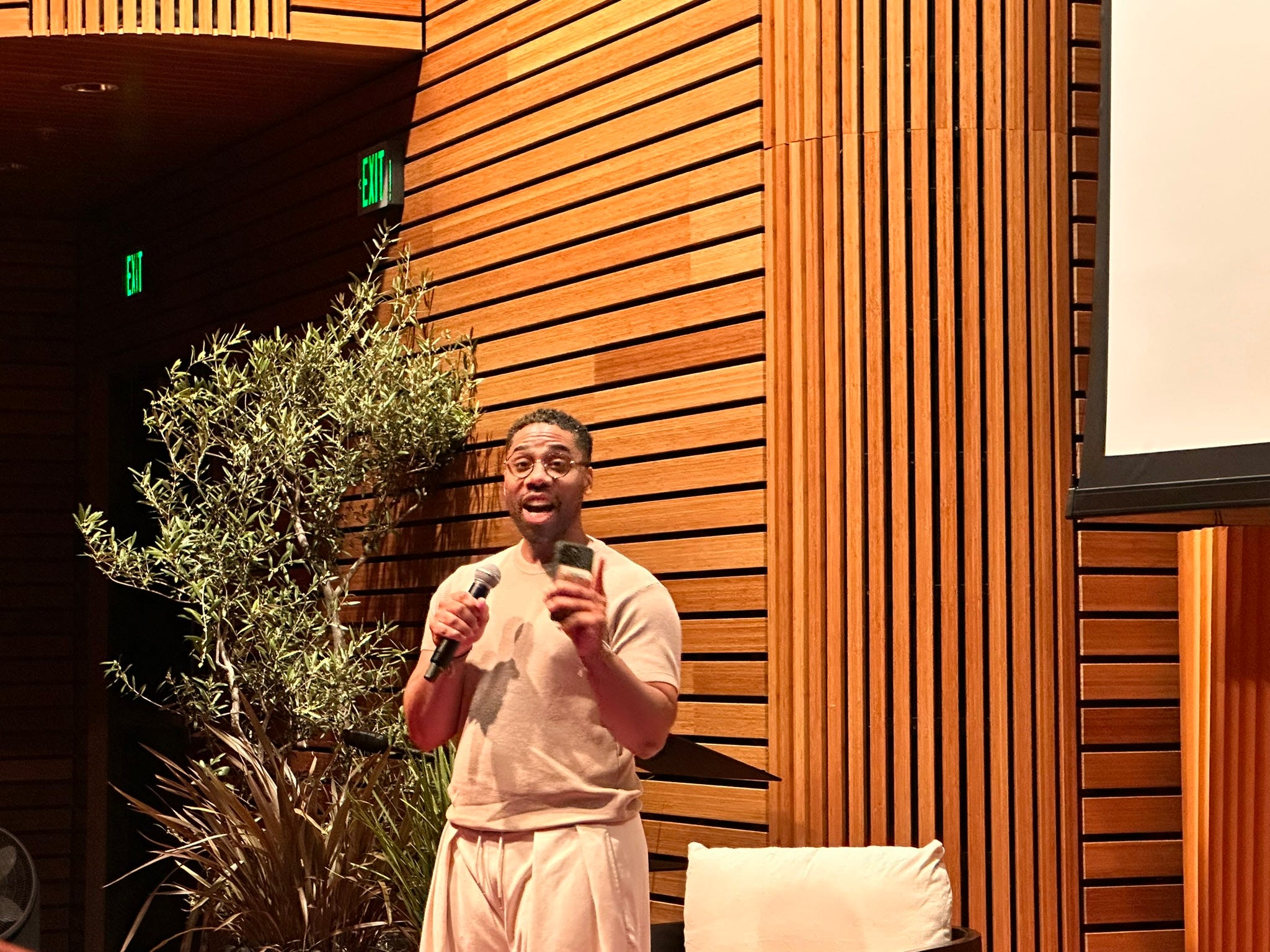
This year’s gathering captured that spirit. On the stage at Zellerbach Hall, writer, comedian, and commentator Baratunde Thurston offered a powerful reflection: “Bioneers isn’t a conference—it’s soil.” He expanded on this idea by noting that true peace exists when everyone’s rights are secure, and led attendees in a brief, unifying chant: “Bioneers is not a conference; Bioneers is soil. Soil brings people together and grows movements.”
You see, the organization serves as a foundation for thinking, living and behaving differently, from a place of wholeness and connection, not from a place of “me, myself and I.” This couldn’t be more important at a time of growing divisiveness and uncertainty around the world, but particularly in the United States, where we are experiencing unprecedented “system shifts” in the history of our democracy.
As a fertile hub of social and scientific innovators, they help restore people and the planet through their content, initiatives, programs and solutions. Think game-changing initiatives related to Restorative Food Systems, Biomimicry, Rights of Nature, Indigeneity, as well as Women’s and Youth Leadership.
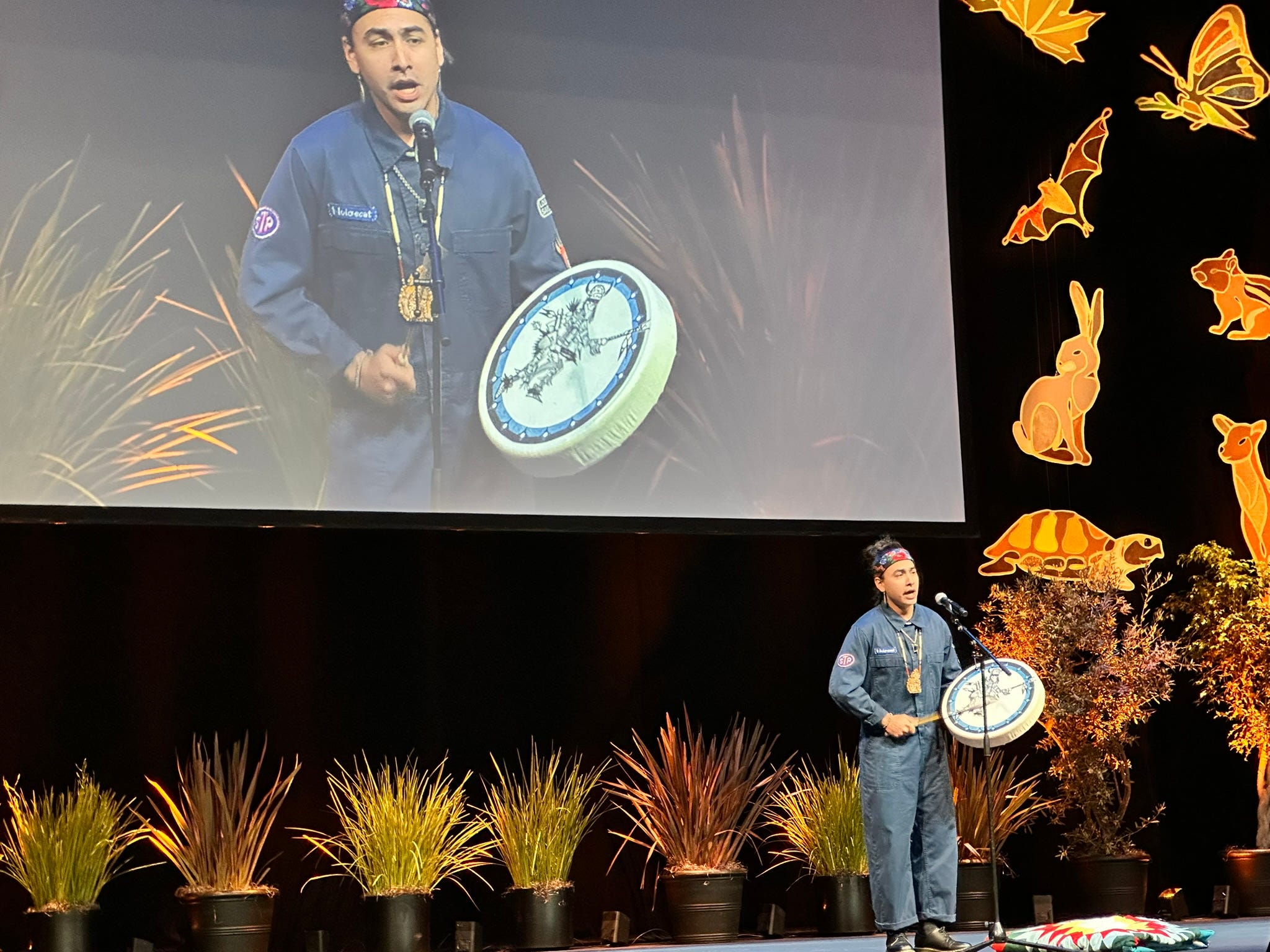
The sessions this year mirrored these vital commitments. The event kicked off with a drumming session by Deb Lane and Afia Walking Tree, then moved into sessions supporting earth-based solutions and a bow to nature, such as Gary Farmer with A Change Has Gotta Come and Becoming Earth: How our Planet Came to Life with Ferris Jabr.
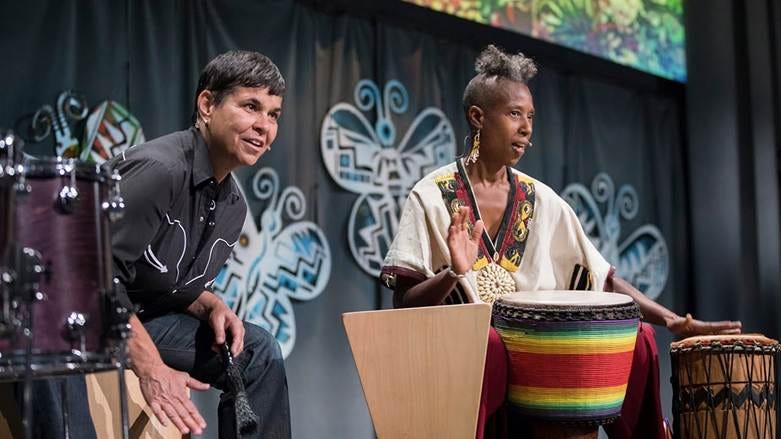
Above: Deb Lane and Afia Walking Tree. From previous Bioneers events. Credit: Bioneers.
Other highlights on the first day included Terry Tempest Williams on Nature, Culture and the Sacred, an indigenous forum where they tackled lessons in resilience, how farming affects the nutritional quality of food and human health, fossil fuel phase out and a just transition from California to the Amazon, how ecosystems navigate uncertainty, soul care for a time of collapse and emergency and tending our grief, among others. They also held discussions on psychedelics research, environmental justice, how our democracy became a kleptocracy and enabling the land to own itself.
Cory Doctorow then addressed the issue of Enshittification as a solo keynote, and later in a dialogue with Zephyr Teachout and Wendy Liu.
From monopolies and mediocrity to the revival of democracy, the panel discussed how a handful of powerful tech companies have come to dominate the internet and media landscape, leading to a steady decline in quality, user experience, and even the health of democracy. Doctorow described this pattern: platforms start by serving users well, then gradually degrade as they prioritize profit, advertisers, and shareholders over people.
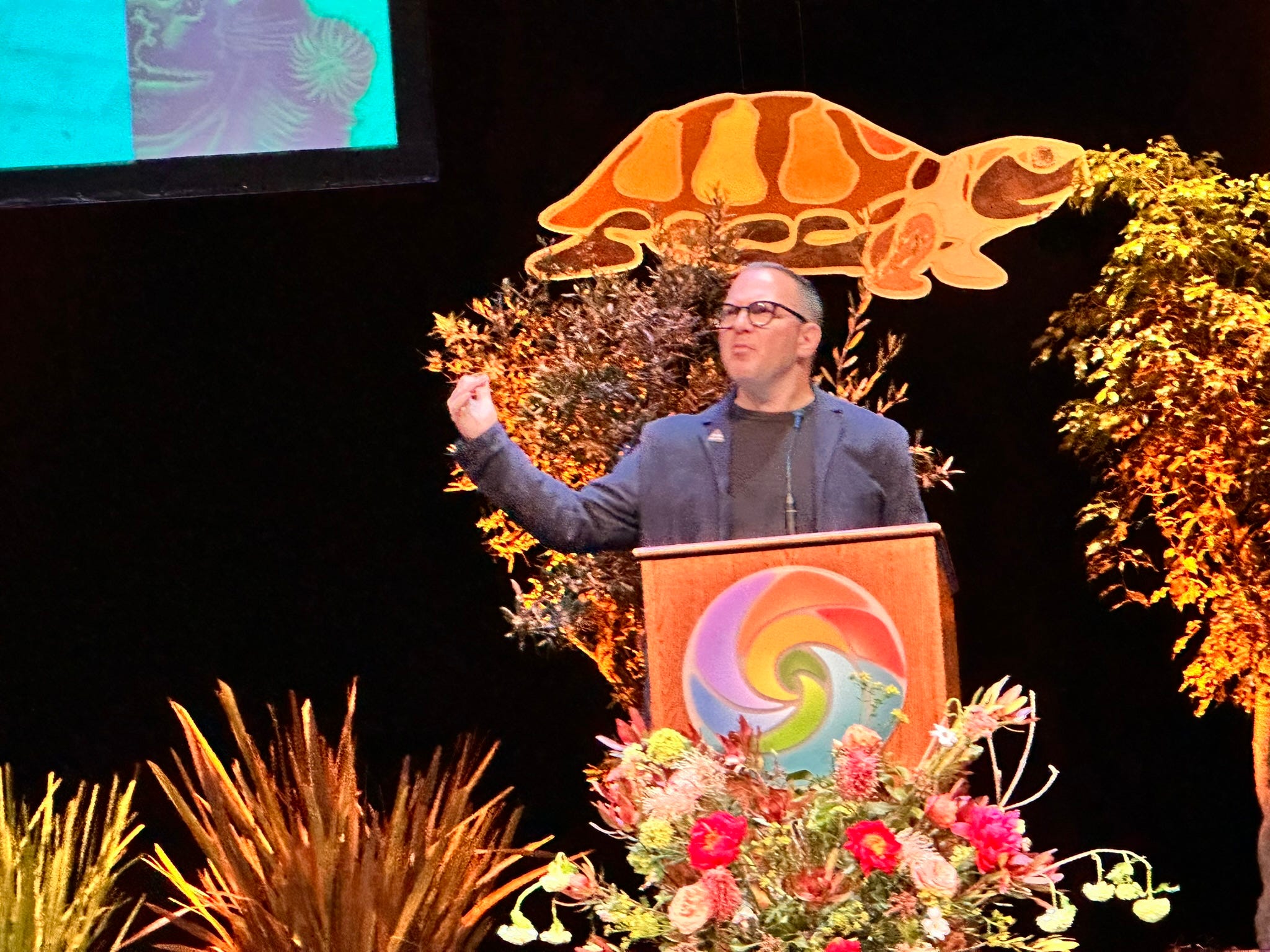
The conversation explored how this dynamic is not accidental but the result of policy choices, monopoly power, and a lack of regulation that allow companies to lock users in and extract more value over time. Teachout emphasized the political and legal dimension—arguing that corporate concentration erodes democracy itself, and that antitrust laws and structural reforms are essential to restore balance and accountability. rather than exploit them.
The overall message was that the current trajectory of the internet is reversible—but only through collective awareness, policy change, and a renewed commitment to building systems that prioritize people over profit. The ultimate question becomes: How can we ensure that technology serves human needs rather than exploits them?
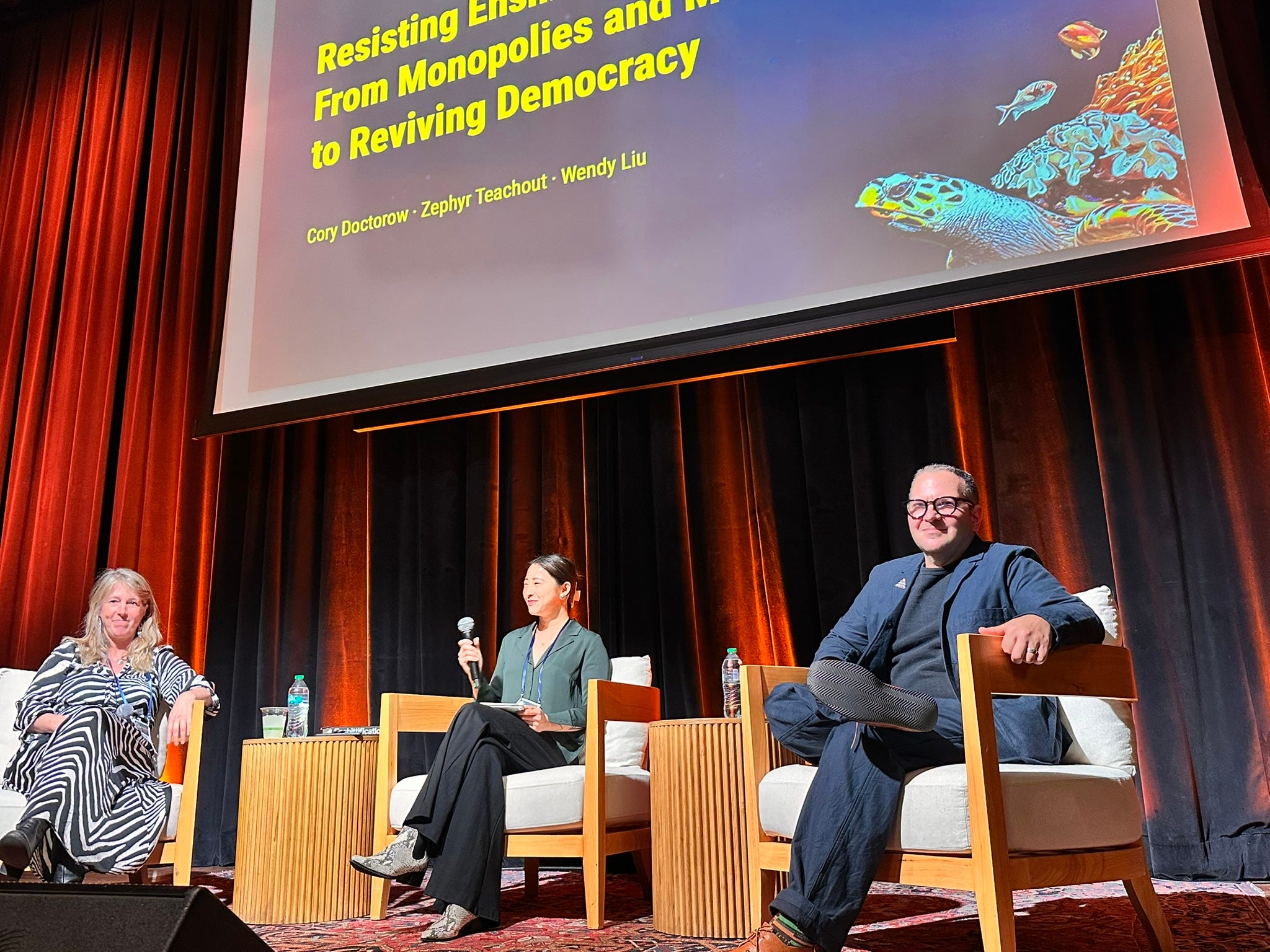
Above, Enshittification panel
On the panel focused on our basic human right to drinkable water in the United States, Heather Cooley moderated a discussion with Khalid Osman, Monica Lewis-Patrick, and Jenny Rempel. When I have brought this up to others, their main response was, “You mean drinkable water in the world?” It didn’t occur to them that there could be people in the States without access to safe drinking water; however, we learned that more than two million people live without plumbing or clean water.
Largely, this situation falls upon people of color and other marginalized groups. Khalid deals with people whose taps produce murky water, noting that “We can’t see all the contaminants.” He also submitted that policy decisions do not involve community input. Of the 55,000 community water systems, roughly 50% are out of compliance or outdated, and that number has risen by about 40% over the last decade, which is astonishing.
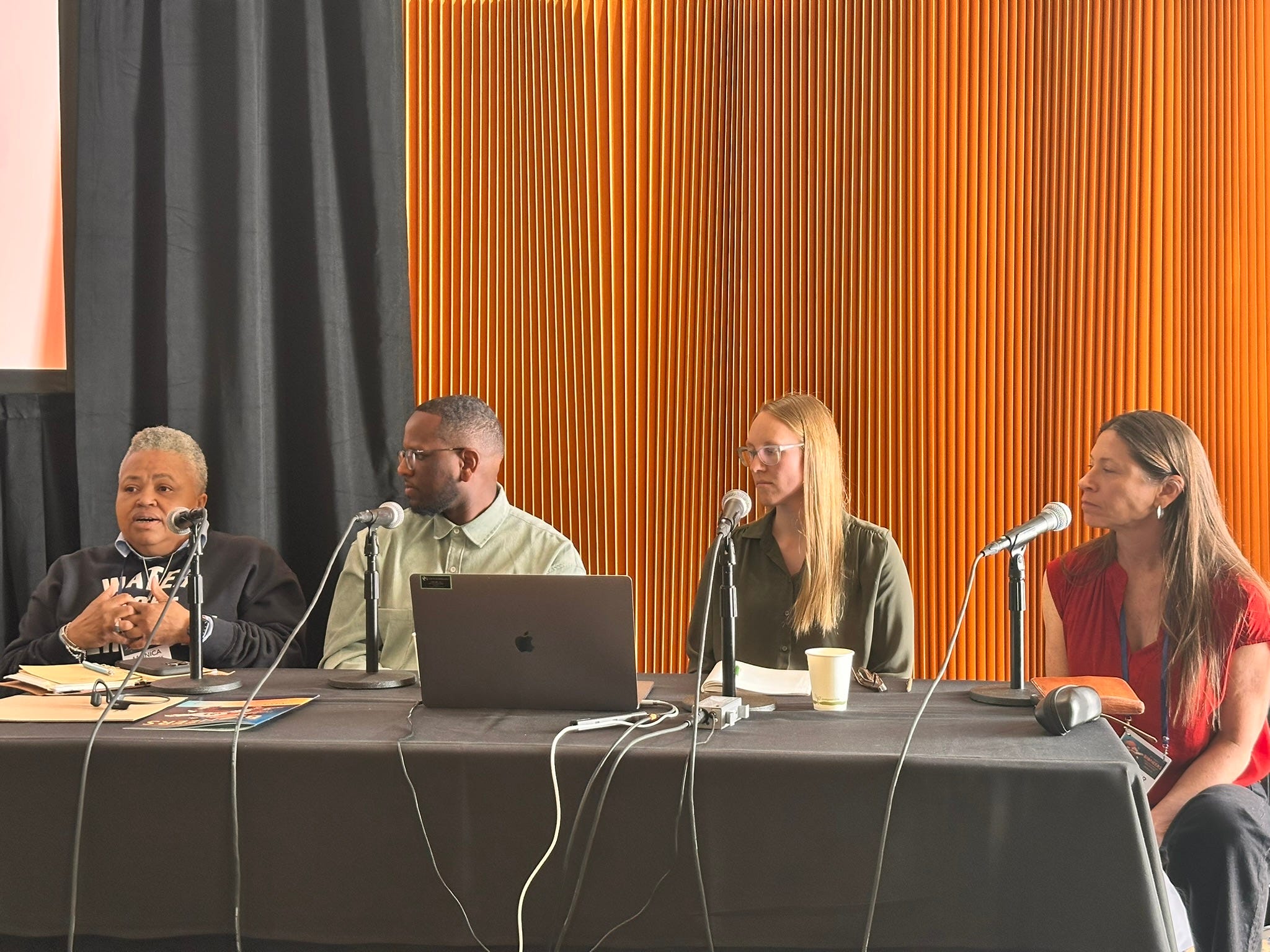
Above, the panel on safe water as a basic human right
Lewis-Patrick, who is the CEO of We the People of Detroit, a grassroots organization focused on civil rights, water equity, and community empowerment, says that “the U.S. struggles to even admit water is even a basic right.” (Two states, California and Virginia, have passed laws on human rights to water). Her organization in the greater Detroit area has been implementing systems to address issues that have had a huge negative impact, such as flooding, while also reminding us that climate change has introduced new contaminants.
Other informative sessions from Friday included Restoring the Ecology of Health in the Anthropocene’s “Polycrisis,” Global and Indigenous Women-Led Movements for Climate Justice with Osprey Orielle Lake, Zainab Salbi and Dilafruz Khonikboyeva, and Where Spirit and Science Meet the Sea with Alexis Bunten, Raynell Morris, Louise Brady and Shane Weeks. There was also a fascinating experiential session on our “Wild Center” with Amber Gray.
On Saturday, we saw a performance by The Gathering Tree, followed by an Indigenous Forum: Women at the Center and later, they held a session on Biodiversity, Social Diversity and the Future of Nature in Cities. The panel on Green Chemistry Innovation and Education, featuring John Warner and Amy Cannon, focused on reimagining chemistry as a force for sustainability rather than harm.
A central idea was that many environmental and health crises are not inevitable—they result from how chemistry has traditionally been practiced—and that by redesigning materials and processes from the start, it’s possible to eliminate toxicity and waste altogether. Warner emphasized innovation at the molecular level, showing how chemistry can be inspired by nature to create safer, more efficient systems, while Cannon highlighted the importance of transforming education so that future scientists are trained to think this way from the beginning rather than as an afterthought.
A major theme of the discussion was systems change through education, with green chemistry serving as a pathway toward a healthier, more regenerative future in which science is aligned with the principles of life rather than working against them.
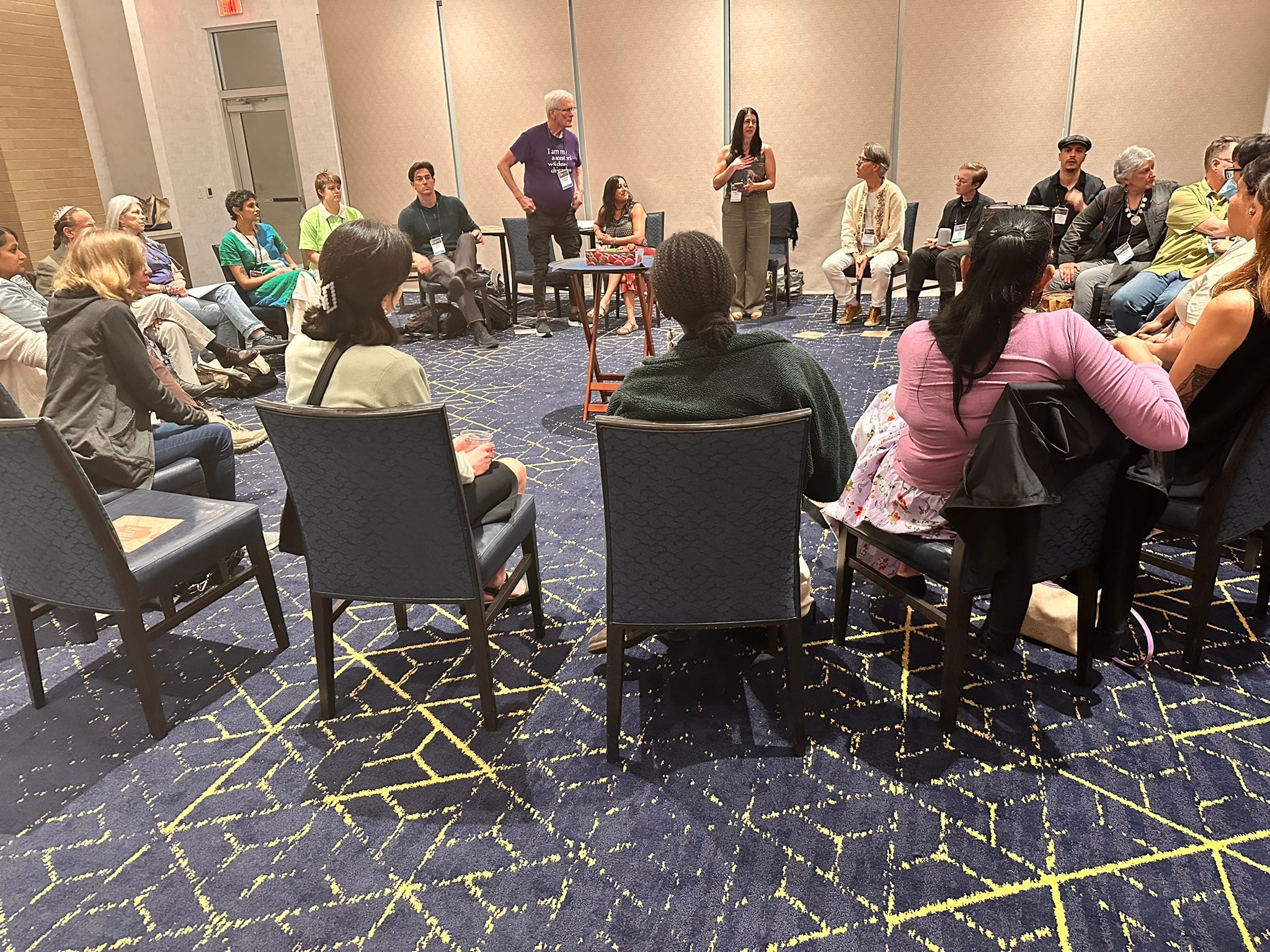
I also love that they weave in mixers and networking around passions and interests, including ones for artists and art lovers; health and wellness practitioners; activists and organizers; food systems professionals and advocates; nature-based solutions and others. We participated in the health and wellness practitioners session led by Christine Imfeld and Saleena Gupte from CIIS. We formed a circle and learned about each other’s needs and insights through collective sharing and break-out groups.
One other thing to note is that each evening there was an opportunity to watch thought-provoking and game-changing independent films, including Yanuni, Sequoias of the Seas, Jane Fonda’s Gaslit (which is currently making its way through the film festival circuit), Tiger, Remaining Native and Free Leonard Peltier. I was truly moved by Farming While Black, a powerful documentary that explores the history, resilience, and resurgence of Black farmers in the United States.
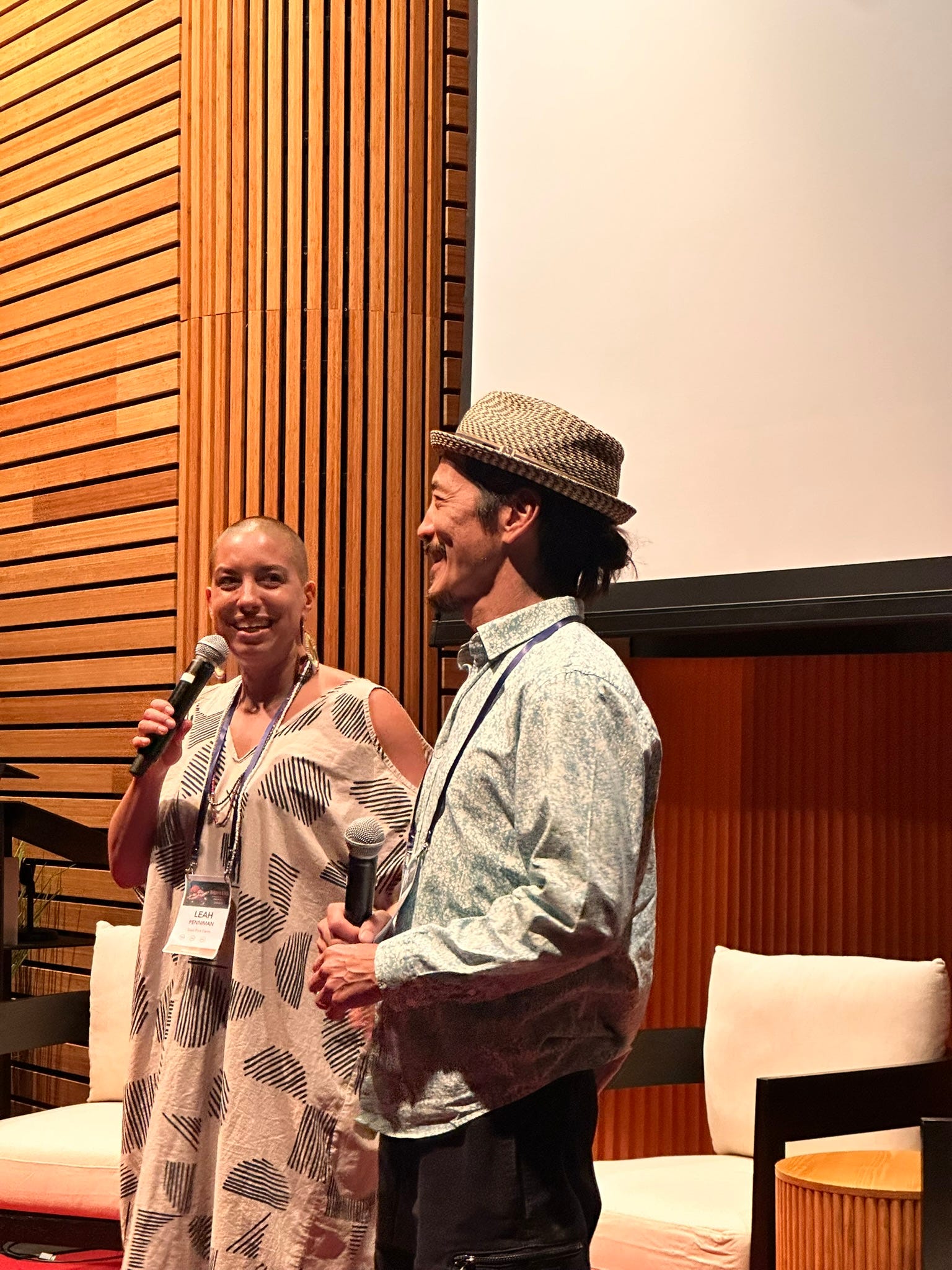
Above, Leah Penniman introduces the film.
The film looks at how Black farmers were systematically dispossessed of land over generations through discrimination, yet are now reclaiming agriculture as a source of cultural identity, healing, and empowerment. It frames farming as a deeply spiritual and ancestral connection to land, food, and community—while also addressing modern issues such as food justice, climate change, and access to healthy food. A central voice to the film is the co-founder of Soul Fire Farm in upstate New York, Leah Penniman and her family. It also highlights activists and farmers like Karen Washington in the Bronx and Blain Snipstal in Maryland, both of whom are working to rebuild Black agricultural traditions and create equitable food systems.
A film that blends history with hope, it acknowledges the painful legacy of land loss and systemic racism, while uplifting a new generation of farmers who are reclaiming land, reviving Afro-indigenous farming practices, and building community-based solutions.
I also had an opportunity to chat with ArtJoy founder Toni Mikulka-Chang (below) about her puppetry display.
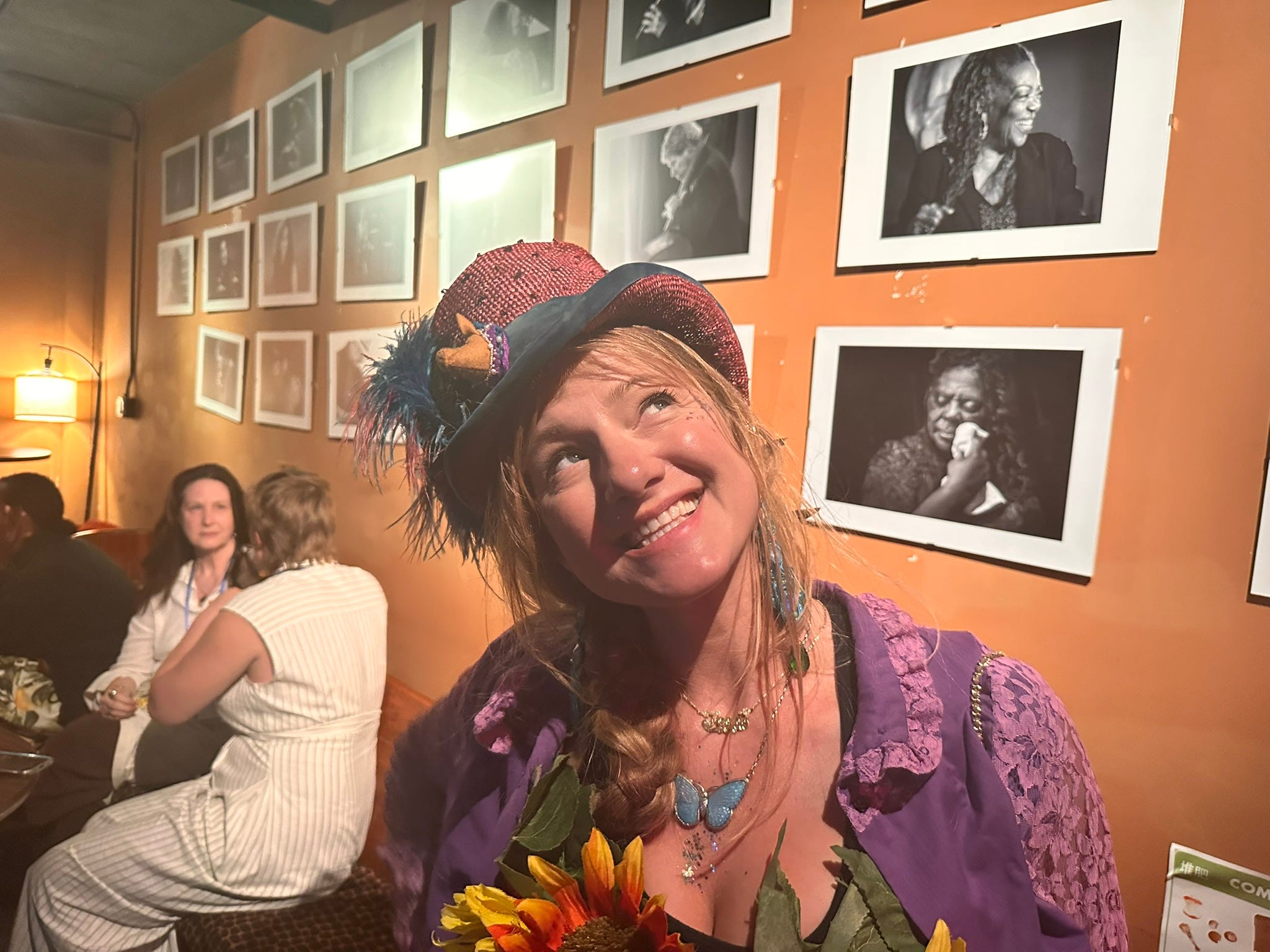
Her organization creates immersive, participatory art experiences that invite people to make, build, and imagine together. From intimate studio workshops in silk painting, pottery, and hands-on craft to monumental public spectacles featuring giant puppets, parades, and large-scale installations, it’s a wondrous experience. Toni’s belief is that “Art isn’t something you only observe—it is something you enter, touch, and help create.” Below, you can get an idea of some of what she brought to life at Bioneers this year.
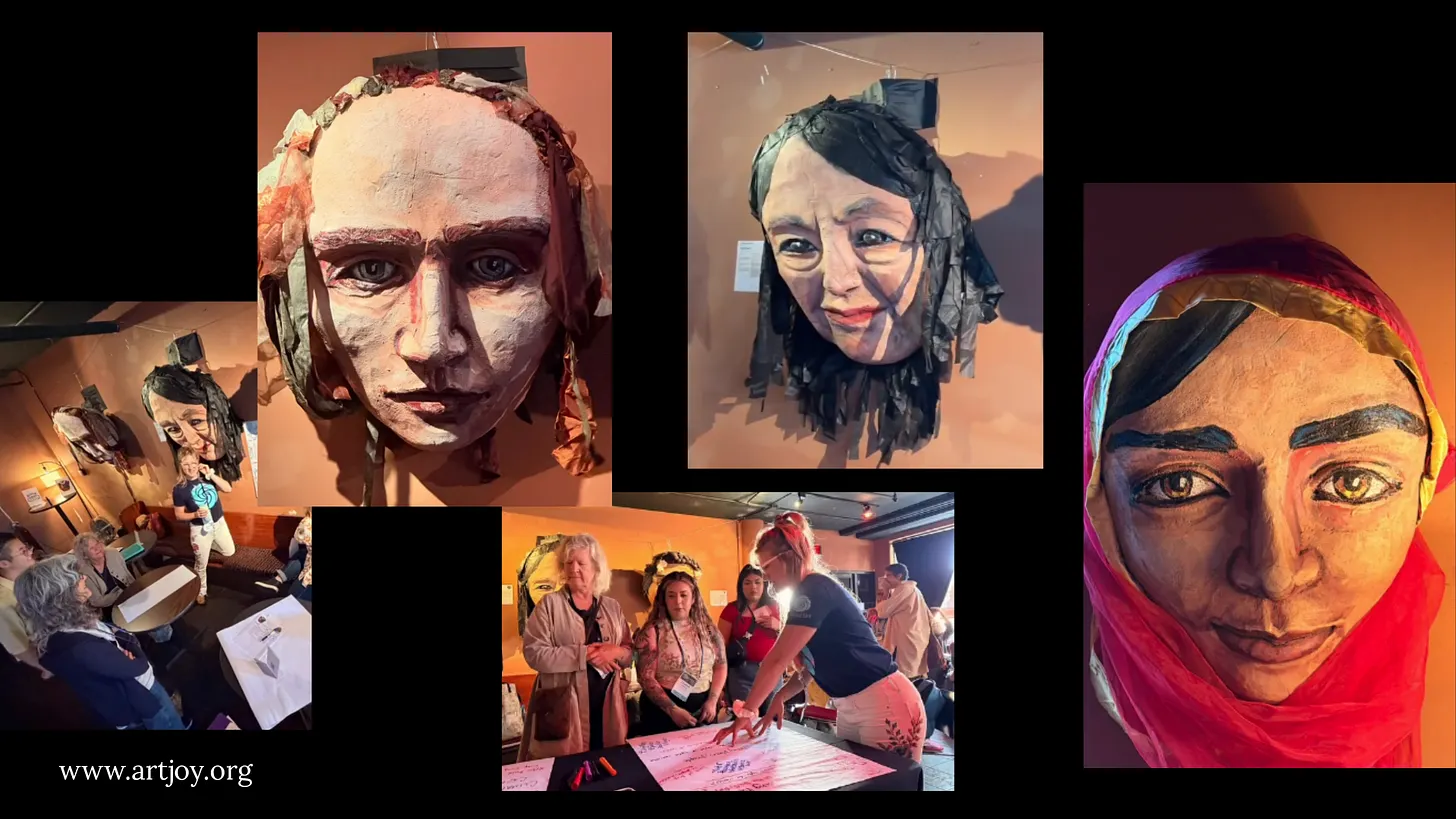
Lastly, since I’m in the middle of reading Michael Pollan’s latest book A World Appears, and also teach about consciousness, I had to attend his keynote and fireside chat with Dacher Keltner. For the book, he interviewed various academics, neuroscientists, plant biologists, and thinkers across fields to understand how awareness arises and what it really is. Given his history of writing about plants, he explores questions such as whether plants might possess a form of awareness and places them in a category called Sentience (the book has a chapter with the same name).
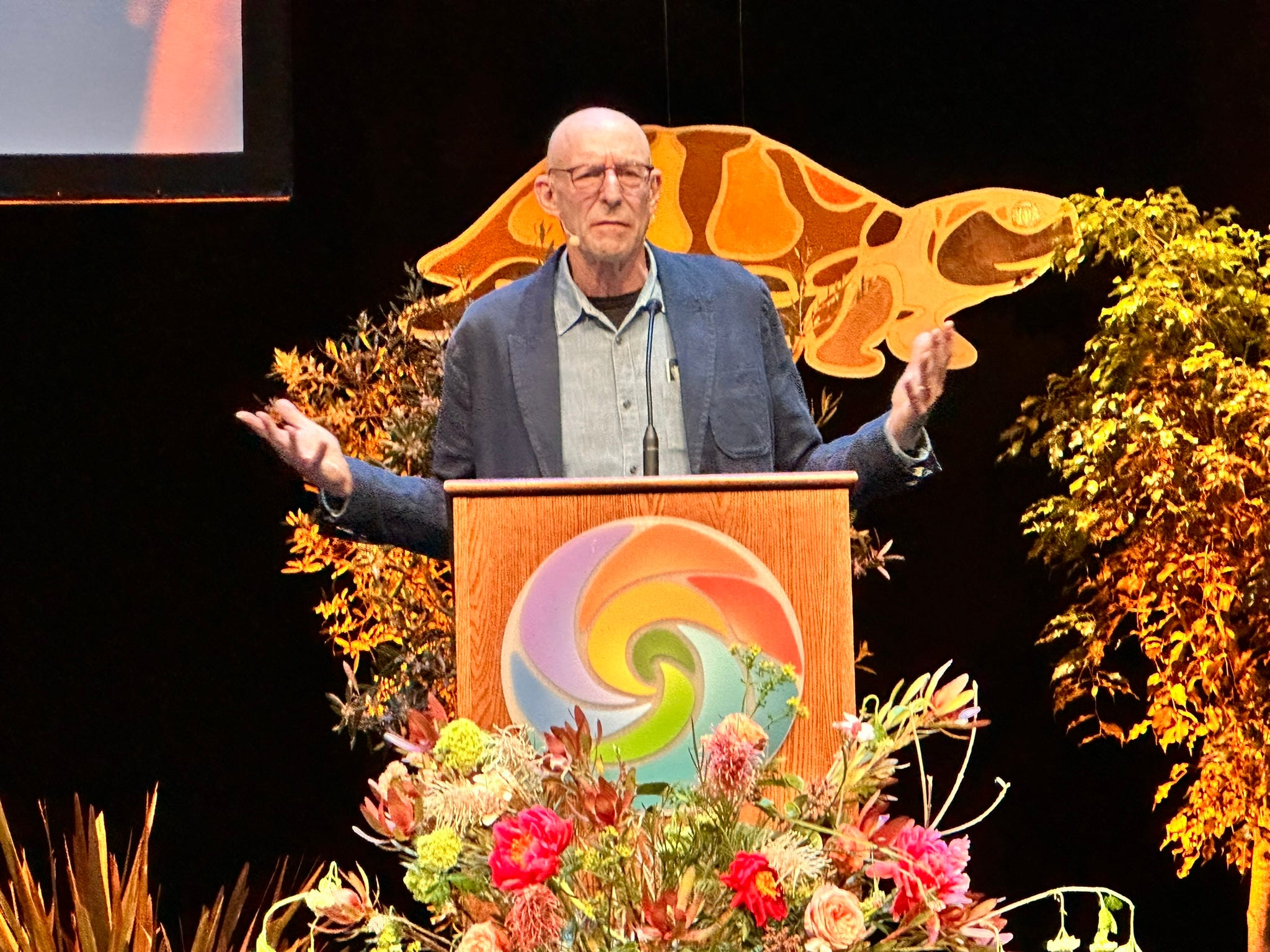
Above, Michael Pollan gives his keynote
While Michael Pollan thoughtfully challenged the prevailing view that the brain alone produces consciousness and acknowledged that it may not be fully explained by current scientific models, I found myself wishing the conversation had gone a step further. In particular, when questions arose around collective consciousness and non-locality, the response seemed to frame these ideas more as ideological than as areas worthy of deeper exploration.
I remain a strong fan of Pollan’s work and recognize the important role he plays in bringing complex topics to mainstream audiences. At the same time, his wide reach presents an opportunity to open the door even further—especially to conversations that invite a more expansive inquiry into consciousness. There is growing value in examining not only what science can currently measure, but also the role of direct experience, perception, and emotion in shaping our understanding of reality.
He brought up the groundbreaking work of Michael Levin and the latest research on bioelectricity, suggesting that science isn’t the only way of knowing things. Art is another way, allowing us to mind-meld and move into another reality.
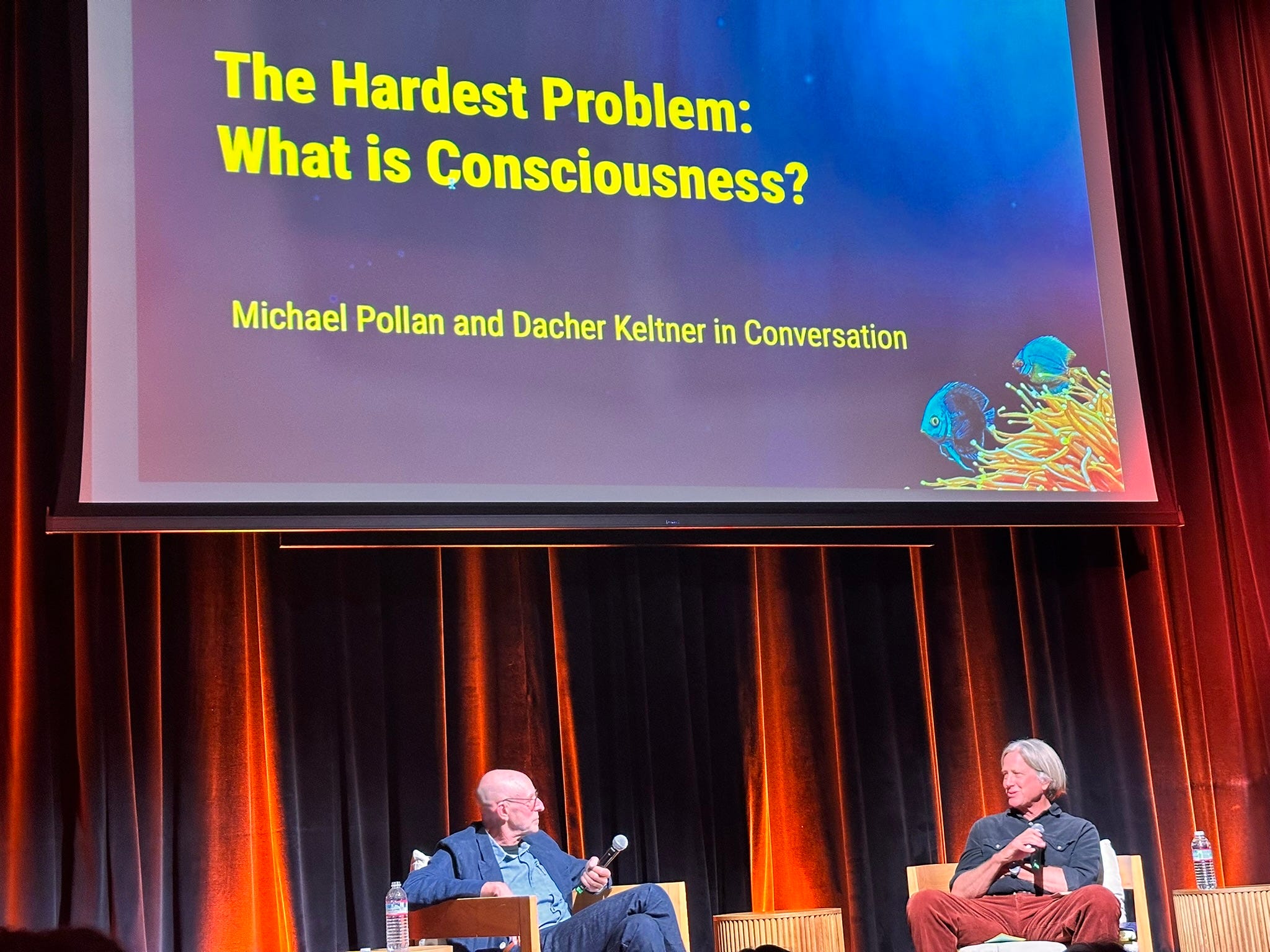
He ended the discussion with great advice about living more intentionally, reconnecting with ourselves, and better understanding our place in a larger web of life. He suggested that next time you’re in line to order a coffee, put your phone away and be present with what is emerging around you. In other words, pay attention to how much phone scrolling you’re doing in those idle moments.
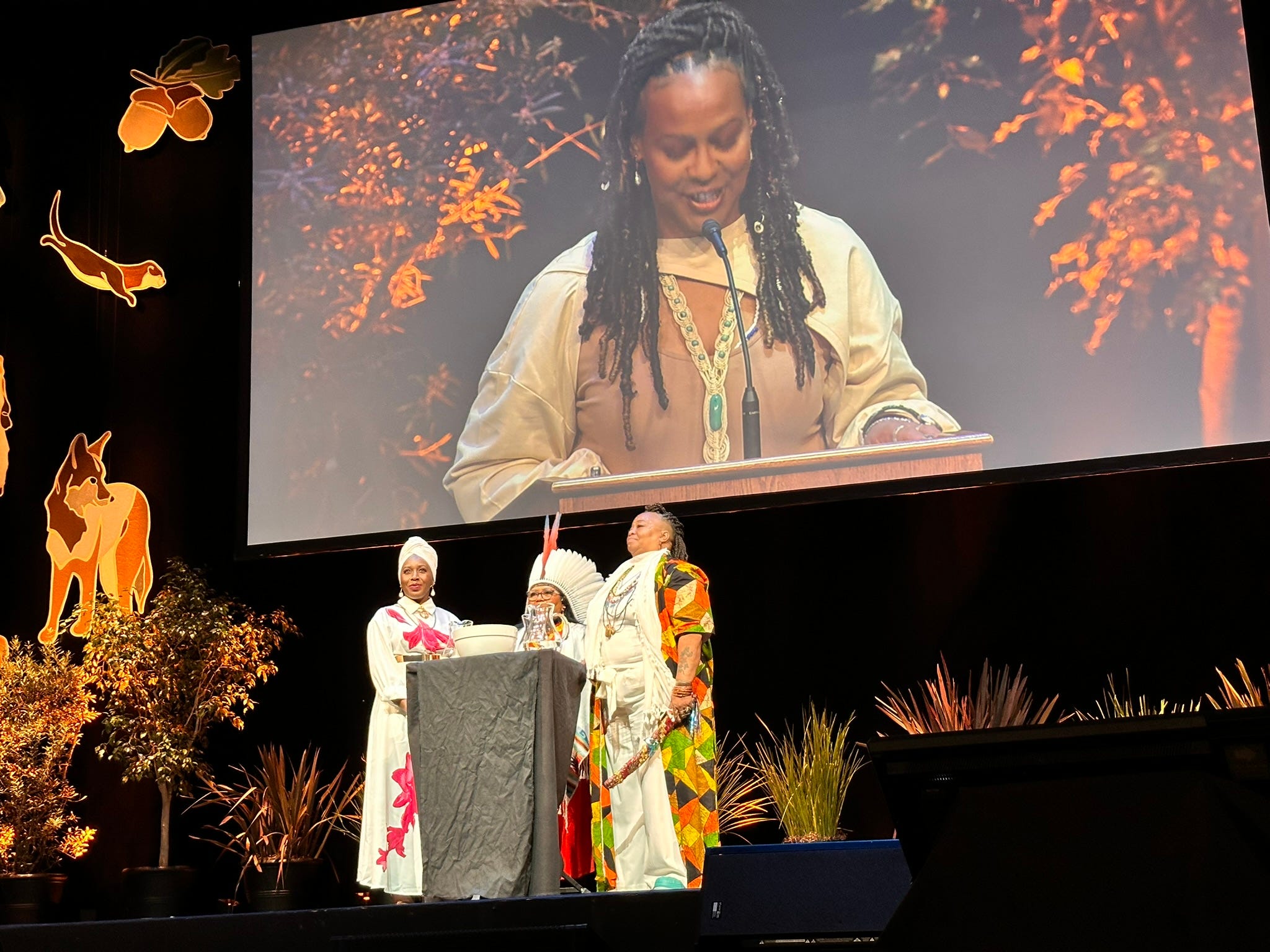
Above: Michelle Schenandoah, Katsi Cook and Louise Herne.
They reminded us that it wasn’t a ceremony, but a practice. They sent peace to people, including those who went to prison for standing up for freedom and basic human rights. They also sent hope to the Amazon and to those who will be our future climate change leaders, dedicated to protecting our planet.
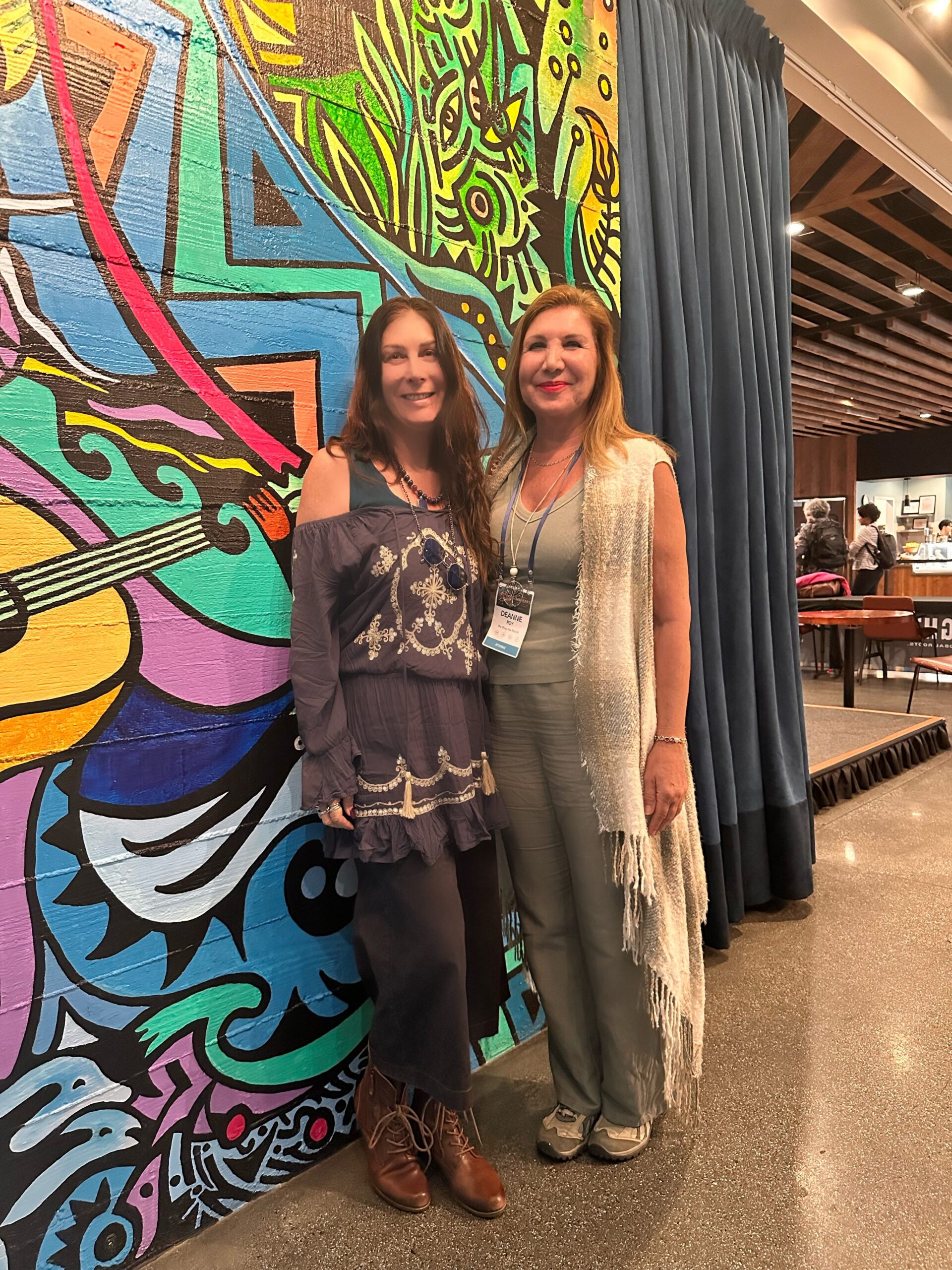
Outside, they held participatory drumming sessions, and there was also an afternoon break for those who wanted to join the No Kings March in central Berkeley.
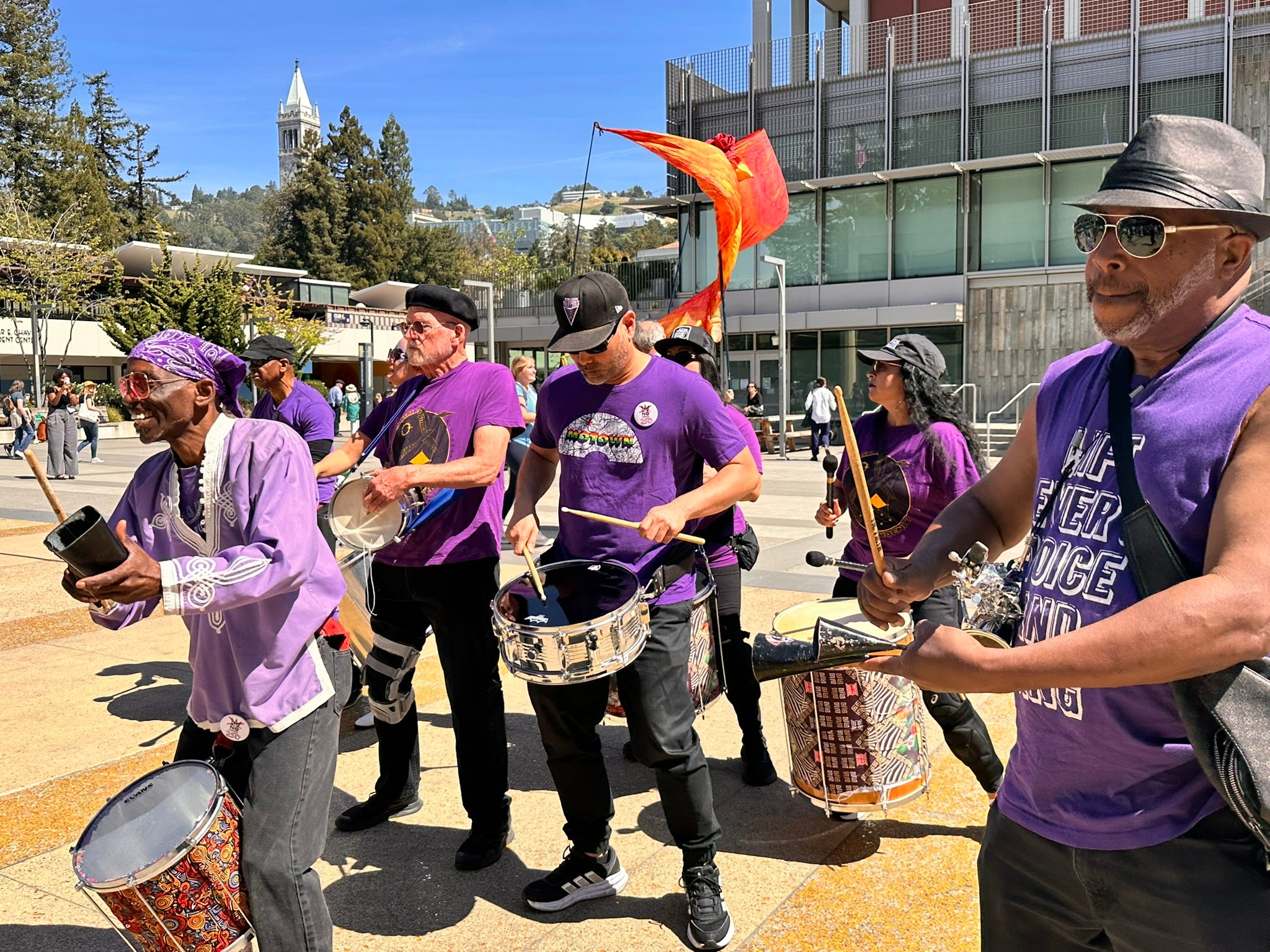
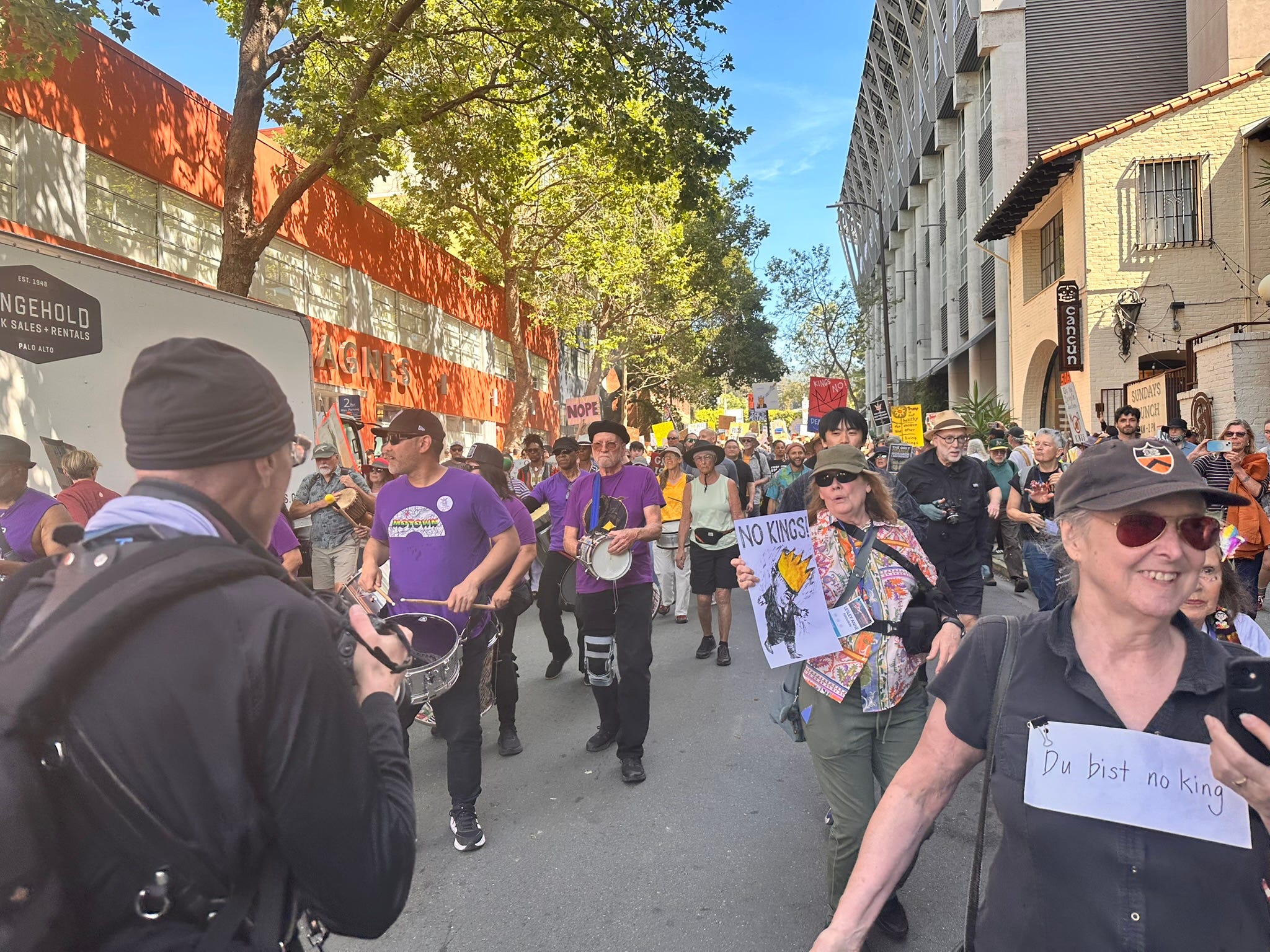
Bravo to yet another fabulous Bioneers event and hats off to the founders, Kenny Ausubel and Nina Simons. You can learn more at www.bioneers.org. Be sure to sign up for their newsletter for year-long offerings and news of their 2027 annual event.
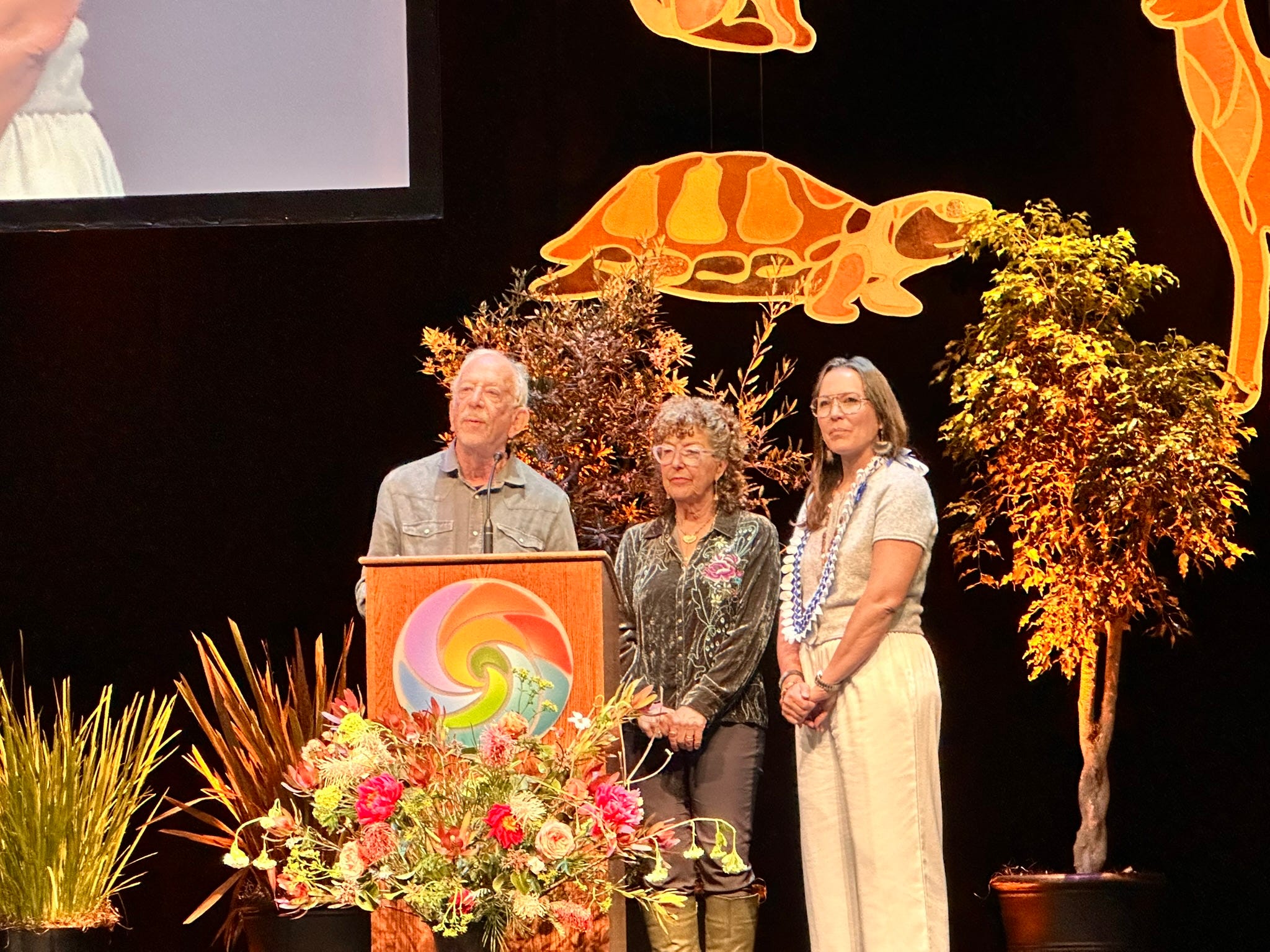
Above (left to right): Kenny Ausubel, Nina Simons (Bioneers founders) and Cara Romero (executive director)
Note: The short video overview includes snippets from the Friday night films, their annual Bioneers Eco-fashion show, outside drumming, the opening and closing session, the No Kings March and some other random highlights.
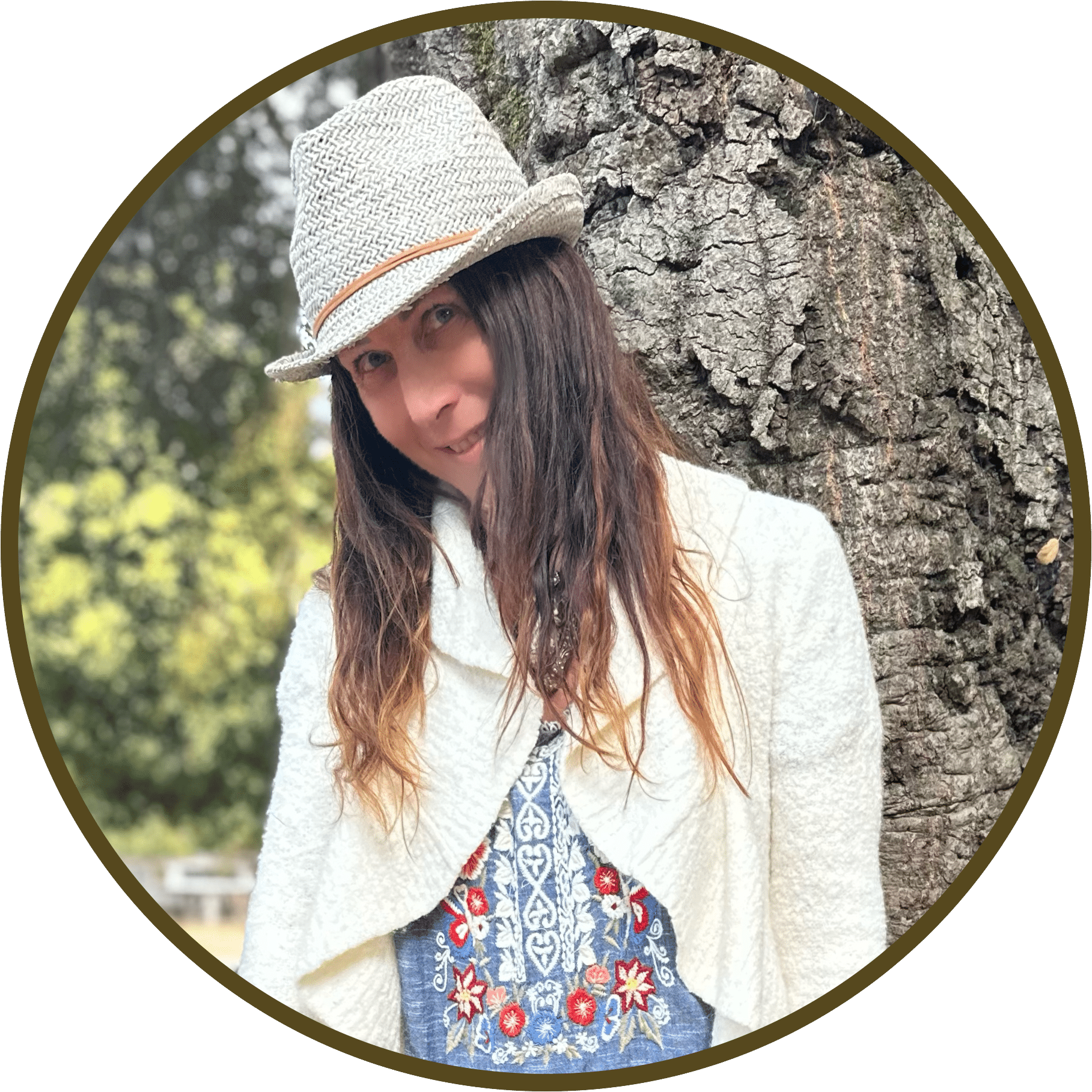
Renee Blodgett is the Founder and Managing Editor of We Blog the World, a global travel, culture and lifestyle publication exploring the world through the lens of meaningful experiences, human connection and cultural depth. Having lived in 10 countries and traveled to 95, Renee has spent much of her life immersed in the people, traditions, landscapes and ideas that shape how we experience the world.
Since launching We Blog the World in 2007, she has written and produced extensive editorial coverage spanning boutique and luxury travel, culinary experiences, arts and culture, wellness, adventure, technology, spiritual traditions and transformative travel. Her work is rooted in the belief that travel is about more than where we go—it is also about what a place, culture or encounter awakens within us.
Renee brings more than three decades of experience across journalism, photography, media, brand strategy, technology, wellness and global storytelling. She has worked with companies and organizations around the world on brand positioning, communications, product launches, media strategy, speaker positioning and storytelling. Through Blue Soul Media, she works with authors, entrepreneurs, thought leaders and purpose-driven brands to clarify their message and expand their impact, which includes speaker coaching/training for high-profile stages such as TED and bringing authors’ work to market while retaining authors rights.
She is also the co-founder of Blue Soul Earth, an educational platform exploring consciousness, ancient wisdom, spirituality, healing and the intersection between science and the nature of reality. Renee is the producer and host of the award-winning Blue Soul CHATS, a conversational series bringing together leading voices in science, technology, consciousness, wellness and spirituality.
Her growing body of work also includes Blue Soul Living, which extends her interest in consciousness and well-being into the spaces we inhabit, exploring how intentional design, energy and environment can support greater harmony and connection.
Renee is the award-winning co-author of the bestselling Magdalene’s Journey and founder of the Magdalene Collection, inspired by women’s voices, stories and wisdom across cultures and generations.
A longtime photographer and storyteller, Renee has documented people, places and cultures around the world and produced photographic collections focused on destinations including the Galápagos Islands, London, South Africa, Rome and Ecuador. She also co-founded Traveling Geeks, an international initiative that brought entrepreneurs, journalists, creators and technology leaders together with their counterparts in other countries to exchange ideas and explore innovation across cultures.
Renee’s work has been recognized by Forbes, the United Nations and others for her influence in media and social storytelling. Across her work in travel, media, consciousness and culture, a common thread remains: curiosity about the world, the stories that connect us and the ways meaningful experiences can change how we see ourselves and one another.