
Broadly speaking, it’s not inaccurate to say that I found Bhutan disappointing. “Disappointing” might be too strong a word, actually, but the country definitely wasn’t as amazing as its reputation suggests. It’s ironic, then, that my favorite single experience in Bhutan was also its most famous, hyped one. I’m talking, of course, about Paro Taktsang Monastery, more famously known (at least in English) as the Tiger’s Nest.

As you search for information about travel to Bhutan, the Tiger’s Nest Trek is almost always first on the list. It’s also the centerpiece of the expensive luxury tours that were compulsory in Bhutan prior to the country’s post-covid reopening. Whenever too many people are crazy about something, I’m skeptical that it can’t possibly live up to expectations.
In the case of the Tiger’s Nest, I was also doubtful that the trek itself would be exhilarating, regardless of how I might’ve ended up feeling about the monastery itself. Many travelers to Bhutan are old and even decrepit; what might be a thrilling adventure for someone twice my age could easily end up being a walk in the park (i.e. boring) for someone like me.
How to Trek the Tiger’s Nest
Get yourself to Paro
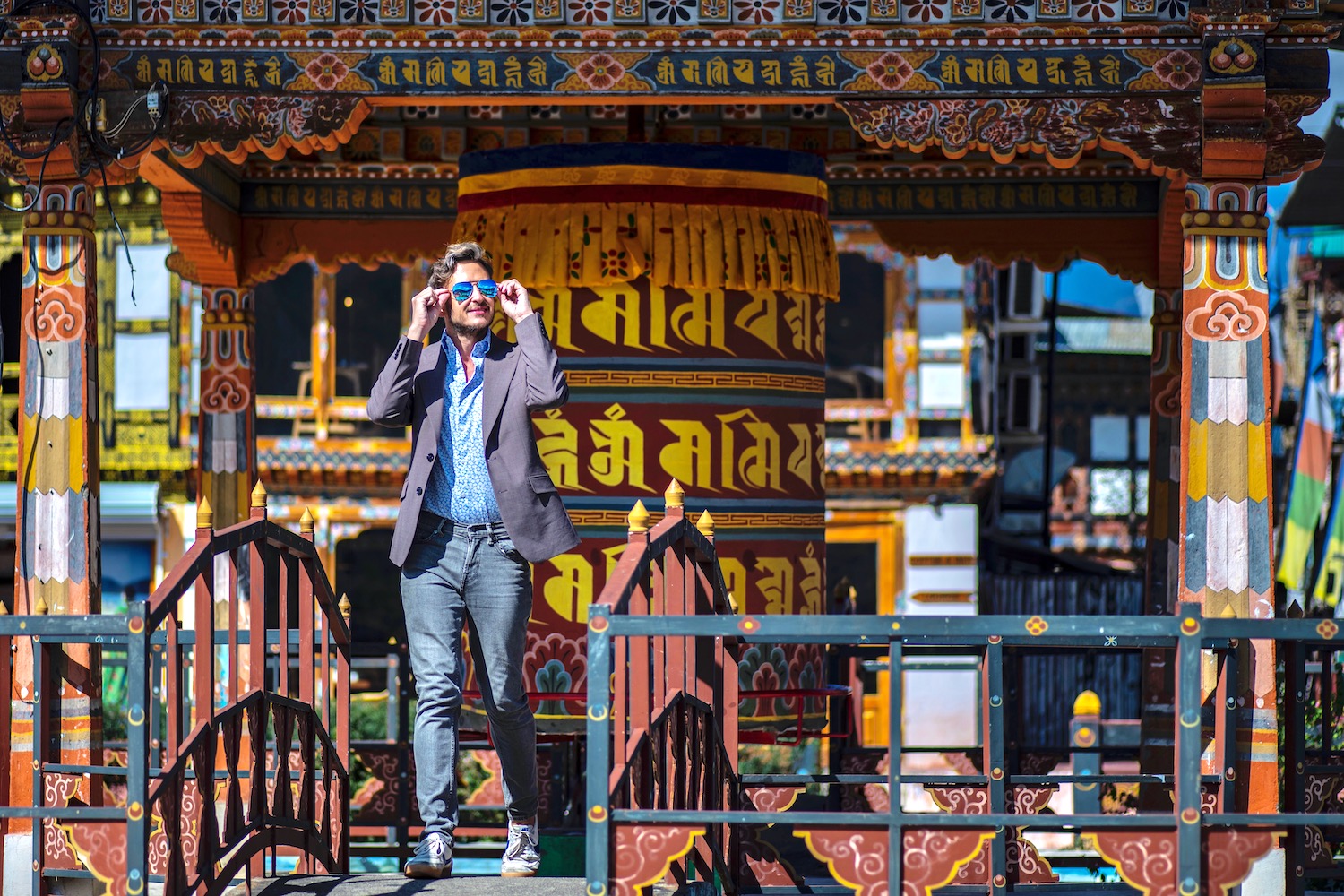
The Tiger’s Nest is about 20 minutes outside of central Paro, which means that Paro is your most realistic base for trekking there. You could technically come here on a day trip from Thimphu, and doing so wouldn’t be catastrophic on the way where. After finishing, however, you’ll want to be able to get “home” quickly; you’ll be wiped out.
And to the Taktsang trailhead

Notice I said “outside of Paro.” The Bhutan Tiger’s Nest Trek, expectedly, begins more or less in the middle of nowhere, rather than in the middle of the city. It’s important that if you are coming from outside of Paro, you get a ride all the way to the trailhead. Otherwise, you’ll have to get a second cab in central Paro, which is easy enough, but annoying in my opinion.
Hit the ground running
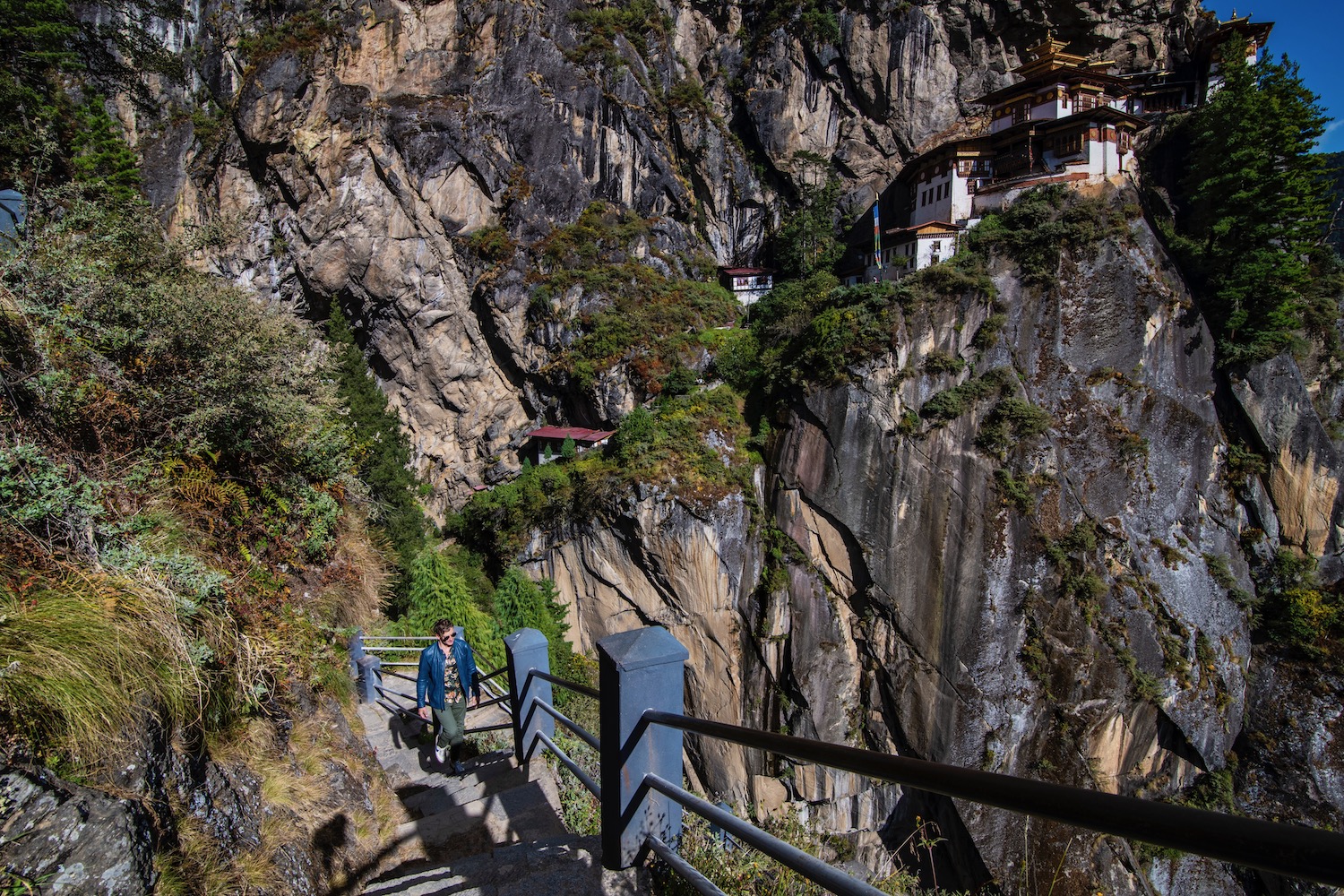
The bad news? I realized, upon arriving at the trailhead, that I’d forgotten to bring a bottle of water with me—and I was already parched. The good news? Less than an hour up the trail (if you walk fast, and I do), there’s a cafe with plenty of beverages and food, if you’re into that. I recommend starting off fast so that you can take your time later (and you’ll want to).
Take a break with a view

I say “food, if you’re into that” because with Bhutan Tiger’s Nest Trek, as in general, I just don’t like eating before or even immediately after I hike. Rather, I enjoyed the scenic cafe with a big bottle of water and a small Diet Coke. Had I finished my trek earlier, however, I might’ve stayed for longer on the way down—the views are really that good.
Pace yourself on the second half—and on the way down
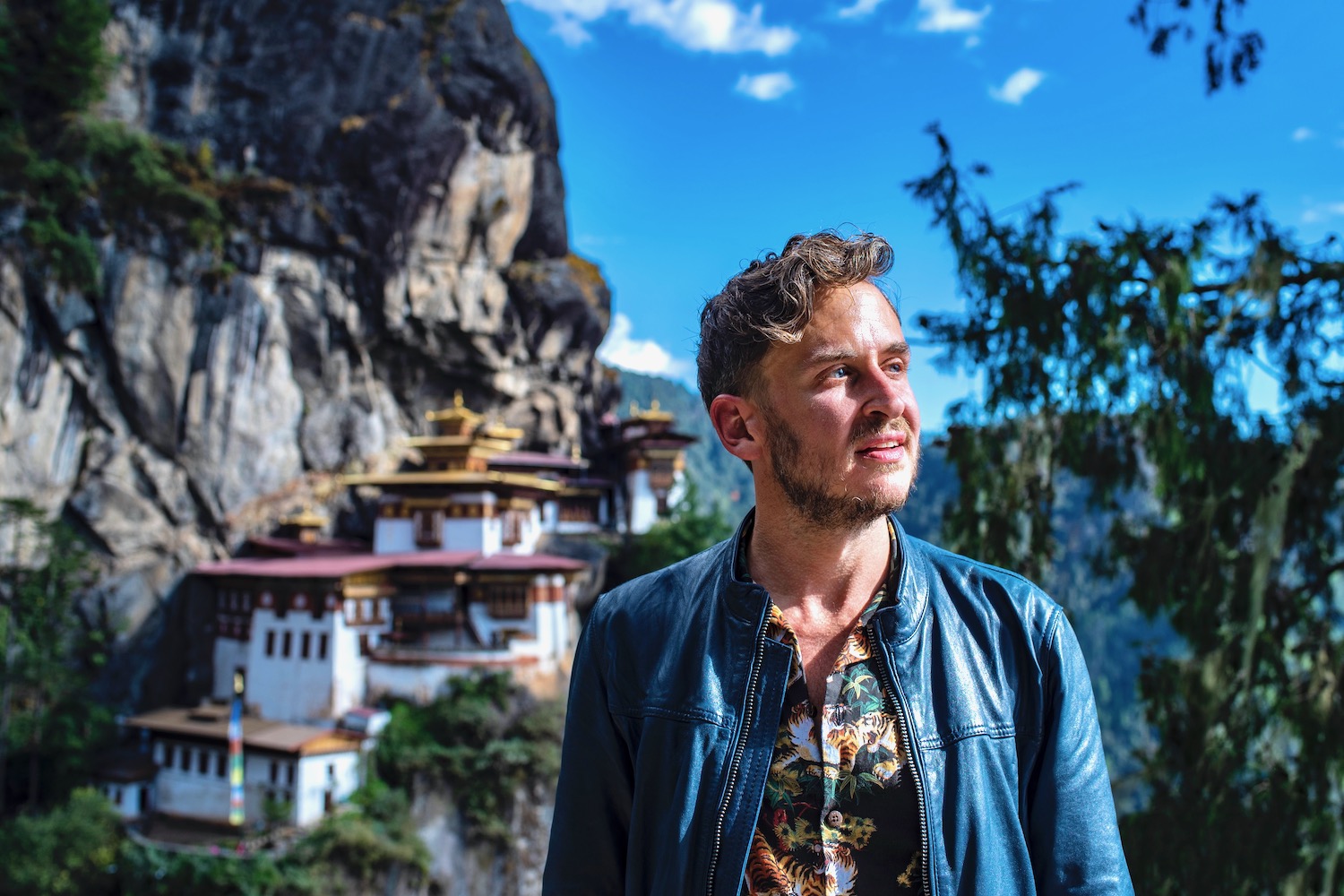
Remember how I said earlier that you should push through the first part of the trek as fast as you can’t? This is because once you pass the cafe, the views of the monastery in the distance become ever more spectacular—you won’t want to put your camera down. Go fast along the less-picturesque parts of the trail so you can go slow here, if you that’s what serves you.
Do You Need a Guide to Visit the Tiger’s Nest?
Contrary to popular belief, you don’t need a guide to do the Tiger’s Nest trek. You don’t even need a ticket. The trailhead is completely open; you walk directly from the parking lot onto it without any control or verification whatsoever. The only time anyone asked me for a ticket (or whether I had a guide) was hours later, an the entrance to the monastery itself.
Now, you do need a guide to go inside the monastery, where pictures are strictly forbidden. And there’s an argument to be made that the Bhutan Tiger’s Nest Trek is not really worth doing unless you go into the monastery. But in my opinion, the journey is more than the destination in this case; if you don’t want to hire a guide (and can’t find one to piggyback to go inside the monastery), then I wouldn’t sweat it.

Robert Schrader is a travel writer and photographer who’s been roaming the world independently since 2005, writing for publications such as “CNNGo” and “Shanghaiist” along the way. His blog, Leave Your Daily Hell, provides a mix of travel advice, destination guides and personal essays covering the more esoteric aspects of life as a traveler.